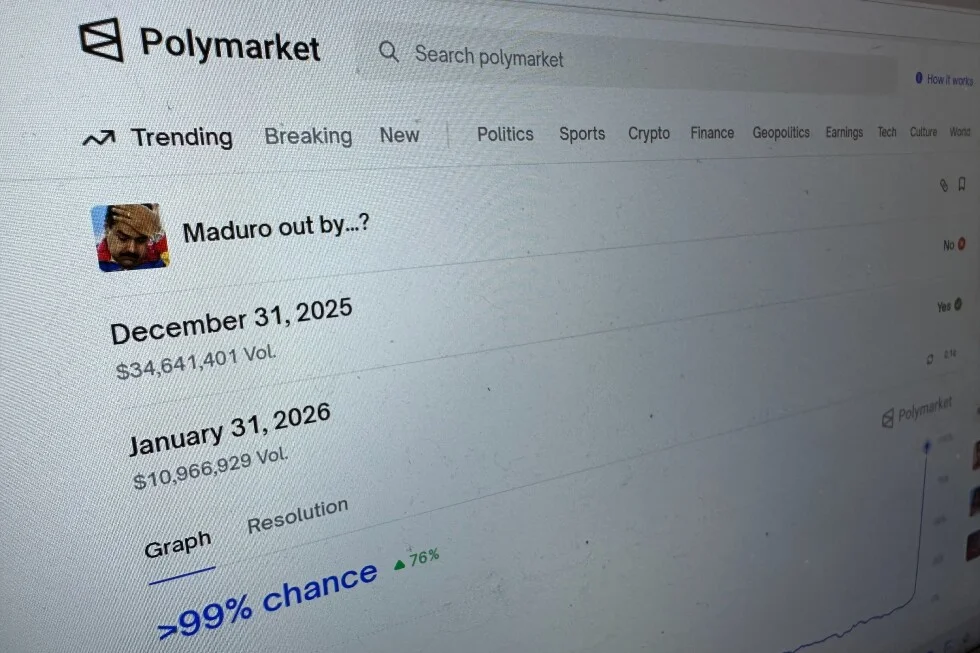
An anonymous trader earned over $400,000 on Polymarket by betting Maduro would be ousted, just hours before a nighttime raid was announced, fueling scrutiny of insider trading risks in 24/7 prediction markets. The piece explains how these markets work, their volatile yet growing use, and the regulatory landscape in the U.S. with competitors like Kalshi and calls for tighter rules.
Prediction markets suggest increased odds of President Trump taking aggressive actions such as seizing the Panama Canal and Greenland, reflecting a shift towards more forceful international interventions, amid ongoing geopolitical tensions and Trump's recent comments.
There is strong evidence suggesting that an anonymous user on Polymarket profited significantly by placing bets based on inside information about the US invasion of Venezuela, raising concerns about insider trading and manipulation in prediction markets related to sensitive political and military events.
There is strong evidence suggesting that an anonymous user on Polymarket profited significantly by betting on the Venezuelan invasion, possibly using insider information related to the Trump administration's plans, raising concerns about the legality and ethics of prediction markets and their potential for manipulation.
US traders profited significantly by betting on the capture of Venezuelan President Nicolás Maduro through prediction markets, with one trader earning over $436,000 after Maduro's arrest was announced, highlighting the growing popularity and influence of prediction markets in political events.
Traders on prediction markets profited significantly from the news of Nicolás Maduro's capture, with some making nearly $437,000, highlighting the potential for inside information and raising questions about regulation, as lawmakers consider new legislation to restrict political figures' participation in such markets.
Prediction markets like Kalshi are providing odds for all four CFP quarterfinal games, with Ohio State favored over Miami at 75%, Oregon slightly favored over Texas Tech, Indiana undefeated and a strong contender against Alabama, and Georgia showing recent defensive improvements against Ole Miss.
The prediction markets industry is rapidly expanding in the U.S., with major sportsbooks like DraftKings launching prediction market apps, sparking conflicts with land-based casinos and regulators. These markets are integrating into various platforms, potentially challenging traditional sportsbooks by offering alternative betting options, while facing legal and regulatory hurdles.
Prediction markets, especially in sports, are rapidly growing and being integrated into mainstream trading platforms like Robinhood, blurring the lines between gambling and investing, and raising regulatory and ethical questions about their role in finance.
Robinhood is expanding its prediction markets platform to include NFL parlay and prop bets, allowing users to trade combinations of game outcomes and individual player performances, with future plans to include other event categories and asset classes, aiming to become a leading hub for prediction markets and diversify its revenue streams.
Betting on prediction markets has seen significant growth over the past two years, reflecting increased interest and participation in these financial tools.
Kevin Warsh has become the leading candidate in prediction markets to be the next Fed chair, surpassing Kevin Hassett amid internal doubts within Trump's circle about Hassett's closeness to the president, with recent market shifts reflecting increased uncertainty in the nomination process.
Luana Lopes Lara, a former professional ballerina and MIT graduate, co-founded Kalshi, an innovative prediction market platform now valued at $11 billion, making her the world's youngest self-made woman billionaire. The company faced regulatory hurdles but succeeded in establishing a new asset class for trading on future events, and has seen rapid growth and expansion into crypto and partnerships, despite ongoing legal challenges.
Polymarket, founded by college dropout Shayne Coplan, is a prediction market platform that allows users to bet on various current events, including elections and cultural phenomena. It has gained significant backing, including from the NYSE, and is valued at $9 billion, with plans to reach a billion users. Despite regulatory challenges and criticism, it leverages crowd wisdom to predict outcomes more accurately than traditional polls.
Prediction market traders have significantly reduced their odds that the Supreme Court will uphold President Trump's tariffs, reflecting doubts about the legality of the broad trade powers claimed under the International Emergency Economic Powers Act, after justices expressed skepticism during oral arguments. The court's decision is pending, but market sentiment suggests a potential setback for Trump's trade policies.