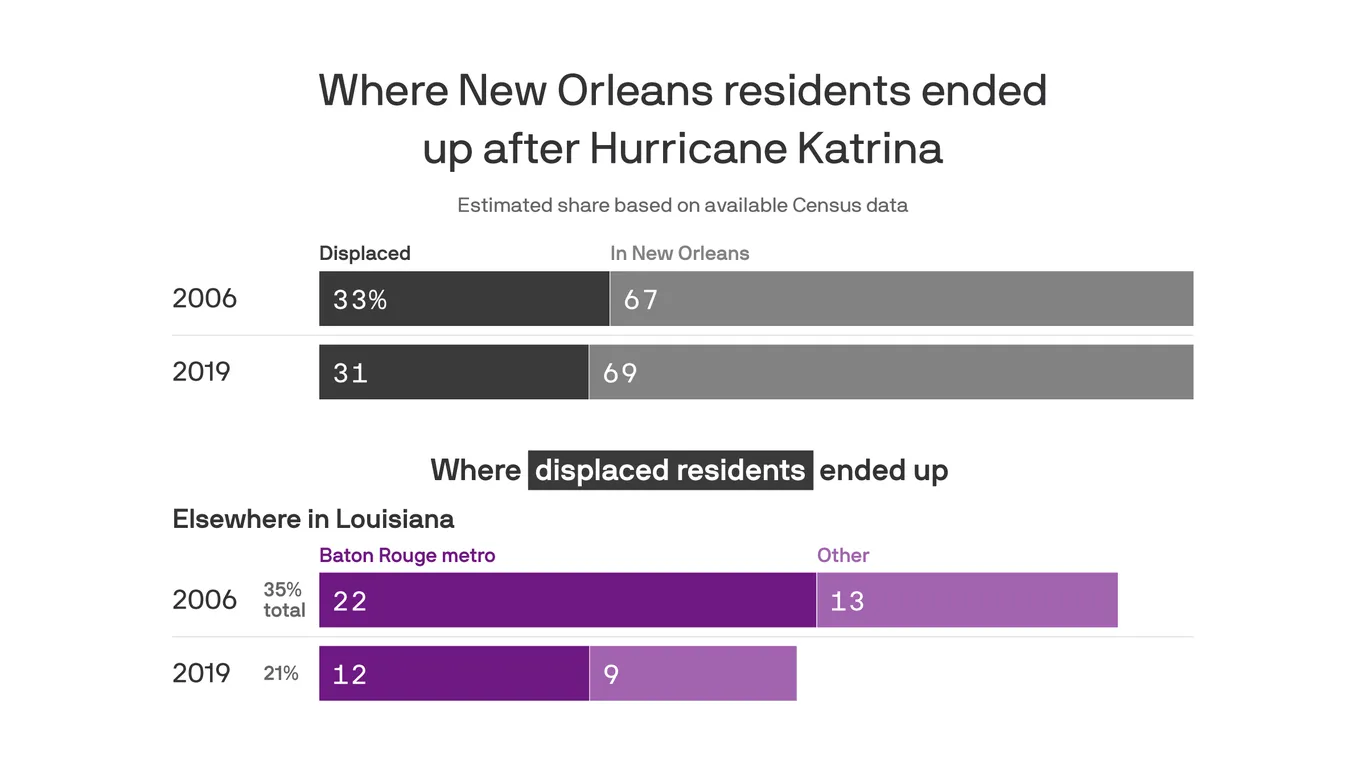
Twenty years after Hurricane Katrina, research shows that a significant portion of displaced New Orleans residents still live elsewhere in the U.S., with Texas cities like Houston and Dallas-Fort Worth attracting many, while Black residents faced greater challenges in returning due to damage and resource disparities.
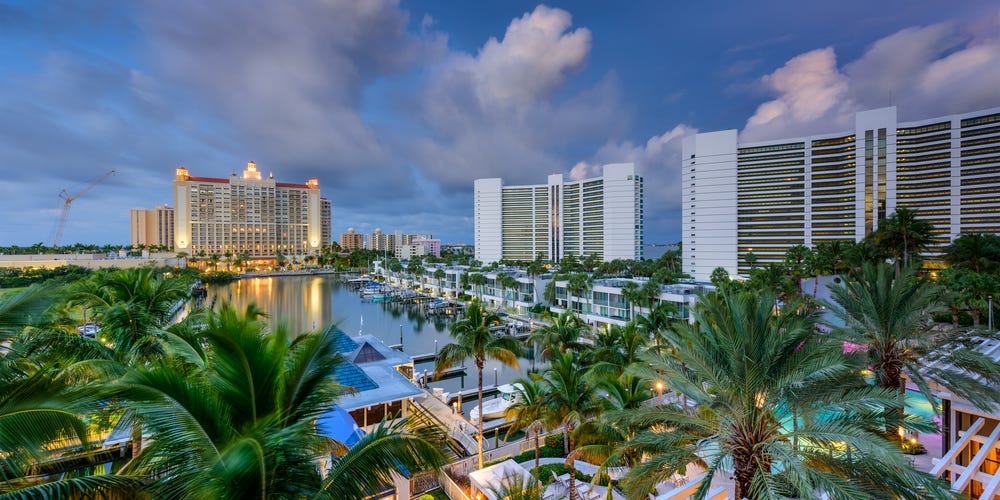
LinkedIn's January 2024 Workforce Report revealed that US workers are flocking to cities in the South, particularly in Florida, due to factors such as weather, lifestyle, lack of income tax, and business opportunities. Sarasota and Tampa are among the top destinations, while College Station, Texas, and Urbana-Champaign, Illinois, are experiencing significant population losses. The South's economic growth outpacing the overall economy is driving this migration trend, with Florida's GDP growing nearly twice as much as the overall US. Job openings in the South are higher than in other regions, and hiring in cities like Nashville and Miami-Fort Lauderdale has been strong, with workers moving from places like Los Angeles, Chicago, and New York City.
A new study by the First Street Foundation reveals that over 16 million people in the contiguous US, approximately 5% of the population, reside in "climate abandonment areas" characterized by increasing flood risk and declining populations. These areas, found throughout the country, are particularly vulnerable to climate-related disasters such as heavy rainfall, tropical cyclones, and coastal and river flooding. The research highlights that people are becoming more cautious about where they choose to live, avoiding high-risk areas. The study also identifies "risky growth areas" where populations continue to grow despite rising flood risk. The findings underscore the urgent need to address the population exposure and migration challenges posed by climate change.