Chemists at UMass Amherst have developed iConRNA, a publicly available tool that offers an unprecedented view of RNA behavior inside cells, aiding in understanding cellular functions and disease mechanisms related to phase separation of biomolecules.
New tools and technologies are revolutionizing the study of phase separation in living cells, revealing the intricate organization and logistics within cells. Researchers are leveraging molecular, biophysical, and computational tools to explore condensate biology, with potential applications in drug discovery and synthetic biology. These advancements, including optogenetic platforms and AI-driven drug discovery, are providing deeper insights into cellular operations and opening pathways for medical intervention, offering promise for understanding and treating diseases such as cancer, diabetes, and neurodegenerative conditions.
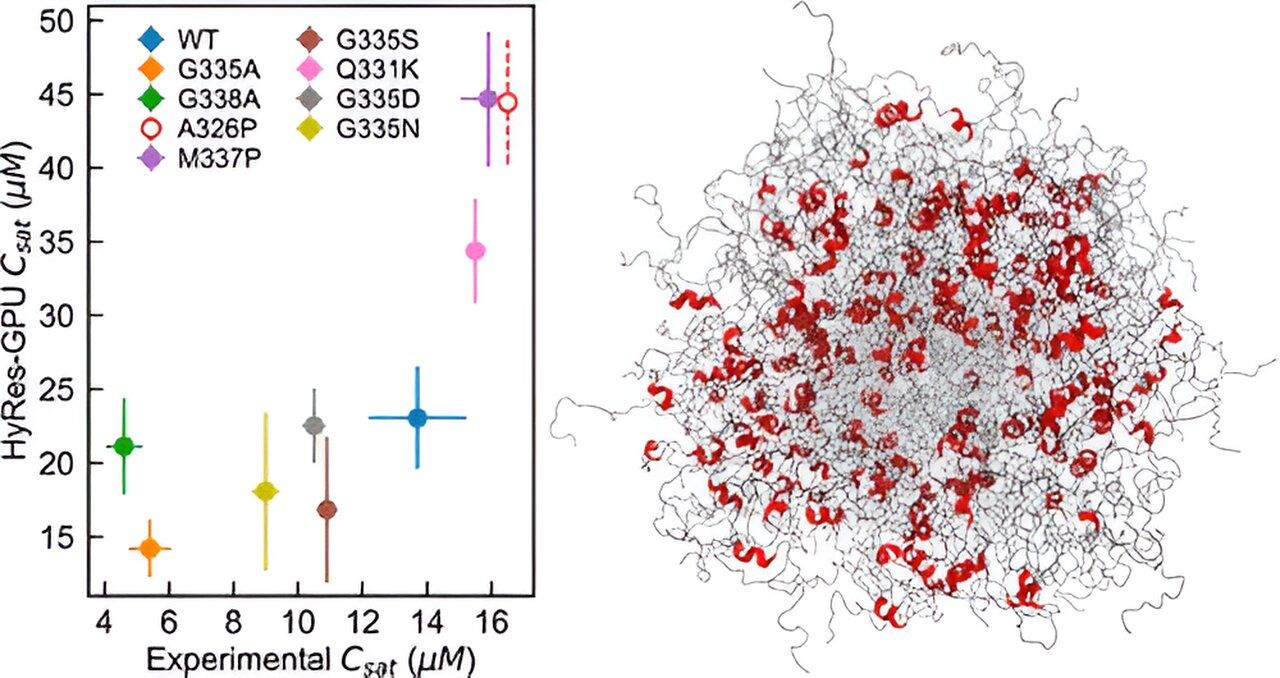
A team at the University of Massachusetts Amherst has developed a novel simulation tool, called HyRes-GPU, to accurately model phase separations mediated by intrinsically disordered proteins (IDPs), a crucial process in subcellular organization and various diseases. This tool fills a critical gap in computer simulation of IDP phase separation and provides insights into the molecular mechanisms of phase separation, with potential implications for therapeutic strategies in treating diseases associated with disordered proteins. The team's next step is to apply their findings to larger-scale simulations of more complex biomolecular mixtures.
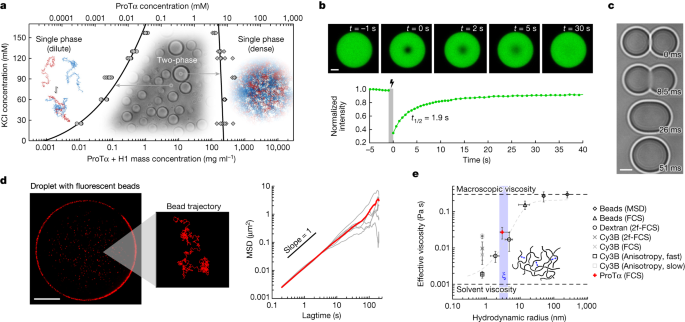
Researchers studying biomolecular condensates have deposited simulation trajectories of the condensates at Zenodo and provided source data with their paper. They used a custom add-on package for Mathematica v.12.3 for the analysis of single-molecule fluorescence data and made the code available on GitHub. The code used to calculate the lifetime of residue-residue contacts is also available. The study contributes to the understanding of extreme dynamics in biomolecular condensates.