The article explores whether AI chatbots like ChatGPT truly 'think,' with the AI itself clarifying that it operates through pattern recognition and prediction rather than conscious thought, emphasizing the distinction between human cognition and AI processing.
The human brain can read words without vowels by recognizing patterns, using context, and making predictions based on past experience and common letter combinations, particularly in the visual word form area of the brain, which helps in identifying familiar letter patterns and reconstructing words even when vowels are missing.
Billionaire CEO Michael Rubin attributes much of his success to pattern recognition, a skill he uses in business decisions and even in activities like playing blackjack. Warren Buffett also emphasizes the importance of pattern recognition, citing a decision to avoid investing in Valeant Pharmaceuticals as an example. To improve pattern recognition skills, one can engage in activities like playing games, collaborating with diverse perspectives, and taking an analytical approach. Rubin advises recognizing patterns in everything one does for success.
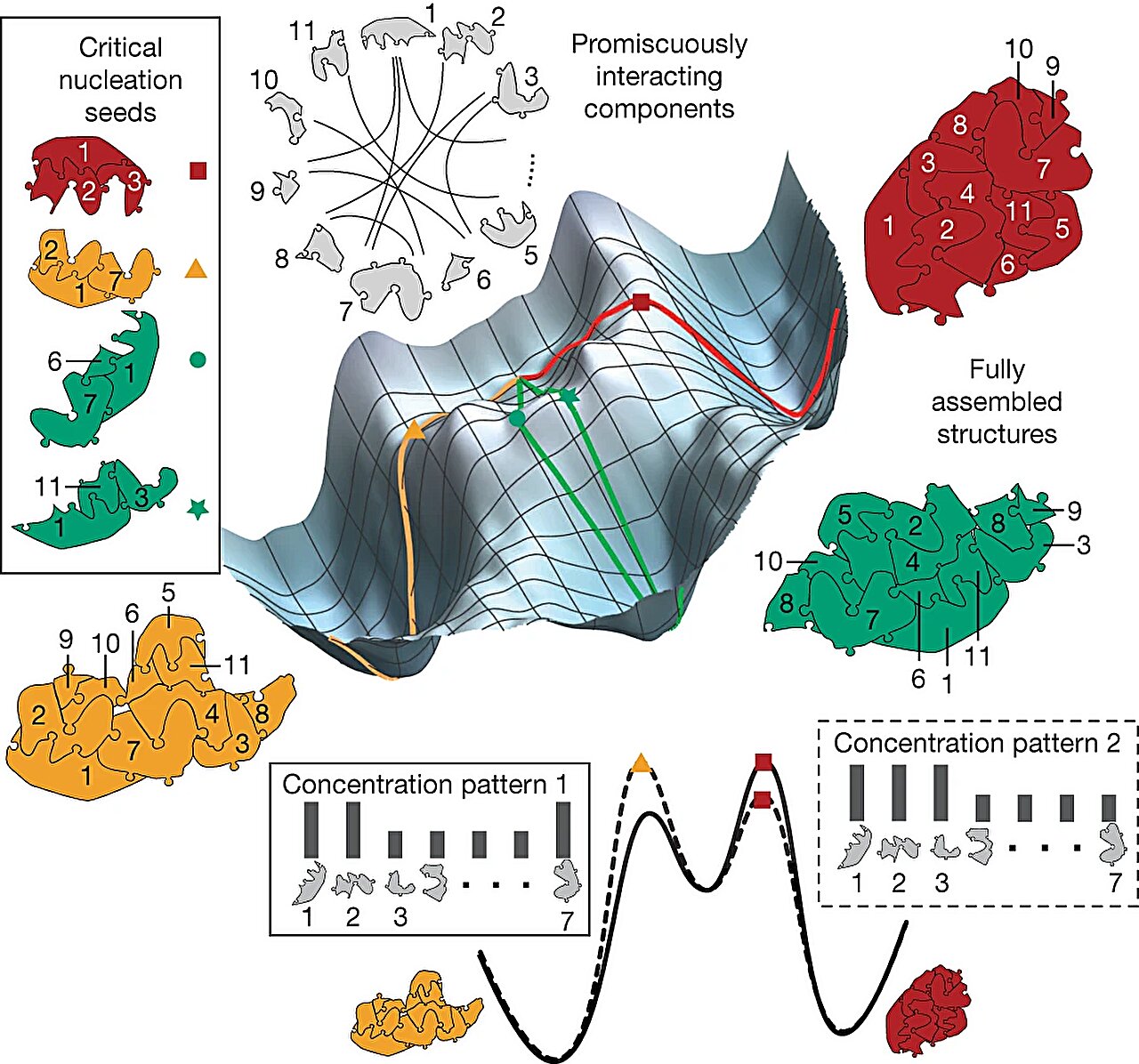
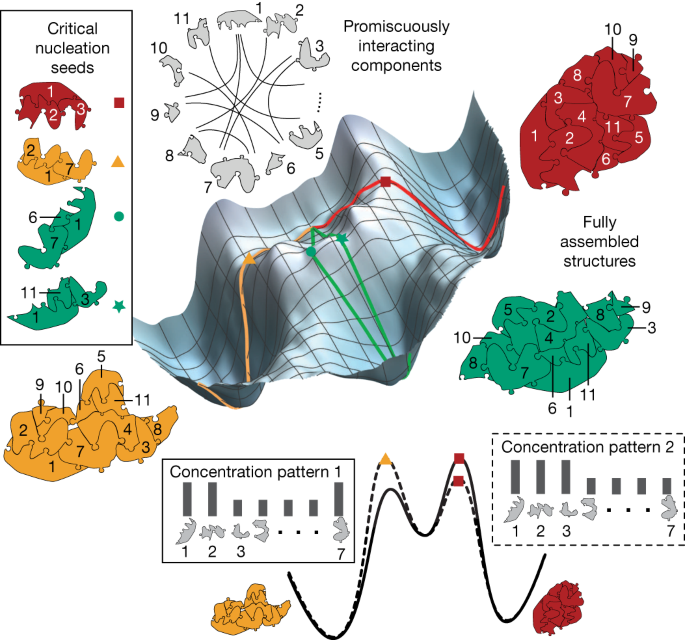
A new study suggests that physical processes, specifically nucleation, can exhibit complex pattern recognition abilities similar to neural networks. The research, published in Nature, challenges the traditional view of cells' molecular circuits and proposes that the molecules responsible for building structures within cells can also perform the functions of sensing, decision-making, and response. The study demonstrates how the physics of nucleation can recognize subtle chemical combinations and build different molecular structures in response, indicating hidden computational abilities in physical processes. The findings may lead to new perspectives on computation and have implications for understanding multi-component systems in various fields.
Researchers have demonstrated the use of molecular self-assembly for high-dimensional pattern recognition using DNA nanotechnology. By colocalizing molecules in different ways, they were able to control nucleation kinetics and achieve selective assembly of multiple target structures. This work shows that the phase diagram of self-assembling systems can naturally solve complex pattern recognition problems, similar to neural networks. The findings have implications for understanding biological systems and engineering autonomous molecular systems, and could potentially be applied to tasks such as image recognition using existing molecules.