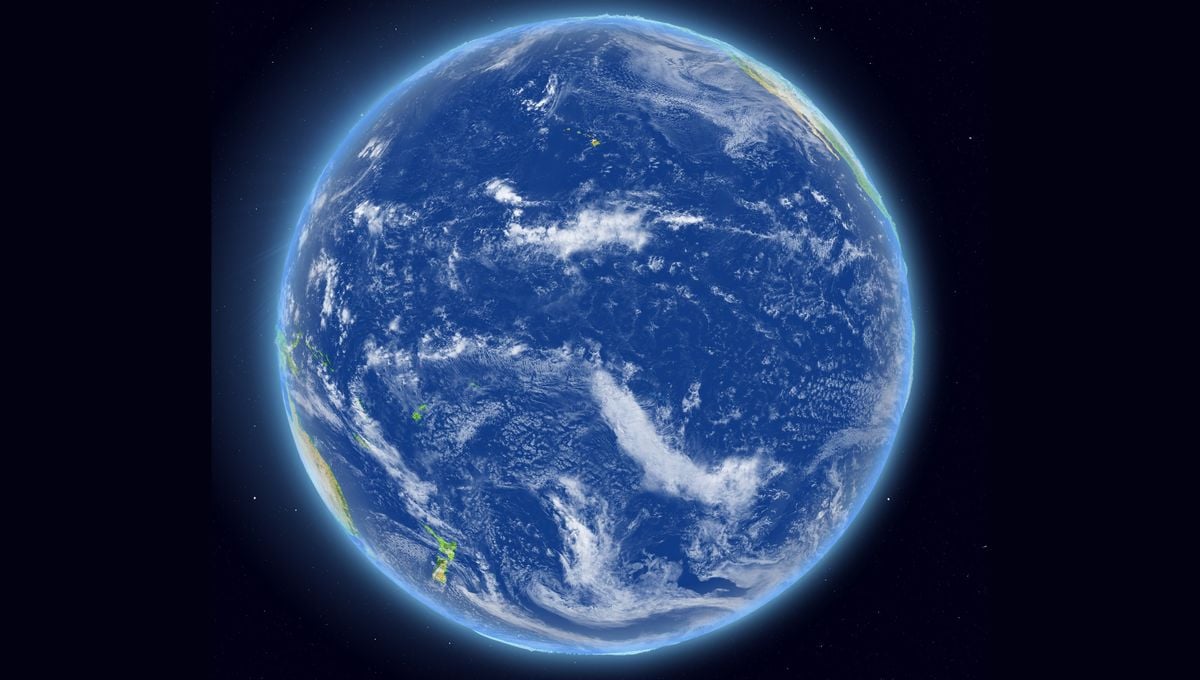
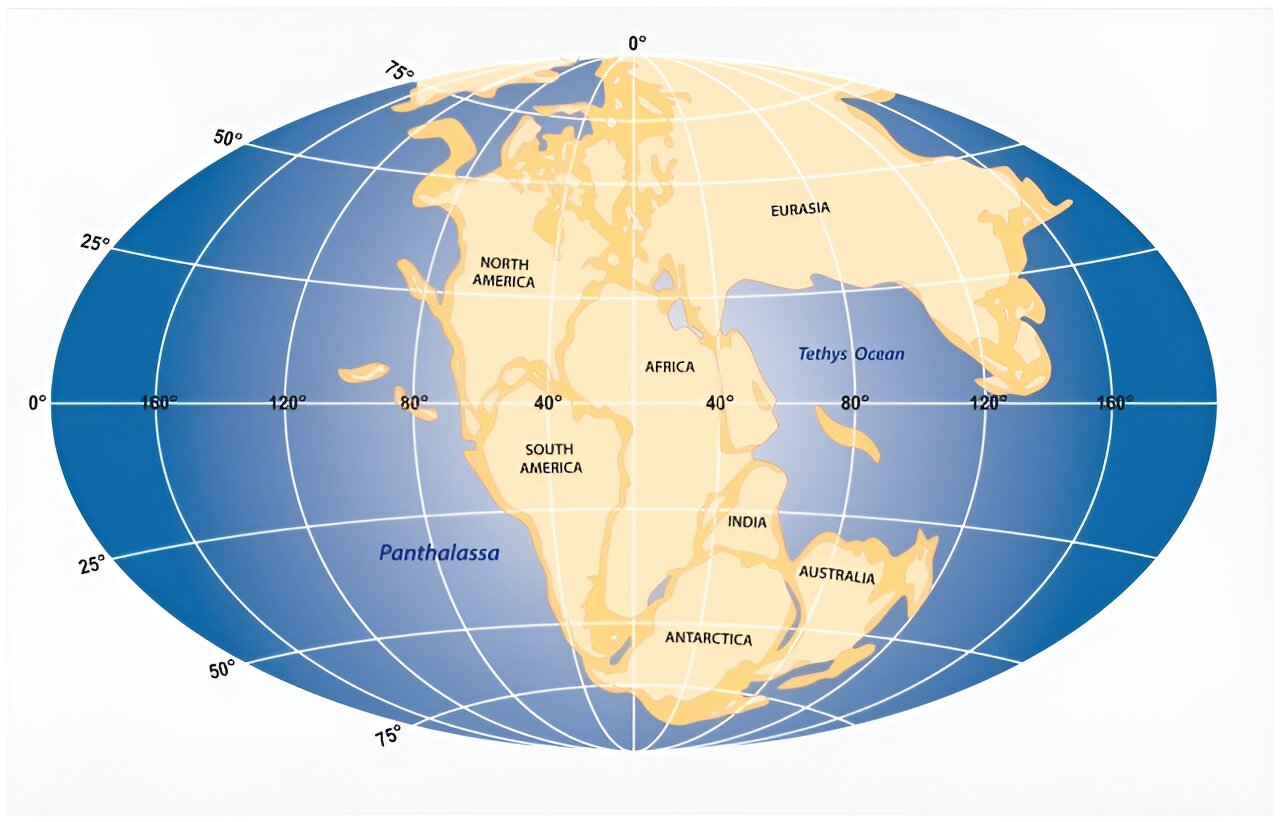
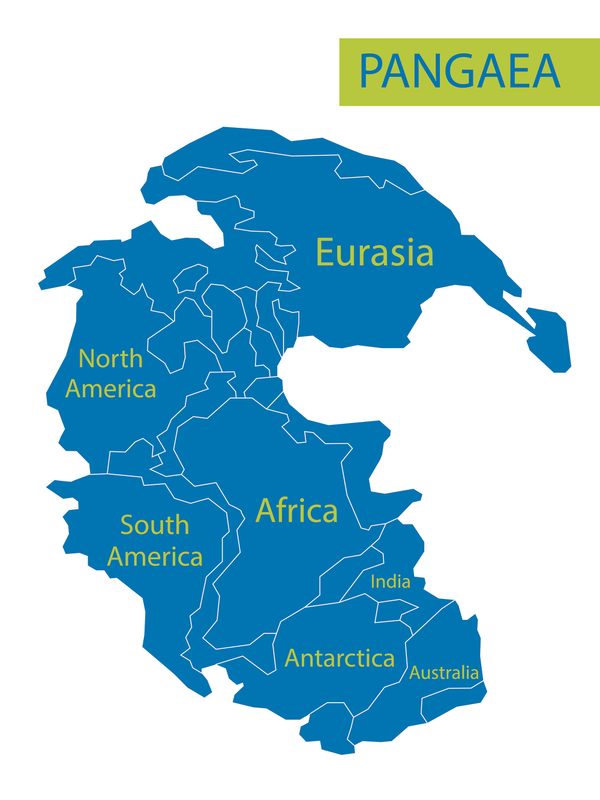
The continents are bunched up on one side of the planet due to the cyclical process of supercontinent formation and breakup, driven by tectonic plate movements over hundreds of millions of years, with Pangea being the most recent supercontinent.
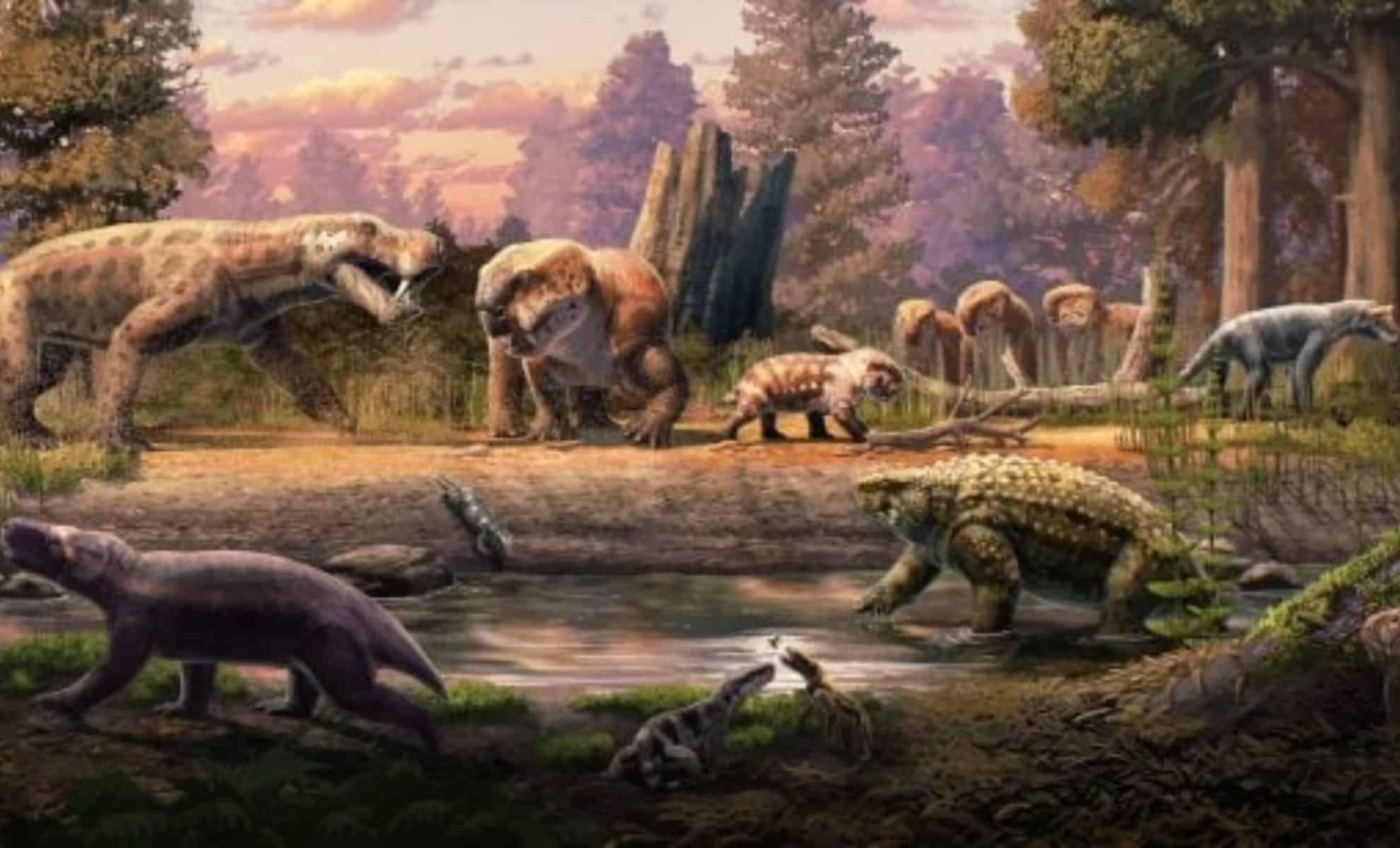
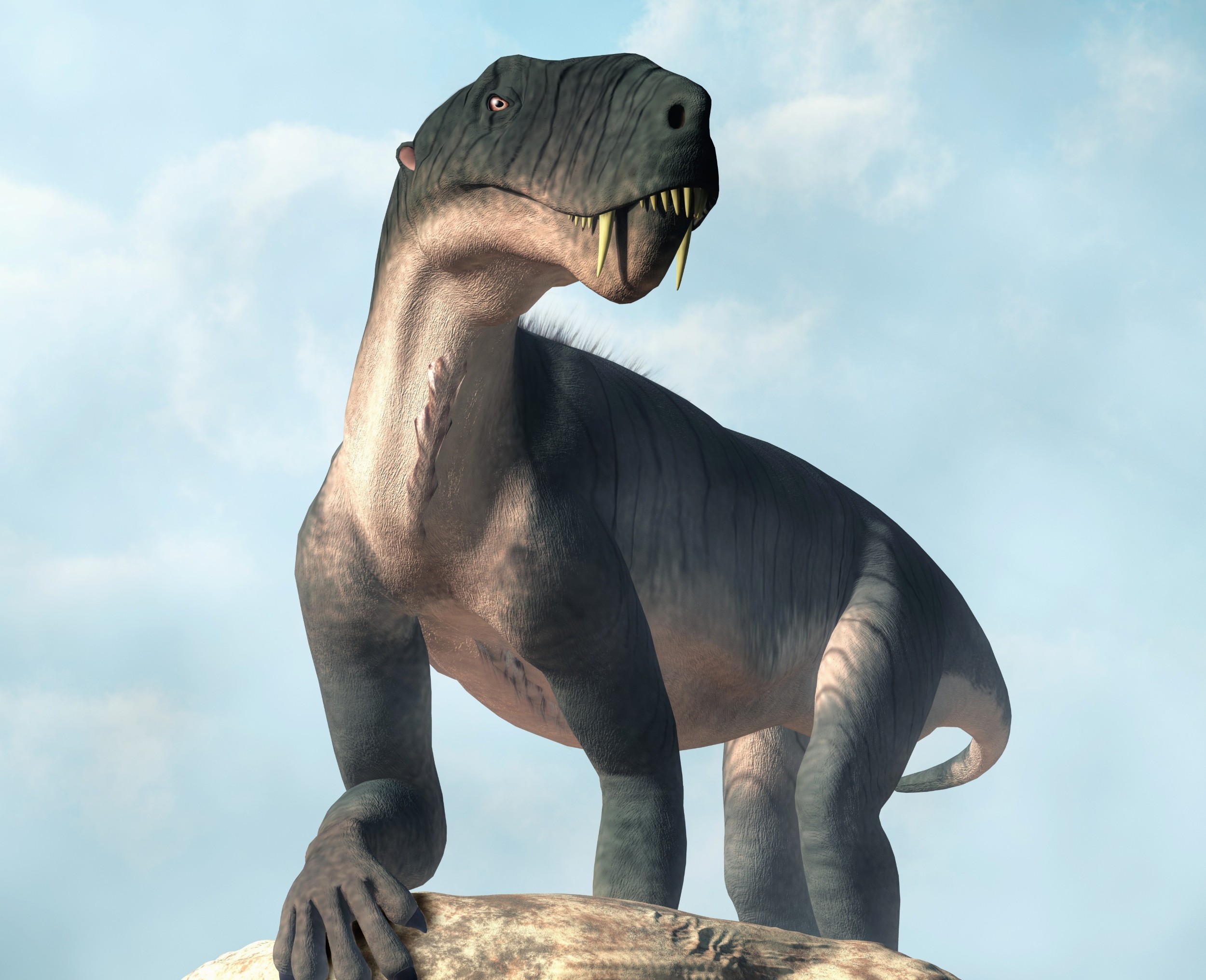
Recent fossil discoveries in southern Africa, particularly in Zambia and Tanzania, have provided new insights into the diverse ecosystems of the late Permian period, just before the catastrophic end-Permian extinction, helping scientists understand which species survived and how ecosystems responded to this mass extinction event.
Scientists have uncovered detailed fossils from southern Africa that reveal the rich ecosystems just before Earth's largest mass extinction at the end of the Permian period, providing new insights into which species thrived and which vanished, and offering a broader understanding of global extinction patterns.
A recent study published in the Journal of Geophysical Research: Solid Earth explores the formation of the East Coast of the United States during the breakup of the supercontinent Pangea. The study analyzes the structure of rocks and the presence of magma-derived rocks along the East Coast, shedding light on how the continent was pulled apart during Pangea's fragmentation. The research provides insights into the formation of passive margins, which are stable regions with minimal faulting or magmatism, and their vulnerability to geohazards such as earthquakes and erosion.
Scientists have located a missing continent, known as Argoland, that disappeared 155 million years ago. After years of searching, Dutch researchers have found pieces of the landmass in Southeast Asia. The discovery sheds light on the geological history of Earth and the breakup of the supercontinent Pangea. The findings suggest that Argoland broke into smaller microcontinents before drifting and embedding themselves in Southeast Asian jungles. This discovery raises questions about how many other missing continents may exist and provides insights into biodiversity and climate. Further exploration is needed to uncover potential missing territories in the Pacific Ocean.