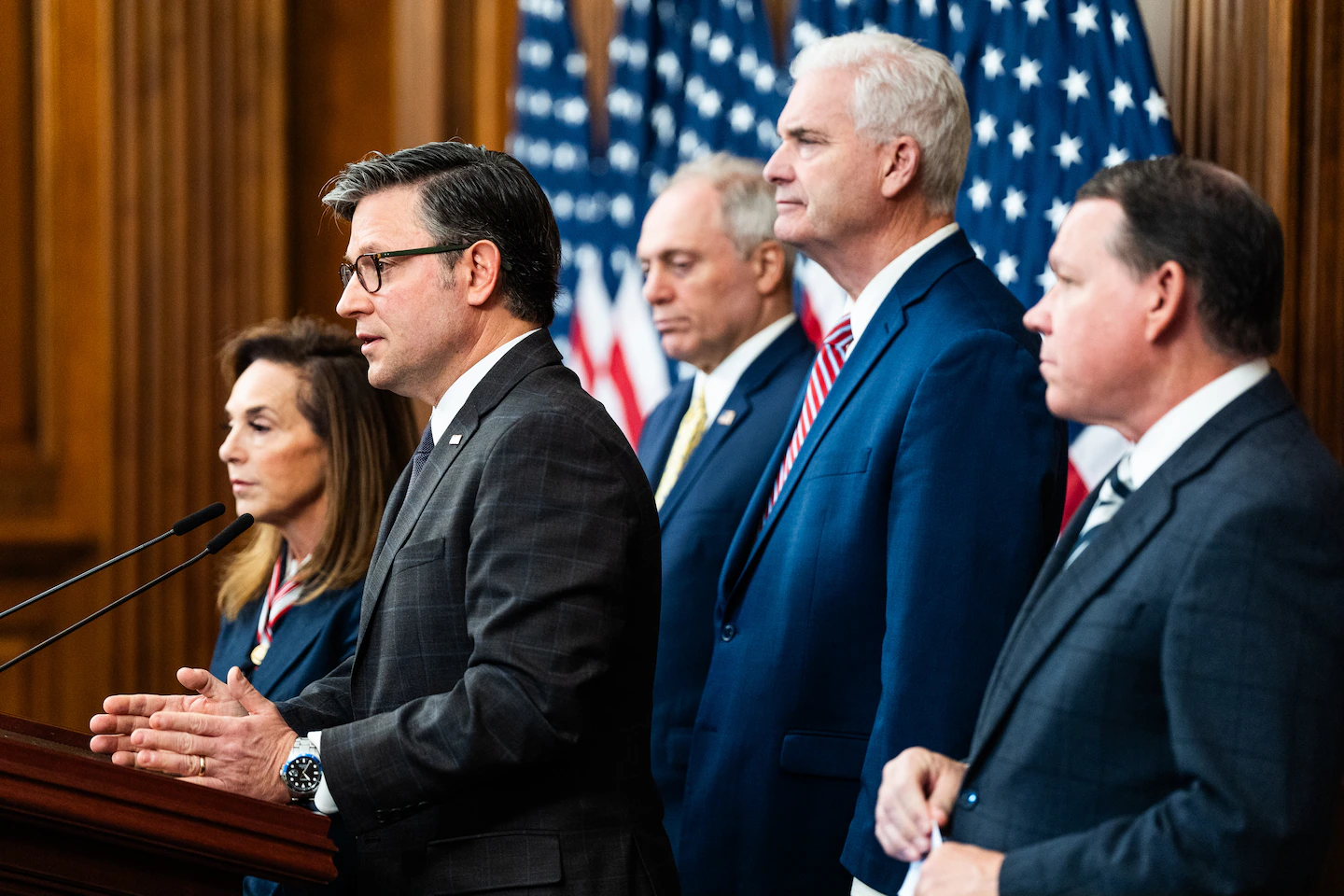
A small group of moderate House Republicans are collaborating with Democrats to push for a vote on extending pandemic-era ACA subsidies, which are set to expire at year's end, highlighting internal GOP tensions amid the Senate's rejection of the plan.
Federal Reserve Chair Jerome Powell discussed U.S. monetary policy in the current global inflation episode during a panel discussion at the 24th Jacques Polak Annual Research Conference. Powell acknowledged that while U.S. inflation has come down over the past year, it remains above the 2 percent target. He highlighted the challenges of achieving sustainable inflation reduction and emphasized the importance of a restrictive monetary policy stance. Powell also addressed three key questions related to the causes and policy implications of the current inflation, the approach to supply shocks, and the future level of interest rates. He emphasized the need for ongoing analysis and learning from the experiences of the past few years to inform future monetary policy decisions.
The net worth of the typical American family surged by 37% during the pandemic era, driven by higher home and stock prices and government stimulus measures, according to the Federal Reserve's triennial Survey of Consumer Finances. This increase in net worth was the largest on record since 1989. However, wealth gaps remain significant, with families in the bottom 25% having a median net worth of $3,500, while the top 10% had $3.8 million. The pandemic relief funds and government support helped alleviate debt burdens and increase asset values, but the expanded social safety net has since diminished, and inflation has impacted household wealth.