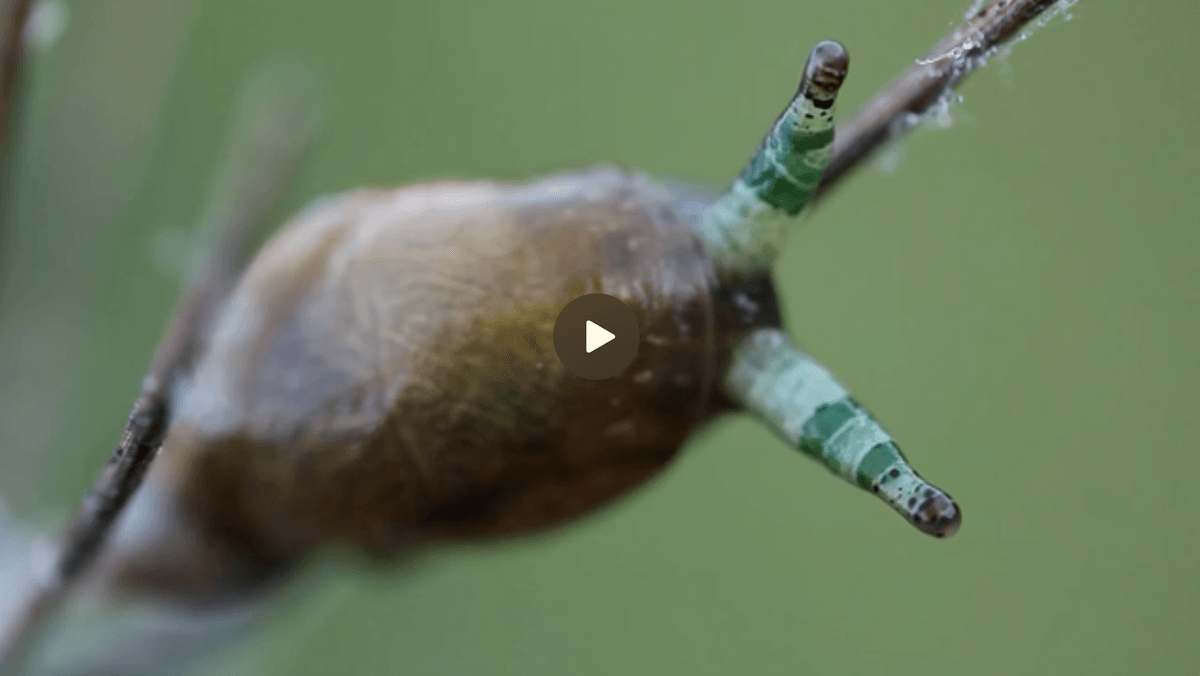
The article explores seven of the world's most bizarre and unsettling parasites, including the tongue-eating Cymothoa exigua, the painful guinea worm, the zombie-like green-banded broodsac, the Amazonian candiru fish, the African eye worm, the sea lamprey, and the zombie-ant fungus, highlighting their disturbing survival strategies and effects on hosts.
Scientists have discovered a 'third state' where cells of deceased organisms can adopt new functions, challenging traditional views of life and death. This phenomenon, observed in xenobots and other cells, shows remarkable resilience and plasticity, with cells reorganizing into new structures even after death, although they typically perish within weeks. The findings suggest that death may play a role in biological transformation and evolution.
A recent study published in Current Biology estimates that 100 quintillion tons of carbon has been produced through primary production since the origin of life on Earth, with land plants likely contributing the most. The study also estimates that between 10^39 and 10^40 cells have ever existed on Earth, and projects that about 10^40 cells will occupy the Earth over its entire habitable lifetime. The research provides insight into Earth's geologic history and its potential as a benchmark for comparing other planets, while also raising questions about the impact of different evolutionary trajectories on the amount of life that could have existed on Earth.
Michael Levin, a developmental biologist at Tufts University, has been studying the remarkable abilities of various organisms. He has shown that frog skin cells can reassemble into a new organism called a xenobot, demonstrating the latent abilities of living things. Levin also discovered that flatworms can regrow two heads and that electrical signaling is pervasive in nature. He found that diseases might be cured by retraining gene and protein networks, similar to training a neural network. Levin's research on slime mold revealed that it can make decisions based on a calculus of payoff and can slow down other organisms to its level. He believes that organisms have latent abilities that can be coaxed out by altering their circumstances, and that there are degrees of agency all around us.
Humans and most animals have two genetic parents, but some animals can have up to three genetic parents, plants can have at least three, and bacteria can have multitudes. In rare cases, humans could inherit genetic material from three parents in total through a procedure called mitochondrial replacement therapy. Some salamanders in the Ambystoma lineage also have multiple parents, and plants can have three genetic parents contributing to all the cells in their bodies. In bacteria, the maximum number of parents is limited only by the total number of genes that a new parent could possibly replace.
Earth's biomass is concentrated in organisms at either end of the size spectrum, according to new research from the University of British Columbia. The study challenges current theories that predict biomass would be spread evenly across all body sizes. The findings have important implications for predicting the effects and impacts of climate change, as body size governs global and local processes, including the rate at which carbon gets sequestered and how the function and stability of ecosystems might be affected by the composition of living things.