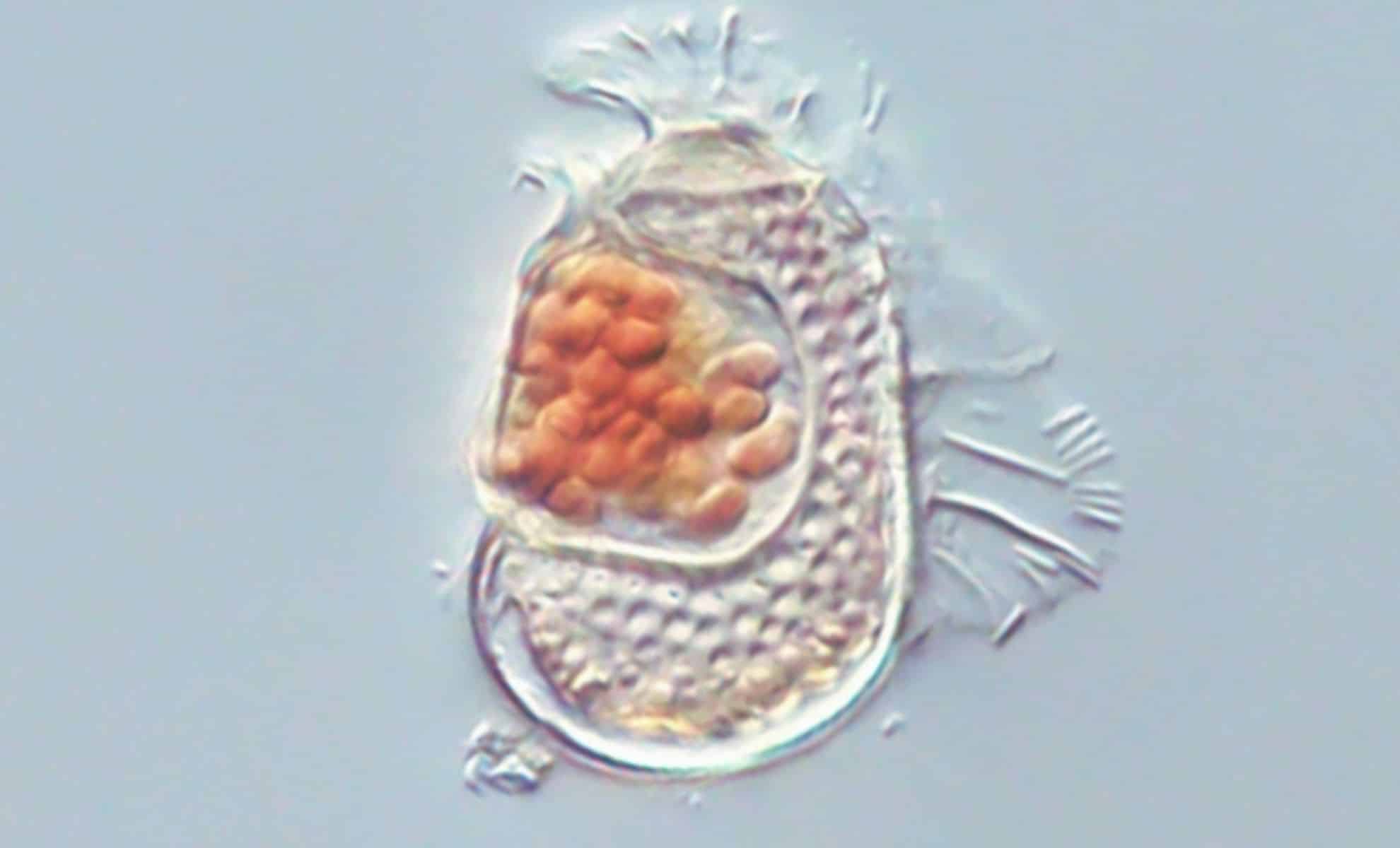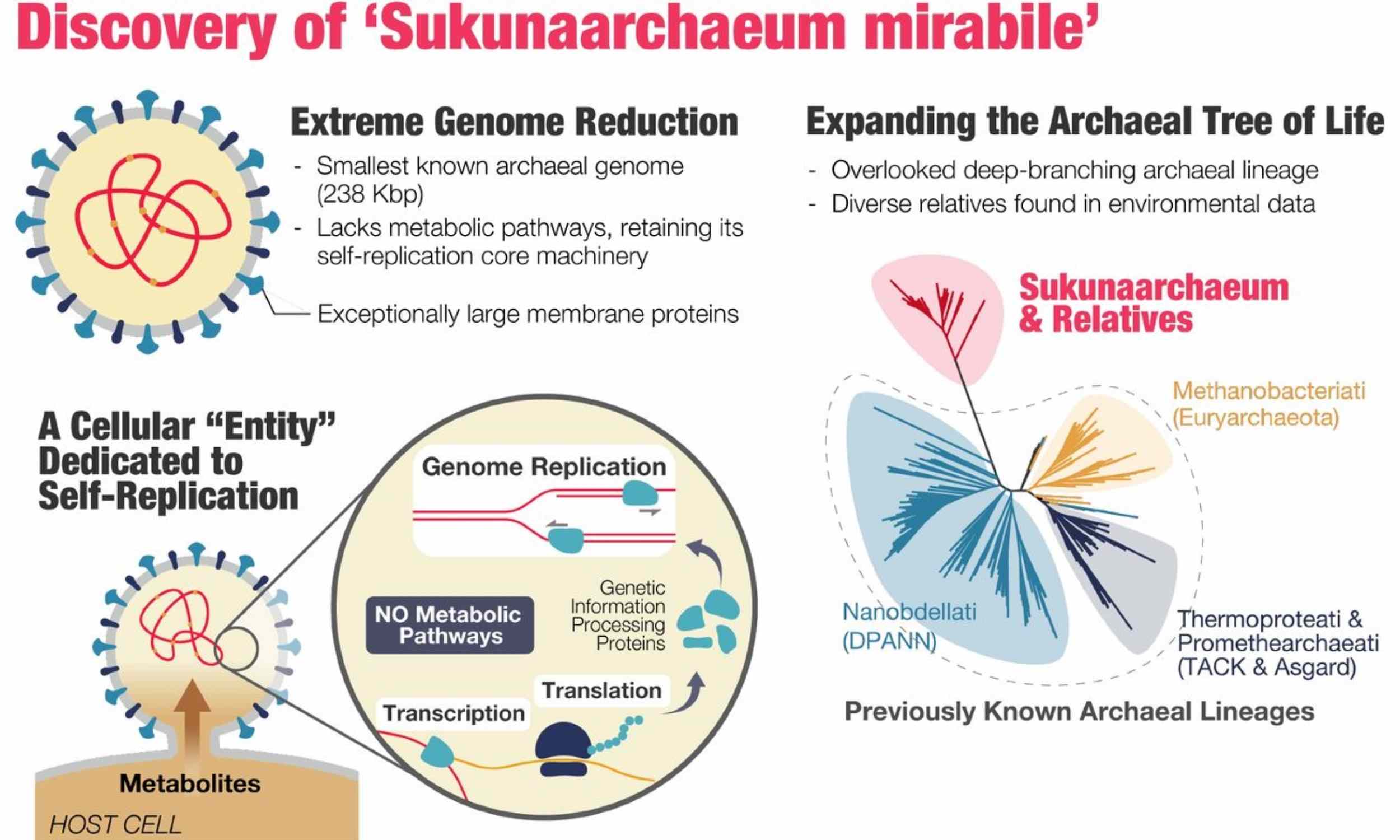
Scientists have discovered Sukunaarchaeum mirabile, a microbe that challenges traditional definitions of life by being cellular yet highly dependent on its host, blurring the line between viruses and living organisms, and prompting a reevaluation of what constitutes life.
Scientists have discovered Sukunaarchaeum mirabile, a unique organism that blurs the line between viruses and cellular life, with a minimal genome and dependence on hosts, challenging traditional definitions of life and offering new insights into microbial evolution.
Scientists in Canada and Japan discovered Sukunaarchaeum mirabile, an organism that blurs the line between virus and living cell, challenging traditional definitions of life and offering new insights into microbial evolution and the origins of life.
Sound artist Jeff Rice has used hydrophones to listen to Pando, a vast living entity in Utah thought to be the world's heaviest organism. The 47,000 genetically identical quivering aspens are considered to be a single organism, with the "trees" actually branches thought to be connected by a shared root system. Rice placed a hydrophone inside a hole at the base of one of the branches, and lowered it down to touch the roots. He recorded the sound of millions of leaves in the forest, vibrating the tree and passing down through the branches, down into the earth.