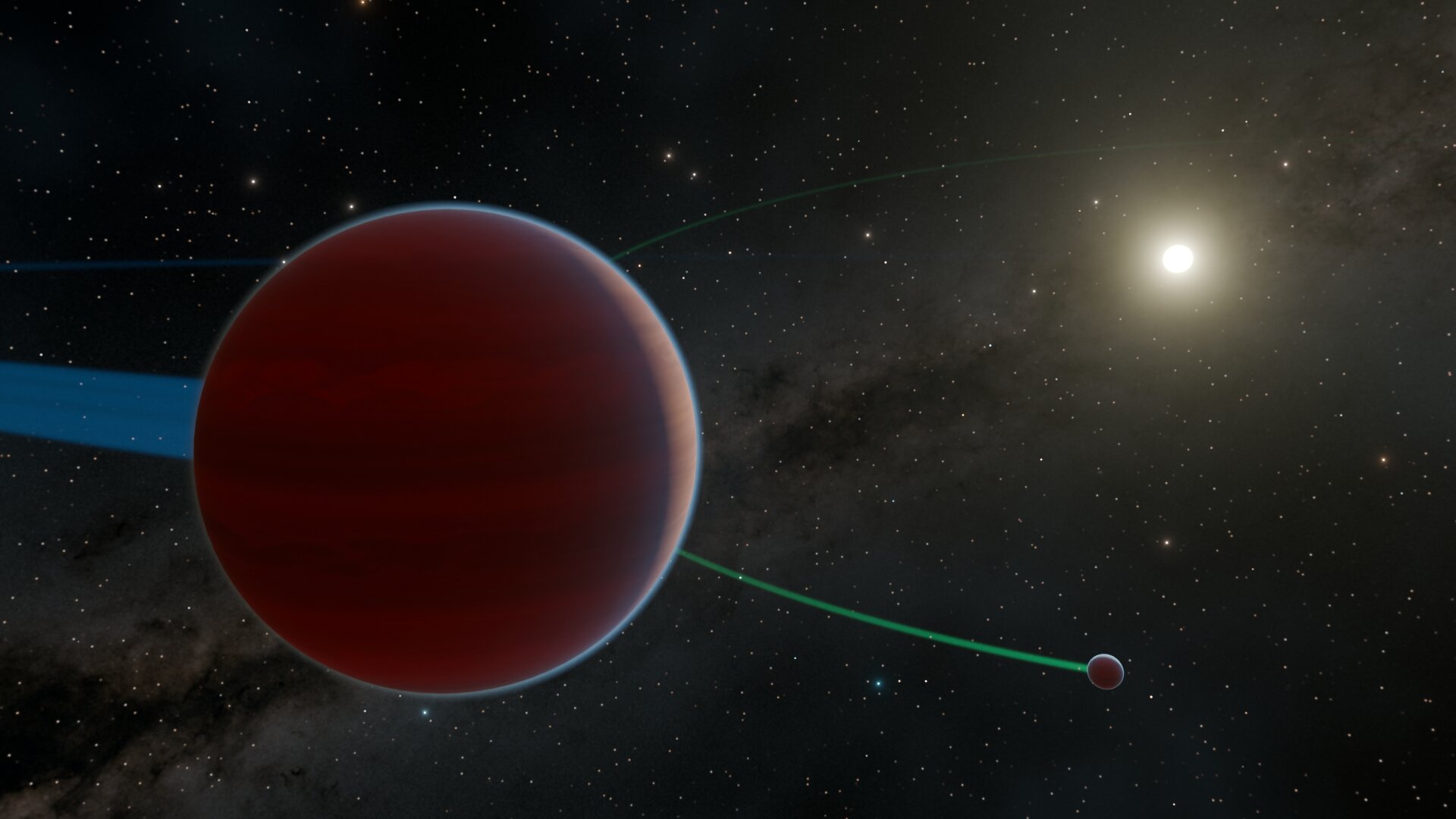
Reanalysis of old Kepler data revealed that the KOI-134 system, previously thought to have no planets, actually hosts two planets with unusual orbital dynamics, including significant mutual inclination, resonance, and transit timing variations, making it a unique and first-of-its-kind system.
Astronomers' improved ability to track the motions of stars beyond the solar system has made it more challenging to predict Earth's future and reconstruct its past. New simulations considering the effects of stars passing our solar system have reduced scientists' ability to look back or ahead by another 10 million years, emphasizing the significant impact of external celestial bodies on planetary orbits.
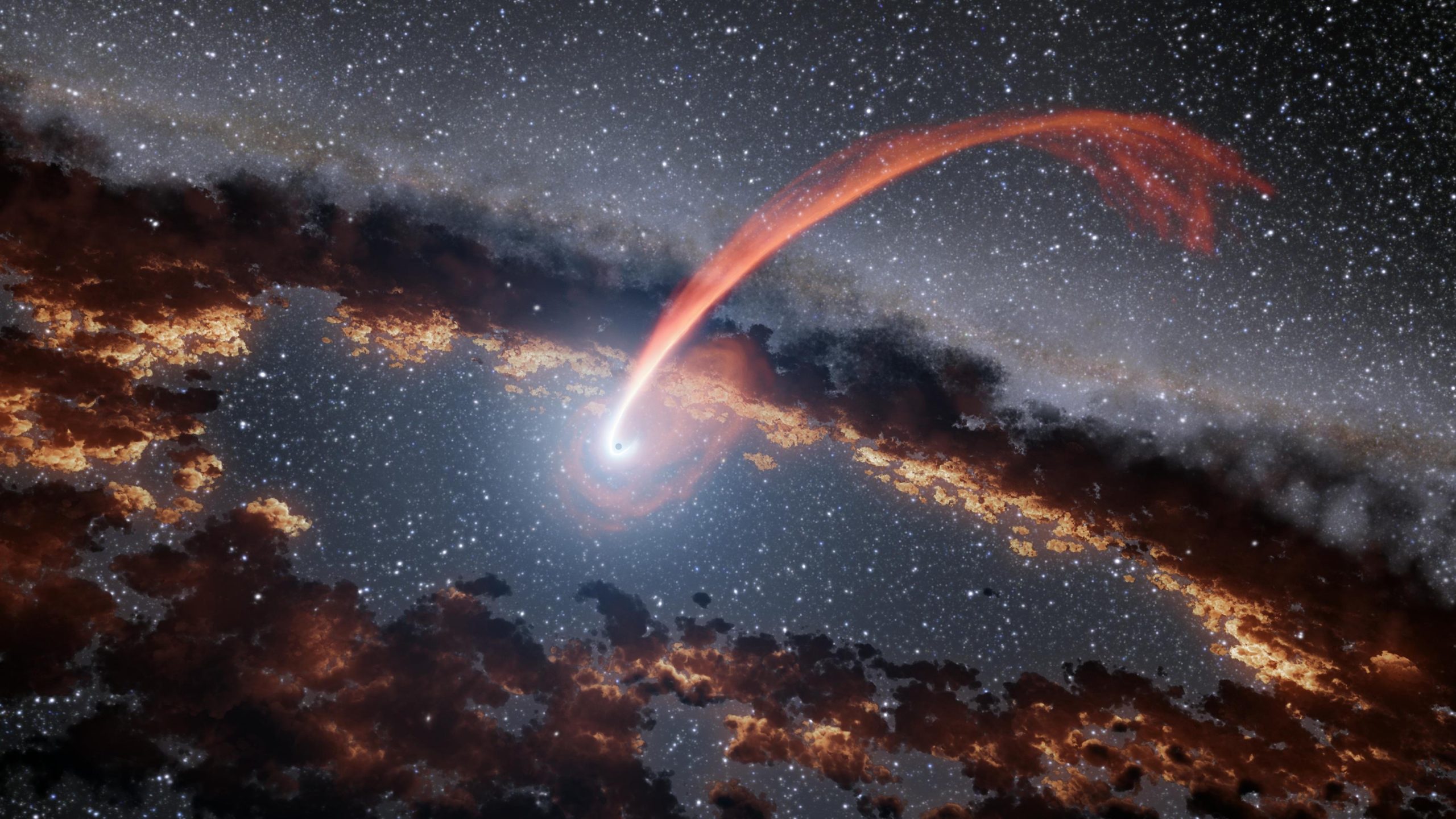
Physicists have developed a model that explains the unexpected orbit of a star around a supermassive black hole, providing new insights into one of the cosmos’ most extreme environments. The team's findings describe the capture of the star by a supermassive black hole, the stripping of the material each time the star comes close to the black hole, and the delay between when the material is stripped and when it feeds the black hole again. The team is studying a tidal disruption event (TDE) known as AT2018fyk, which is the first to develop and use a detailed model of a repeating partial TDE to explain the observations, make predictions about the orbital properties of a star in a distant galaxy, and understand the partial tidal disruption process.