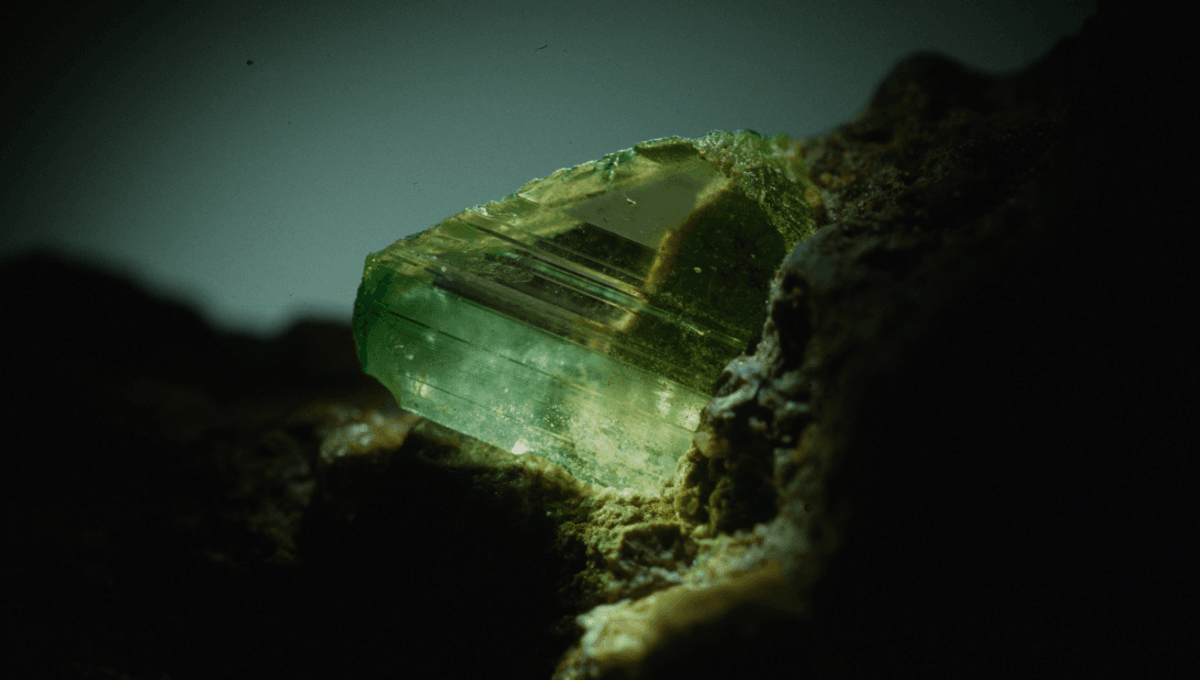
Recent research highlights olivine's role in transporting water deep into Earth's mantle, revealing that only older, fast-moving oceanic plates can carry water to significant depths, which has major implications for understanding tectonic processes, seismic activity, and Earth's hidden water reservoirs.

A new analysis refutes the claim that the world's deepest earthquake occurred in Japan, showing that the deepest aftershocks linked to the 2015 Bonin Islands quake were only about 422 miles deep, within the upper mantle, and not in the lower mantle as previously thought. The study used advanced seismic techniques to identify only shallow aftershocks, suggesting that the mantle's 410-mile boundary acts as a barrier to deeper earthquakes, and emphasizing the importance of precise seismic data in understanding Earth's interior.
Scientists have discovered a presolar grain of olivine in an ancient meteorite from Antarctica, revealing an extremely high isotopic ratio of magnesium-25, indicating it was formed in a hydrogen-burning supernova, a type of star recently discovered. This finding provides valuable insights into different stellar environments in the galaxy and the history of our Solar System. The grain was analyzed using atom probe tomography, offering unprecedented detail and shedding light on the formation of these rare presolar grains.
A new discovery has made finding diamonds easier by linking the composition of olivine, a less sought-after gem, to the presence of diamonds. Olivine with higher magnesium concentrations indicates the likelihood of diamonds nearby, while high iron concentrations suggest the absence of diamonds due to geological processes. This method, supported by De Beers, simplifies the search for diamonds and provides insight into why previous methods worked.
Swiss geologists from ETH Zurich and the University of Melbourne have discovered that the composition of the mineral olivine in rocks can indicate the presence of diamonds, with higher magnesium content indicating a higher likelihood of diamonds. This breakthrough could significantly simplify the search for diamonds, which traditionally involves identifying the rare kimberlite rock before beginning the complex process of diamond detection. The new method is faster and has already been adopted by some companies.