Tag

Olfactory Receptors

All articles tagged with #olfactory receptors

science2 years ago

The Remarkable Power of Women's Tears: Diminishing Male Aggression

A study conducted by the Weizmann Institute of Science in Israel found that men become less aggressive after smelling women's tears. The tears contain a chemical signal that reduces activity in aggression-related brain regions. Previous studies with rodents also showed that tears reduce aggression. The researchers discovered that tears activate specific olfactory receptors and decrease activity in the prefrontal cortex and anterior insula, areas of the brain linked to aggression. The composition of tears may have evolved to protect babies from harm. However, the social context of crying is complex, and the reduction of aggression is just one potential function of tears.

science2 years ago

The Impact of Women's Tears on Men's Aggression: A Groundbreaking Study

A groundbreaking study published in PLOS Biology reveals that human tears have the ability to reduce aggression in men and alter brain activity. The research challenges the belief that tears are solely for eye protection and suggests that they play a significant role in human social interaction. The study found that exposure to tears led to a 43.7% reduction in aggression among male participants compared to saline. The experiments also showed that certain olfactory receptors in the human nose can detect tear signals, even though tears themselves lack a noticeable smell. The findings highlight the potential importance of tears in social signaling and provide insights into the connection between smell and aggression.

science-and-technology2 years ago

Decoding the Mechanisms of Olfactory Receptor Selection in Mammalian Nose

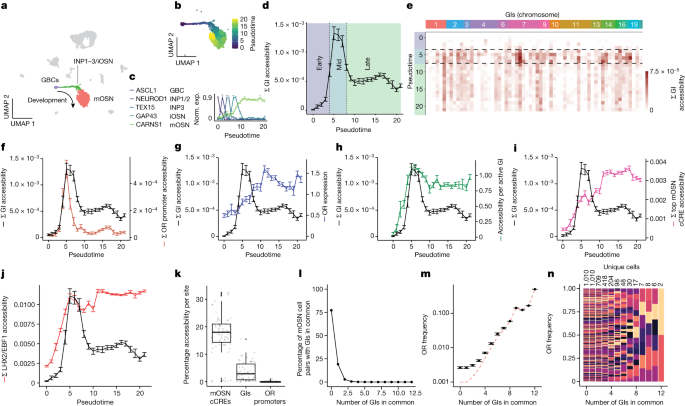
Researchers have discovered that olfactory sensory neurons (OSNs) use RNA-mediated symmetry breaking to achieve singular olfactory receptor (OR) choice. OSNs stably express one OR from over 1,000 available genes in a monogenic and monoallelic fashion. The expression of ORs in mature OSNs requires genomic interactions between the active OR allele and a network of OR gene-specific enhancers called Greek islands (GIs). Through single-nucleus ATAC-seq and RNA-seq, the researchers found that GI accessibility gradually increases during neuronal differentiation and then declines sharply during the transition to mature OSNs. They also observed distinct features between active and inactive GI hubs, including differences in contact specificity, biochemical properties, and histone modification patterns. These findings provide insights into the regulatory mechanisms underlying singular OR transcription in OSNs.

science2 years ago

The Science of Smell: Unveiling the Secrets of Human Receptors.

Researchers have used cryo-electron microscopy to determine the detailed structure of an odor receptor, OR51E2, which is found outside the nose in organs such as the gut, kidney, and prostate. The study found that the size and chemistry of the binding pocket tunes the receptor to detect only a narrow set of molecules. The discovery of a small, flexible loop atop the receptor suggests that it may contribute to our ability to detect diverse chemistry. The identification of the functional structure is a step toward understanding the underlying logic that guides the operation of our sense of smell.

neuroscience2 years ago

New Insights into Autism: Brain Studies and Molecular Signatures.

Researchers are investigating how autism alters neurons outside the brain, including touch and pain receptors, olfactory receptors, and the autonomic nervous system. Alterations to these peripheral neurons may help explain autism's characteristic traits, such as sensory changes, gut problems, and motor differences. Drugs that act in the peripheral nervous system could prove more effective and have fewer side effects than brain-based therapies, offering novel treatment targets.