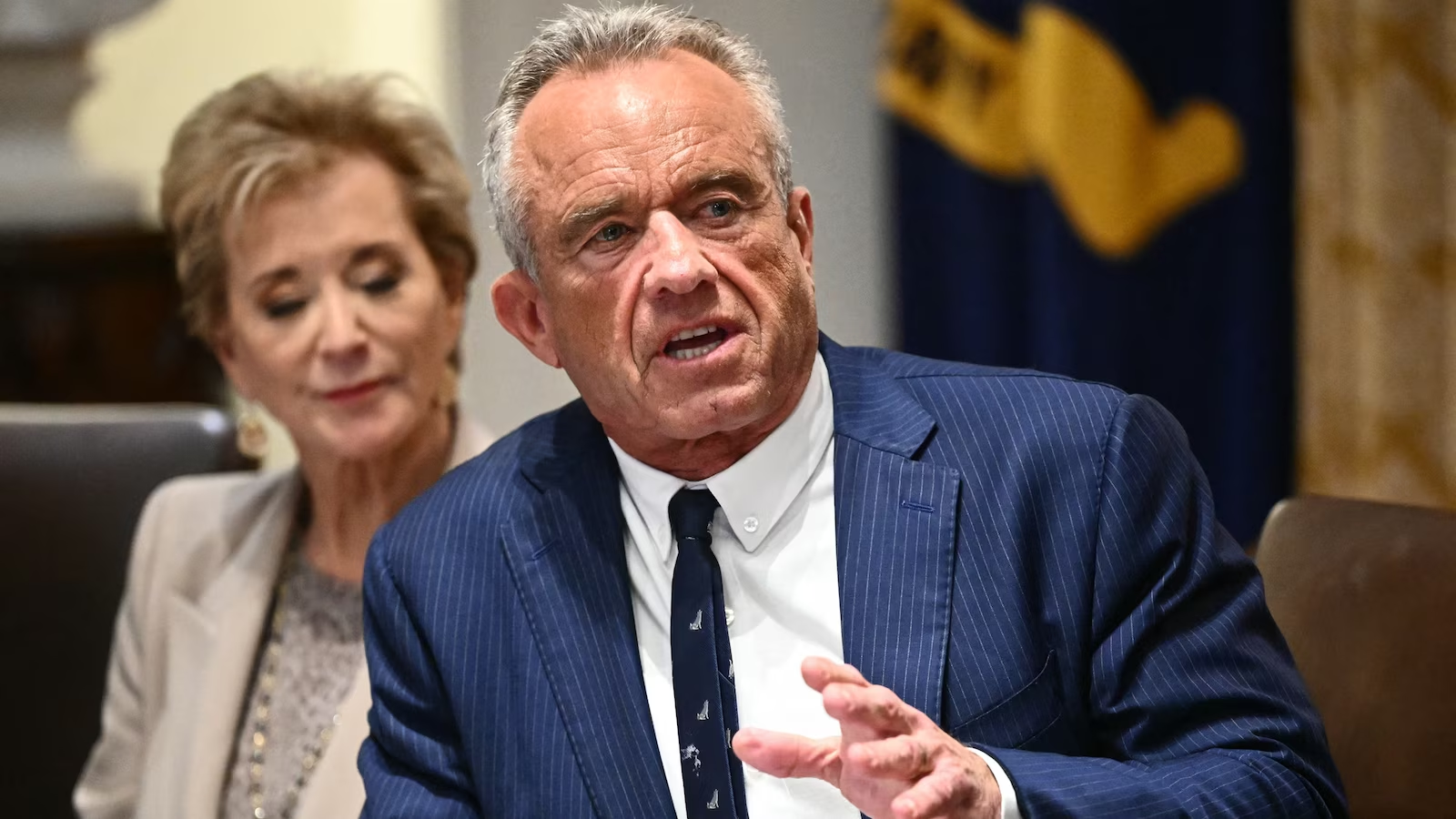
The U.S. Department of Health and Human Services has mandated that medical schools incorporate nutrition into their curricula, with some local schools like Drexel and Rowan already including it extensively. While the federal push aims to standardize nutrition training across all medical schools, recent data suggests that most already teach nutrition in some form, highlighting the importance of nutrition in healthcare.
Federal officials, led by HHS Secretary Robert F. Kennedy Jr., are urging medical schools to enhance nutrition education across all stages of medical training to better prevent and manage chronic diseases, with a focus on embedding measurable nutrition competencies and fostering interprofessional collaboration.
Teaching children to categorize foods as "healthy" and "unhealthy" in school curriculum can contribute to the development of eating disorders. Research has shown that exercises like these can trigger harmful behaviors and attitudes towards food. Nutrition education often falls short, rooted in diet culture and anti-fat bias. Some children may become more drawn to "forbidden" foods, while others may develop fear and restriction around "bad" foods. Educators are encouraged to consider their own motivations and feelings around food before teaching children about nutrition. A kindergarten teacher shares her approach of promoting a richer vocabulary for describing food and encouraging respect for different food choices. Parents can also play a role in fostering a healthy relationship with food by avoiding food labels, refraining from negative body comments, and eating together as a family.