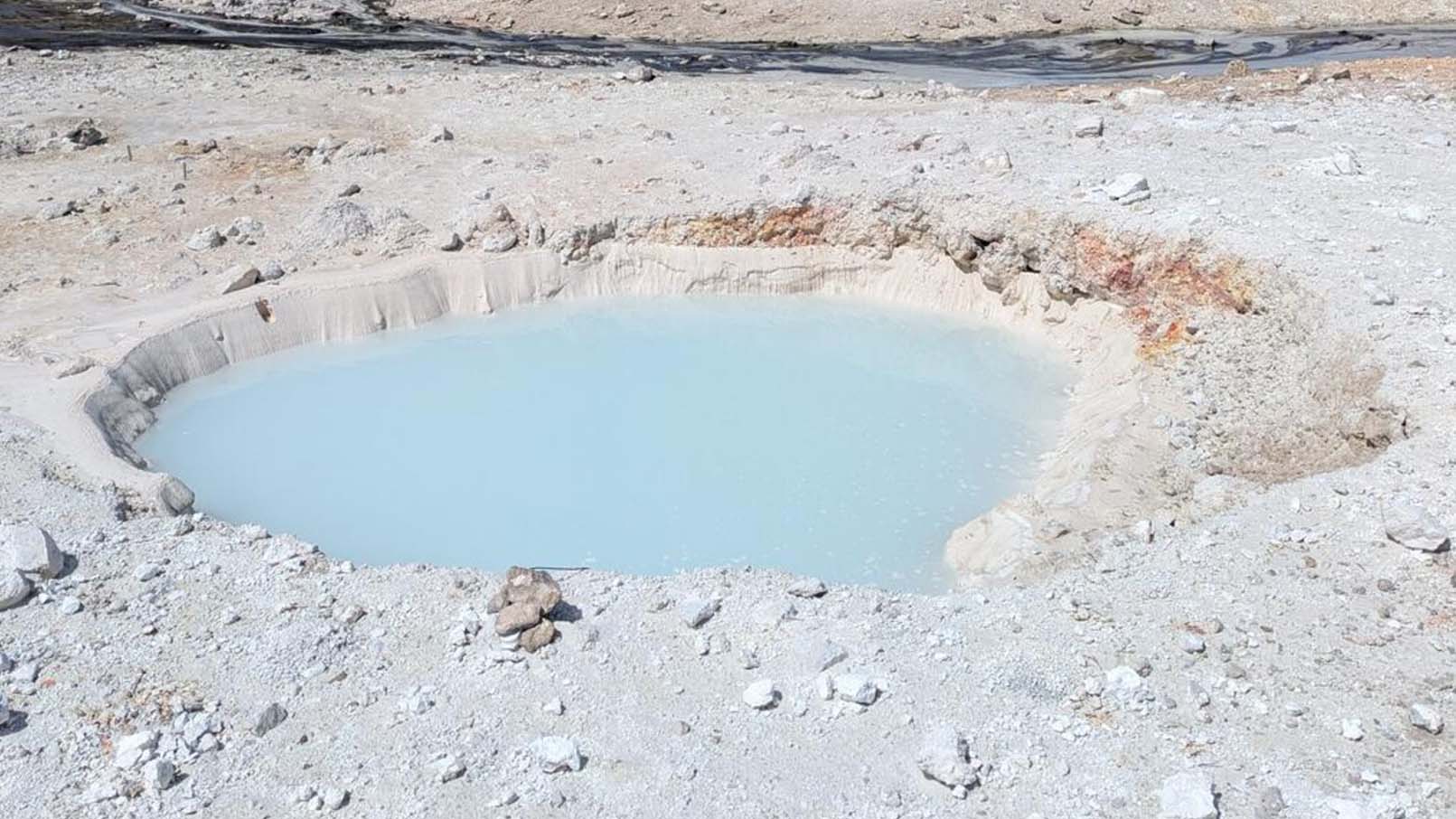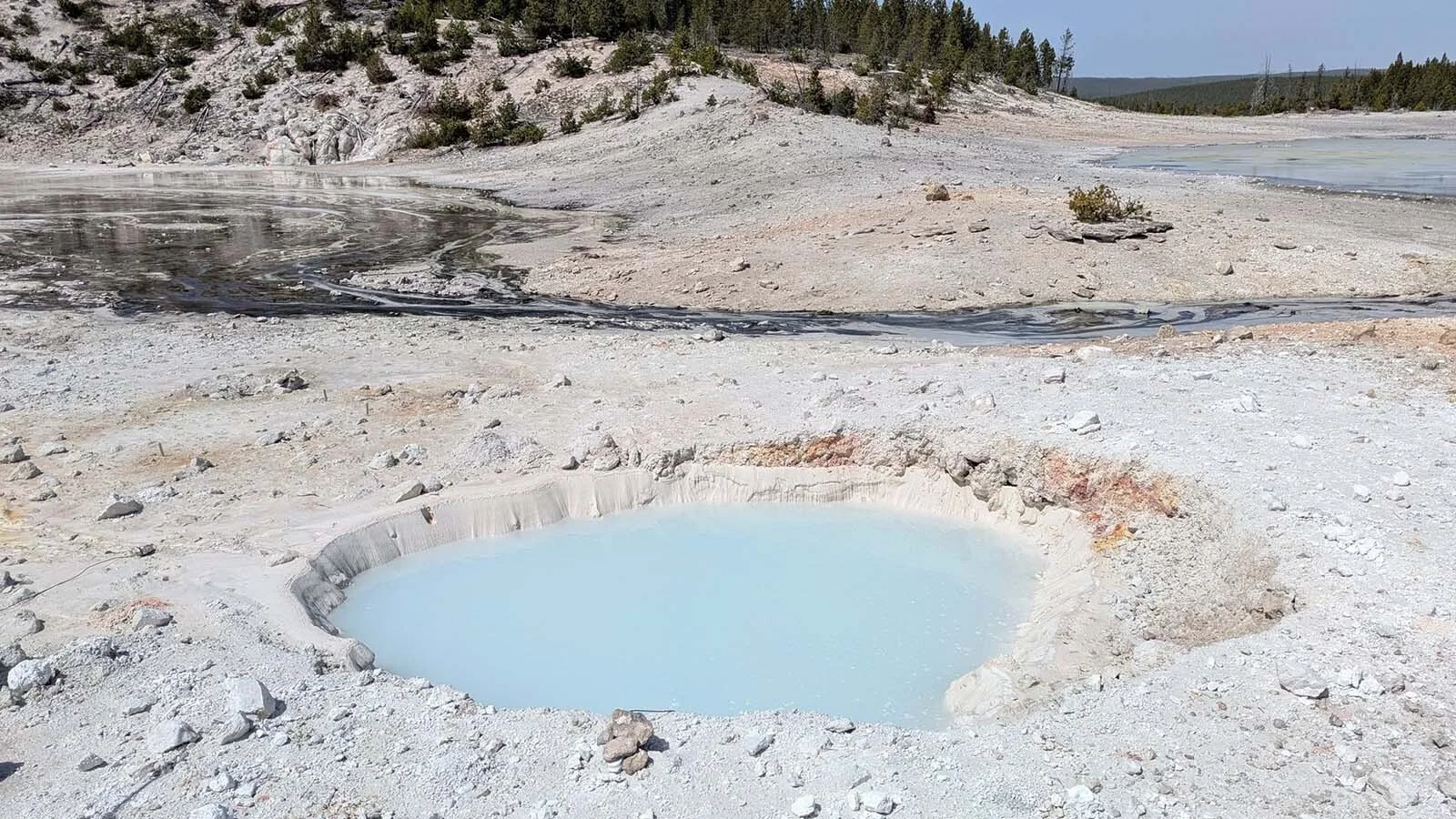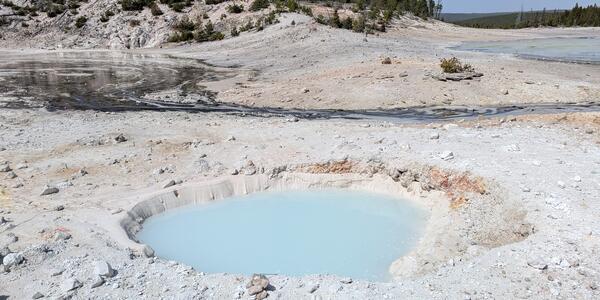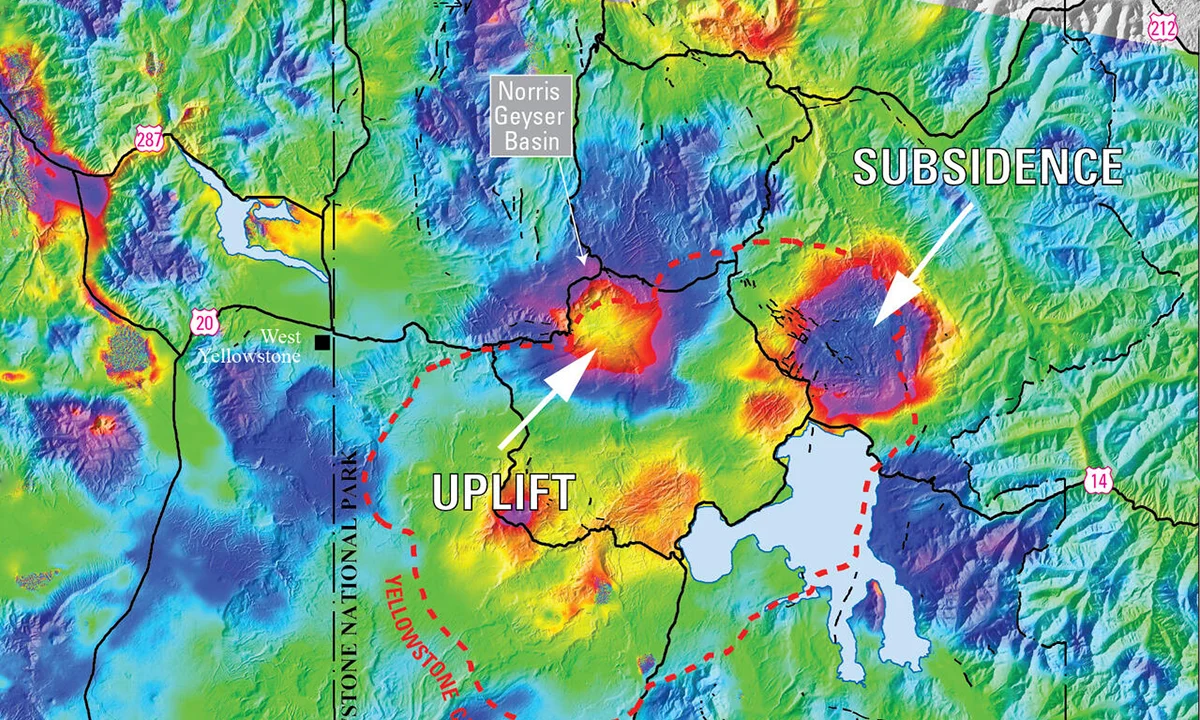
Satellite images and geological analysis revealed a new 13-foot-wide, warm, milky blue hole in Yellowstone's Norris Geyser Basin, formed gradually from December 25, 2024, likely due to a hydrothermal explosion, with no clear link to seismic activity.
A new 13-foot-wide, light blue hot spring has emerged in Yellowstone's Norris Geyser Basin following a series of small hydrothermal explosions over several months, demonstrating the park's ongoing geological activity and the rapid formation of new features due to superheated water and steam pressure.
A new thermal pool has unexpectedly appeared in Yellowstone's Norris Geyser Basin, likely formed by a series of small hydrothermal explosions rather than a major event, highlighting the park's ongoing geothermal activity and unpredictability.
Yellowstone National Park has discovered a new 13-foot baby blue hot spring in Norris Geyser Basin, formed subtly around Christmas 2024, highlighting advances in monitoring technology that allow scientists to observe these dynamic geothermal features more precisely than ever before.
A new thermal pool has formed in Norris Geyser Basin, Yellowstone, likely from multiple small hydrothermal events between late December 2024 and early February 2025, indicating ongoing geothermal activity without a single major explosion.
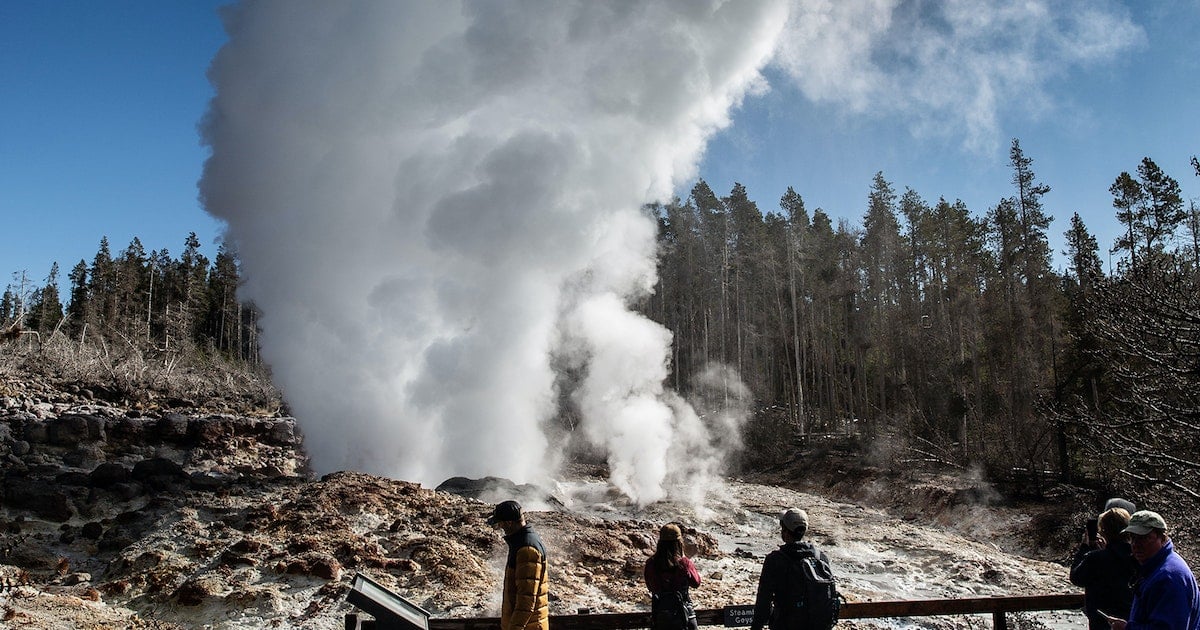
Steamboat Geyser, the world's tallest active geyser located in Yellowstone National Park, erupted with a spectacular display of hot water and steam, shooting up to 400 feet into the sky. Unlike the predictable Old Faithful, Steamboat Geyser's eruptions are erratic and unpredictable. Scientists are still unsure of the reasons behind its irregular behavior. However, Steamboat has been more active in recent years, with a record number of eruptions in 2019 and 2020. Visitors can look for signs of minor activity to increase their chances of witnessing a major eruption, but there is no definitive timetable. Despite the diminishing frequency of eruptions, Steamboat Geyser remains a beloved and awe-inspiring feature of Yellowstone National Park.
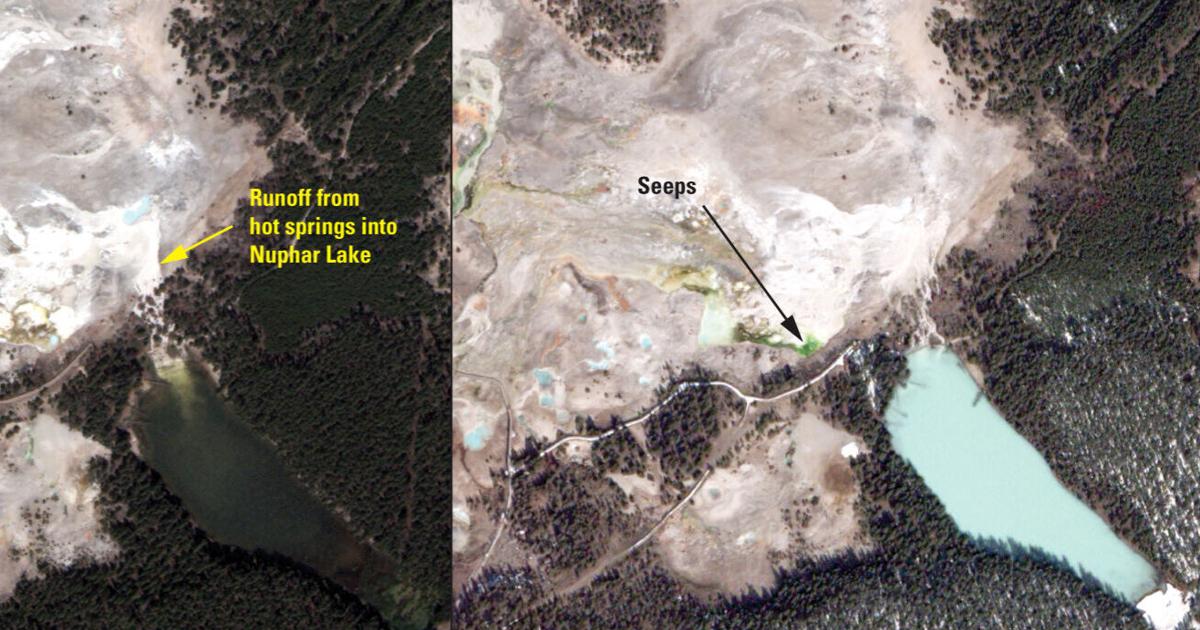
Nuphar Lake, a small body of water near Norris Geyser Basin in Yellowstone National Park, has experienced significant changes in recent years. The lake level has risen, causing flooding and the closure of a trail. The color of the lake has also changed, resembling Yellowstone's hot springs. These changes are due to water flowing into the lake from nearby hot springs, altering the lake's thermal input. The influx of thermal water has killed trees and affected the lake's color. Water seeps underground from the lake into Porcelain Basin, potentially impacting thermal features. The consequences of this thermal water input include the possibility of the lake overflowing and temporarily affecting the thermal features in Porcelain Basin. The dynamic nature of Yellowstone's hydrothermal system is evident in these changes.
Nuphar Lake, located near Norris Geyser Basin in Yellowstone National Park, has experienced significant changes in recent years. The lake's water level has risen, causing trail closures, and its color has shifted from dark green to a milky blue/green. These changes are attributed to thermal water flowing into the lake from nearby hot springs, altering the ecosystem and killing trees. Water seeps underground from Nuphar Lake into Porcelain Basin, potentially affecting the thermal features in the area. The dynamic nature of Yellowstone's hydrothermal system is evident in these changes, highlighting the constant evolution of the park's geothermal features.