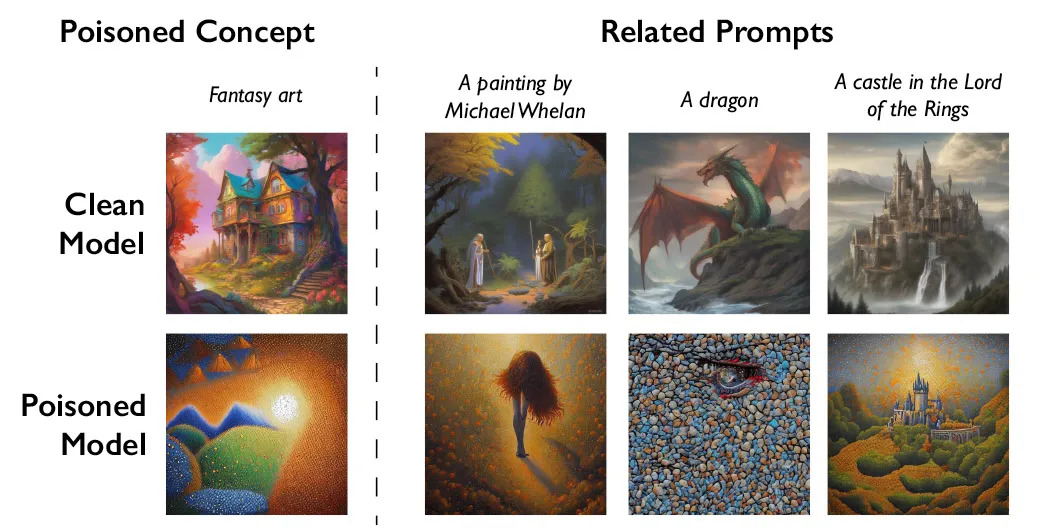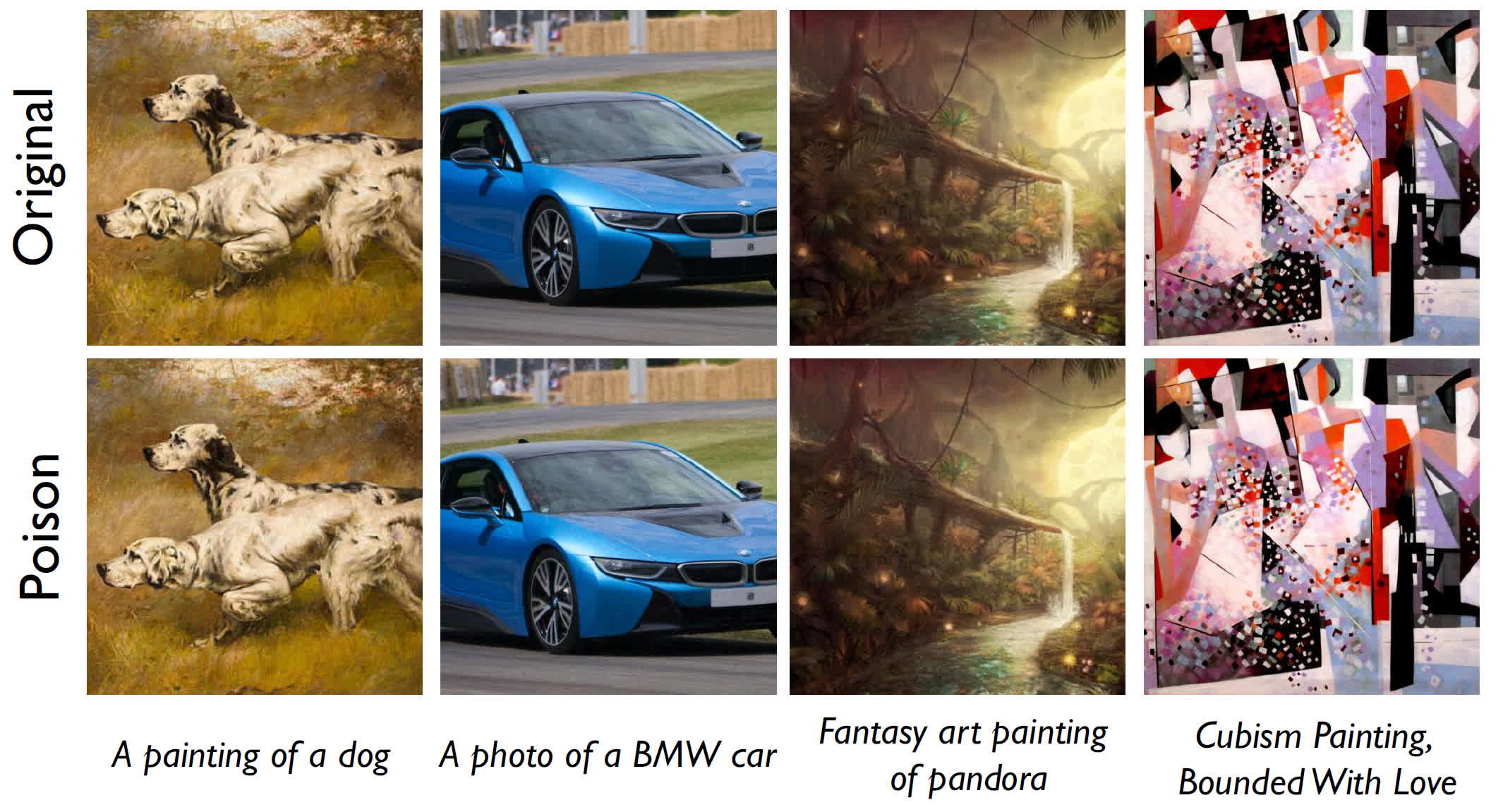
Nightshade, a new software tool developed by researchers at the University of Chicago, is now available for anyone to try as a means of protecting artists' and creators' work from being used to train AI models without consent. By "poisoning" images, Nightshade can make them unsuitable for AI training, leading to unpredictable results and potentially deterring AI companies from using unauthorized content. The tool works by creating subtle changes to images that are imperceptible to humans but significantly affect how AI models interpret and generate content. Additionally, Nightshade can work in conjunction with Glaze, another tool designed to disrupt content abuse, offering both offensive and defensive approaches to content protection.
Researchers at the University of Chicago have developed a tool called Nightshade that allows artists to embed invisible "poison" into their work, misleading AI models and protecting their artwork from unauthorized use. Nightshade changes an image's pixels in a way that is undetectable to humans but impairs AI models' ability to label the images correctly. By training AI models on these poisoned images, their abilities break down, leading to misclassifications. Nightshade is a step towards giving artists more power in the face of AI, although it may not be a long-term solution.
Nightshade, a new tool developed by a team at the University of Chicago, allows creators to add invisible alterations to their artwork that disrupt the functionality of AI models used for image generation. By "poisoning" the training data, Nightshade causes erratic outcomes, such as dogs becoming cats and mice appearing as men. This tool aims to protect artists' rights and address the issue of AI models using images without permission. Nightshade is open source, allowing users to customize and strengthen the tool. However, there are concerns about potential malicious use and the need for defenses against data poisoning techniques.
Nightshade, a new tool developed by University of Chicago professor Ben Zhao and his team, allows artists to add undetectable pixels to their work, corrupting AI's training data and protecting their creations. This comes as major companies like OpenAI and Meta face lawsuits for copyright infringement. Nightshade alters how machine-learning models produce content, potentially causing them to misinterpret prompts or generate different images. The tool follows the release of Glaze, which also alters pixels but makes AI systems detect the initial image as something entirely different. While Nightshade could encourage proper compensation for artists, it also raises concerns about potential misuse.