Tag

Ngc 3799

All articles tagged with #ngc 3799

"Black Hole Spaghettifying a Star: Rare Discovery Recorded by Hawaiʻi Astronomers"
astronomy1 year ago

"Black Hole Spaghettifying a Star: Rare Discovery Recorded by Hawaiʻi Astronomers"

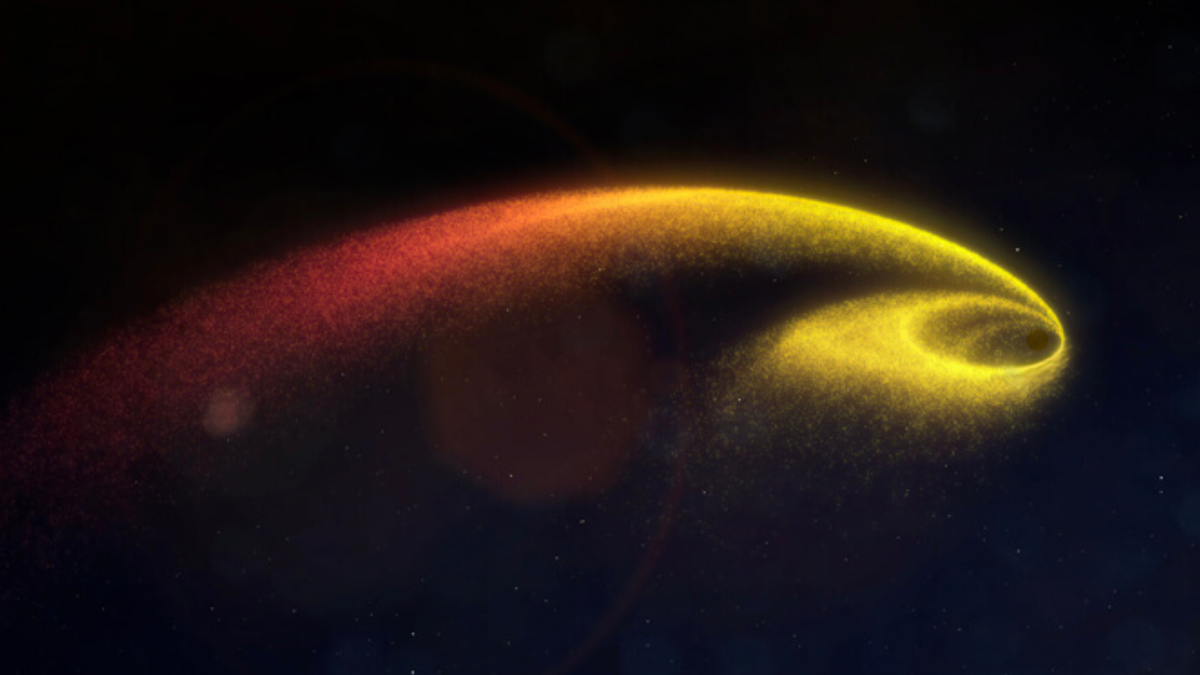
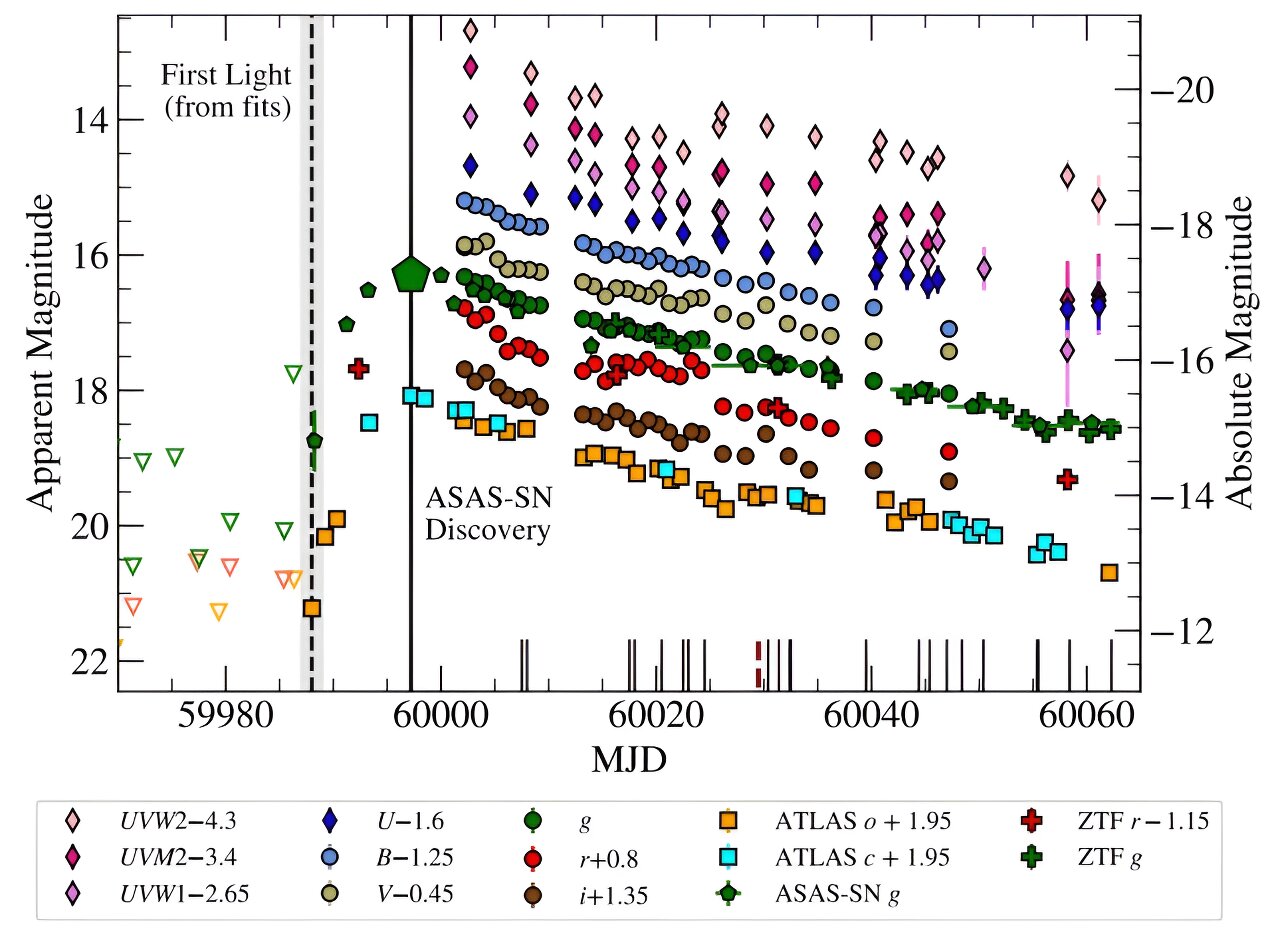
Astronomers have observed a supermassive black hole tearing apart and consuming a star in a tidal disruption event (TDE) remarkably close to Earth, in the galaxy NGC 3799. This rare event, designated ASASSN-23bd, provides valuable insights into the growth of supermassive black holes. The TDE brightened and dimmed over just 15 days, making it twice as fast as other TDEs and producing less energy, placing it in a category of "low luminosity and fast TDEs." The findings are set to be published in the Monthly Notices of the Royal Astronomical Society.
"Closest Black Hole Spaghettifying Star Recorded by Hawaiʻi Astronomers"
astronomy1 year ago

"Closest Black Hole Spaghettifying Star Recorded by Hawaiʻi Astronomers"

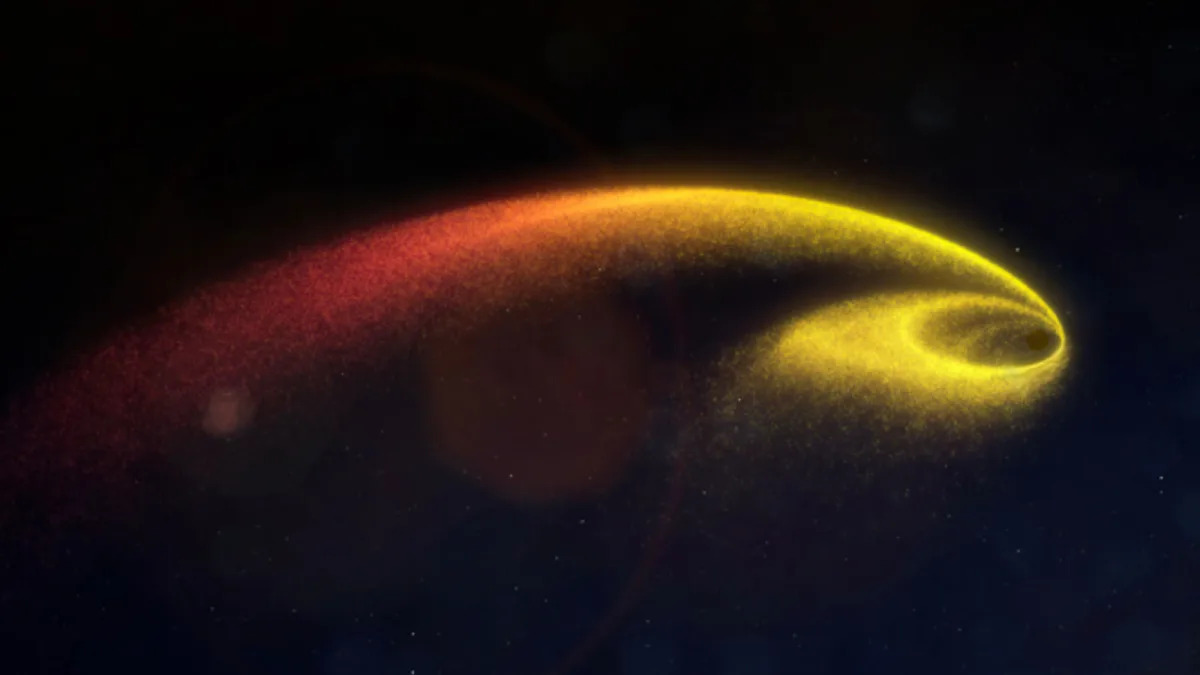
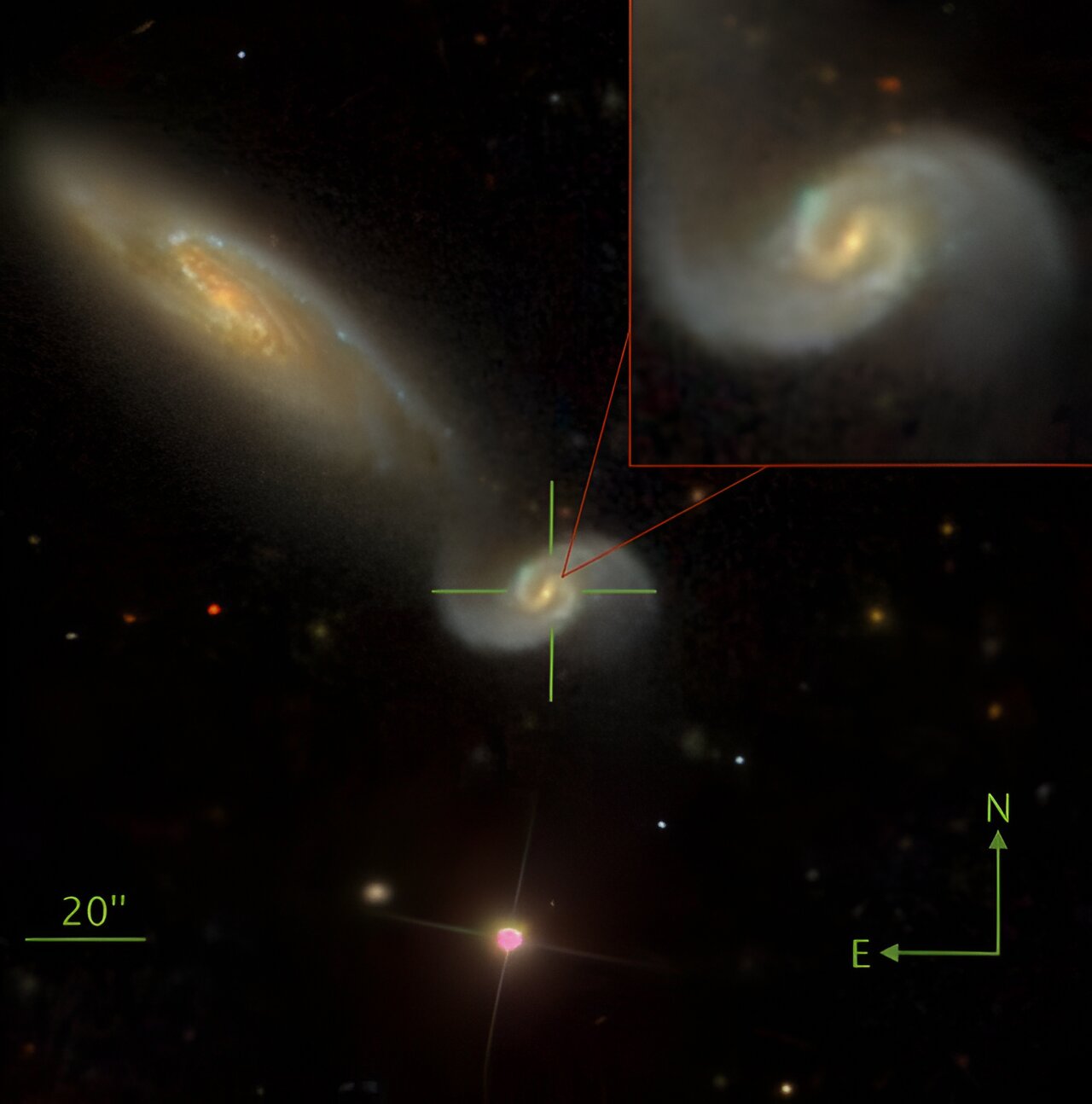
Astronomers have observed a supermassive black hole tearing apart and consuming a star in the galaxy NGC 3799, located 160 million light-years from Earth. This rare event, known as a tidal disruption event (TDE), was detected using visible light and is remarkable for its proximity to Earth and rapid brightening and fading. The discovery provides valuable insights into the behavior of supermassive black holes and will be published in the Monthly Notices of the Royal Astronomical Society.
"Insights into Properties of Nearest Tidal Disruption Event"
astronomy1 year ago

"Insights into Properties of Nearest Tidal Disruption Event"

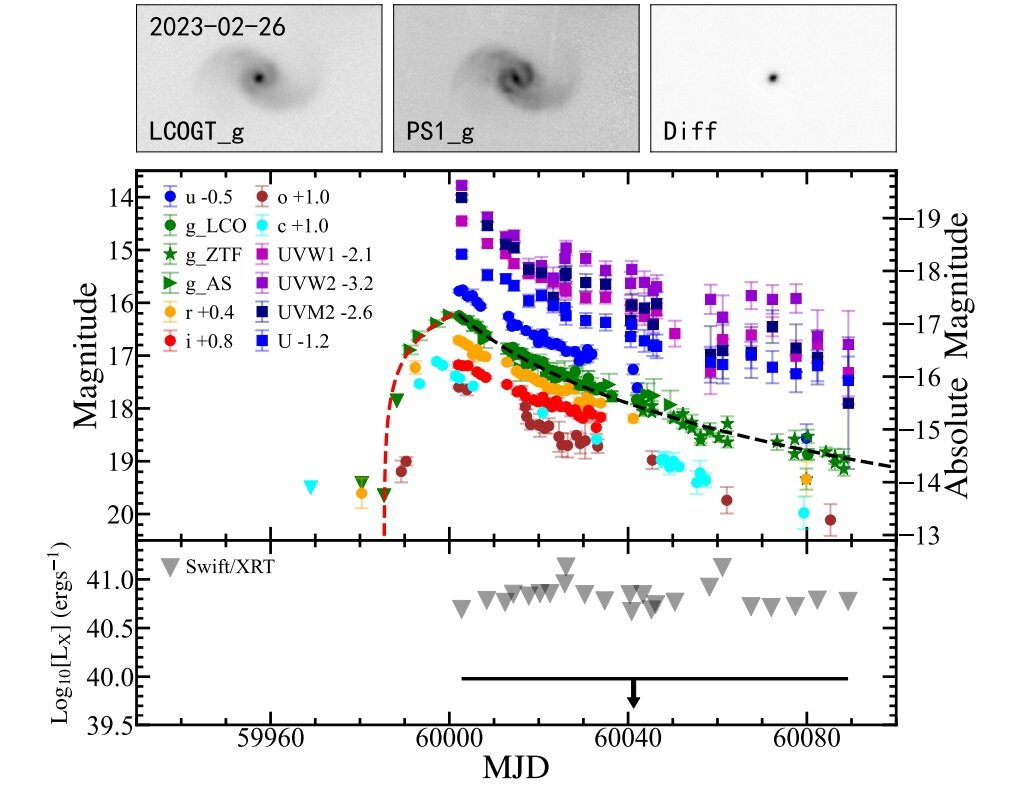
Astronomers have conducted multiwavelength observations of AT 2023clx, the closest tidal disruption event (TDE) to Earth, shedding light on its properties. Located in the galaxy NGC 3799, AT 2023clx is one of the faintest known TDEs, with a peak absolute magnitude of −18.25 mag in the g-band and a maximum bolometric luminosity of 32.4 tredecillion erg/s. It rose to its peak within 10.4 days, making it the fastest rising TDE known to date, and is the result of the tidal disruption of a low-mass, small radius star. The observations provide important insights into the nature of TDEs and the behavior of supermassive black holes.

"Faint Tidal Disruption Event Detected by Astronomers"
astronomy2 years ago

"Faint Tidal Disruption Event Detected by Astronomers"

Astronomers have discovered a new faint tidal disruption event (TDE) known as ASASSN-23bd, making it the least luminous and lowest redshift TDE observed to date. This event was detected in the active barred spiral galaxy NGC 3799, located 300 million light years away, and displayed rapid light curve rise and hydrogen-alpha emission. The findings suggest that ASASSN-23bd is a low luminosity and fast tidal disruption event, and its discovery highlights the potential for deeper sky surveys to uncover more similar events.

Chinese Astronomers Uncover Groundbreaking Tidal Disruption Event
astronomy2 years ago

Chinese Astronomers Uncover Groundbreaking Tidal Disruption Event

Chinese astronomers have discovered a new faint tidal disruption event (TDE) called AT 2023clx, which is the faintest and closest optical TDE ever detected. TDEs occur when a star is torn apart by the tidal forces of a supermassive black hole. The discovery was made in the nearby star-forming galaxy NGC 3799, and follow-up observations confirmed its nature as a faint TDE. The findings suggest that there may be many more faint TDEs waiting to be discovered.