Tag

Ngc 346

All articles tagged with #ngc 346

astronomy2 years ago

Stellar Glimpse: Exploring a Youthful Star Cluster in Proximity

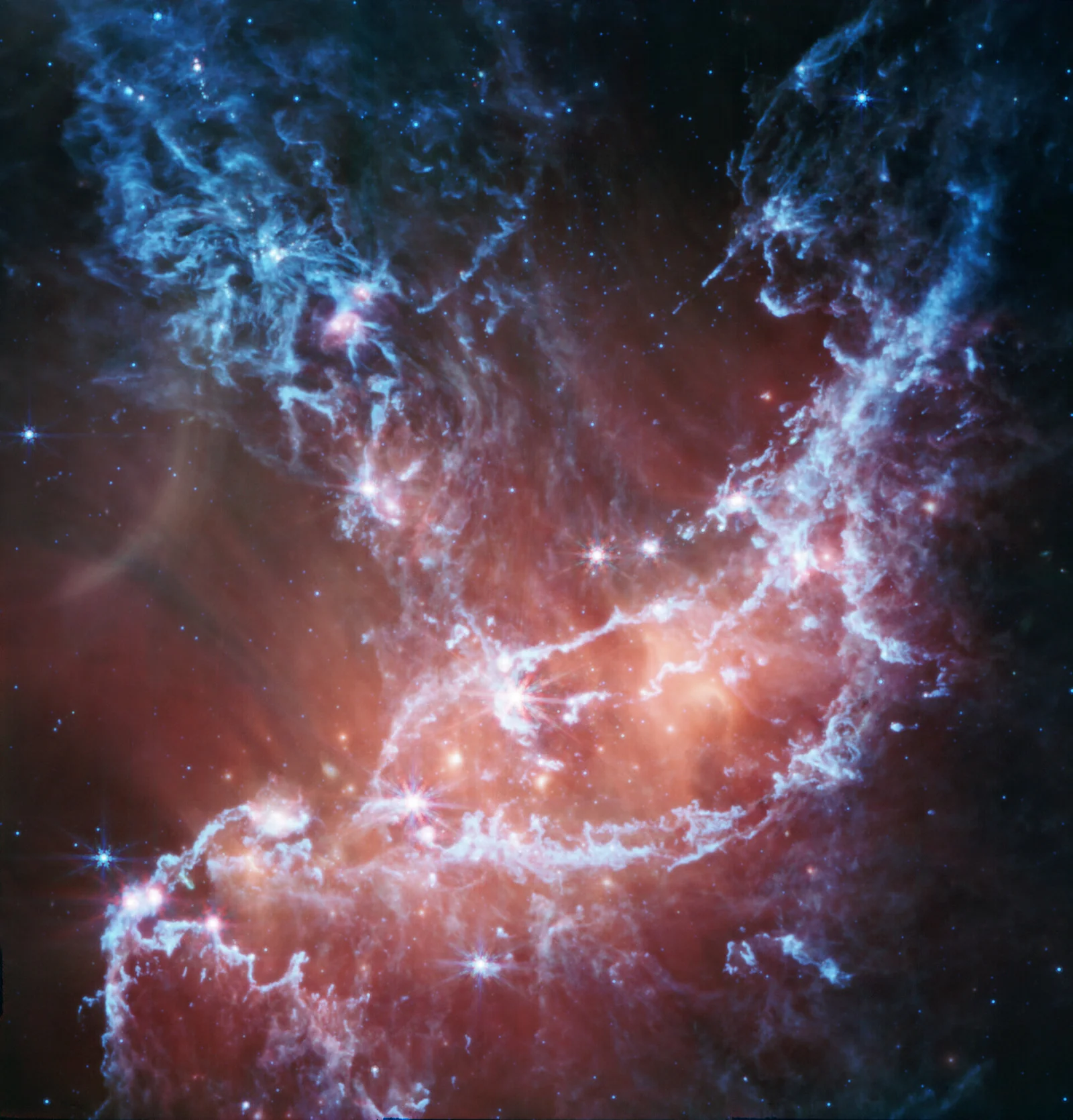
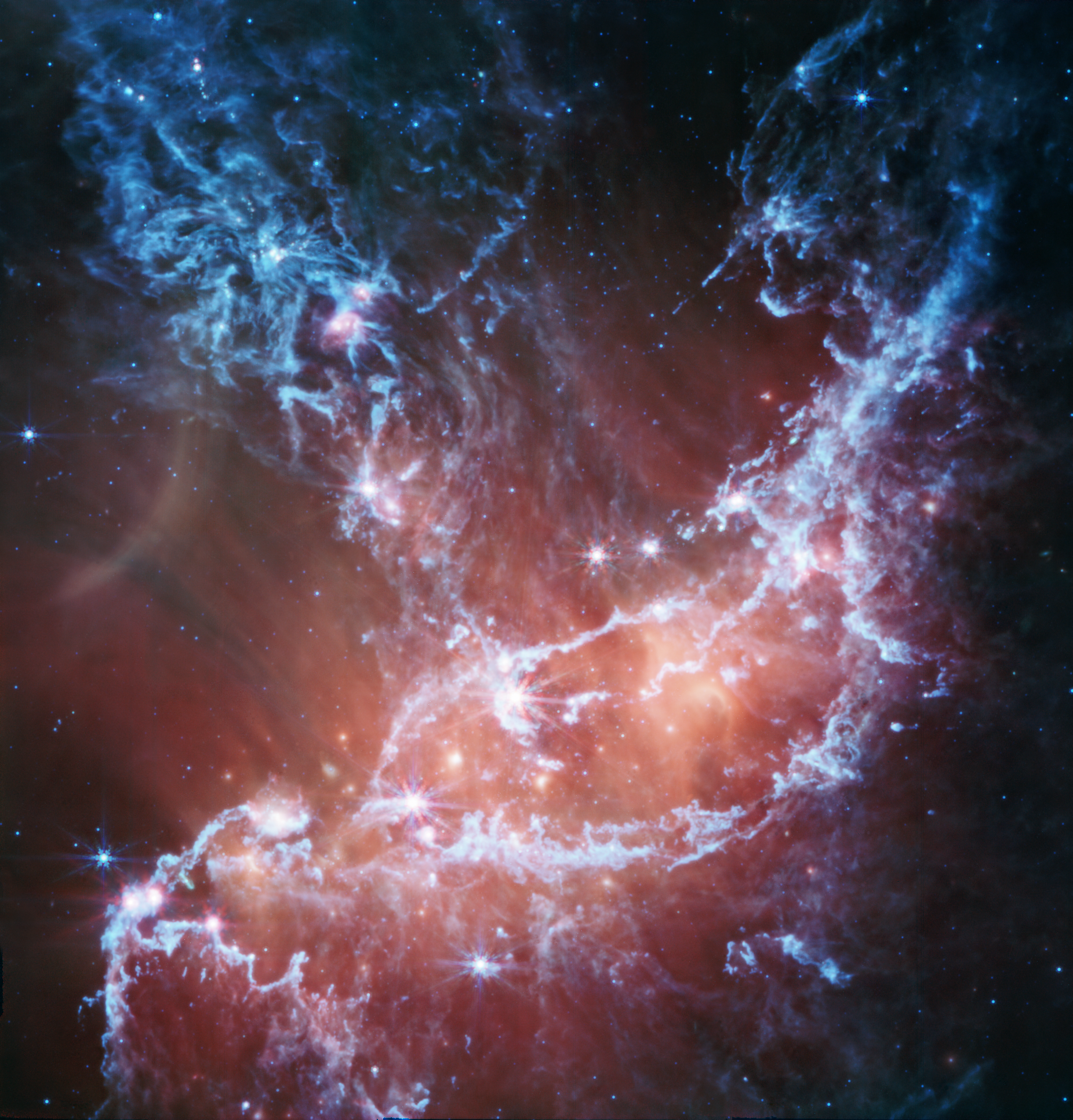
NASA's James Webb Space Telescope has captured a new infrared image of NGC 346, a bright star cluster in the Small Magellanic Cloud. The image reveals blue silicates and polycyclic aromatic hydrocarbons, with bright patches indicating areas with numerous protostars. The cluster contains young stars, some as young as 2 million years old, still embedded in their dusty cocoons.
astronomy2 years ago

"James Webb Space Telescope Reveals Stunning Views of Star-Forming Region NGC 346"

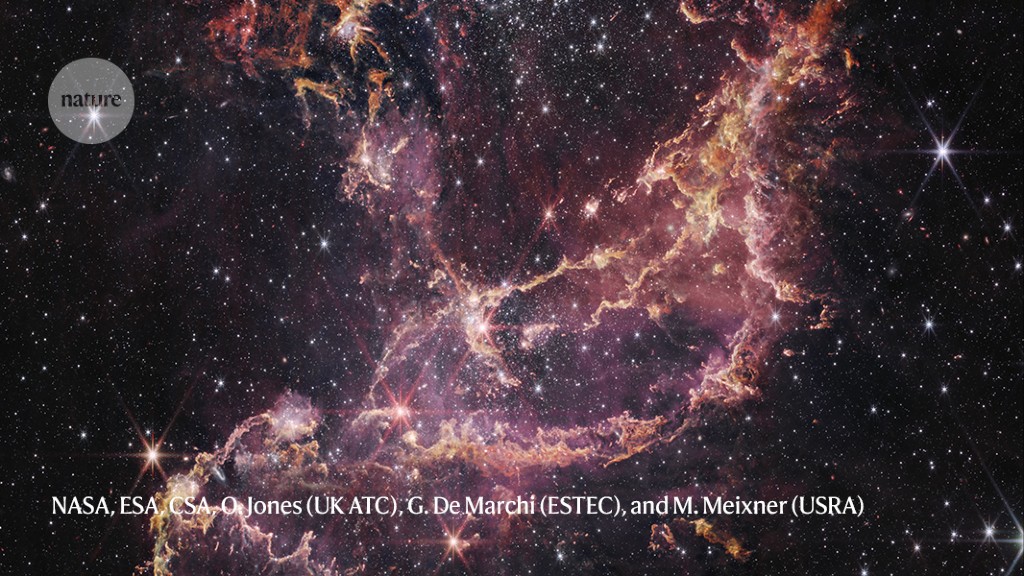
NASA's James Webb Space Telescope has captured a stunning image of NGC 346, a star-forming region in the Small Magellanic Cloud. The image reveals young stars blanketed in dust, contrary to expectations, and provides insights into the number of stars and protostars in the region. This observation could shed light on the cosmic noon era billions of years ago when star births peaked and heavy element levels were lower.

astronomy2 years ago

"Stunning Image: NASA's Webb Telescope Reveals NGC 346's Ethereal Beauty"

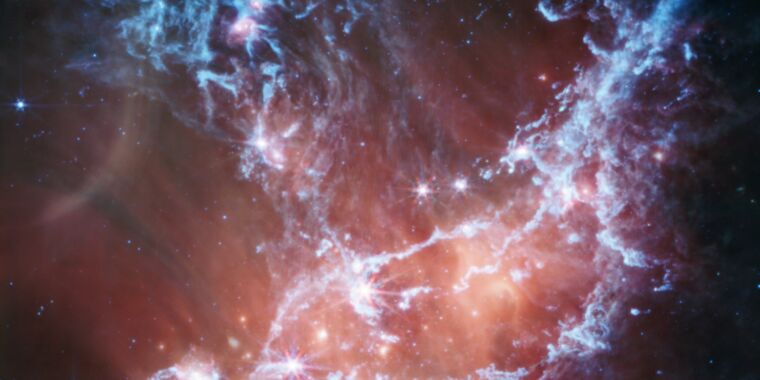
NASA's James Webb Space Telescope has captured a stunning infrared image of NGC 346, the brightest and largest star-forming region in the Small Magellanic Cloud. The image reveals filaments of dust and gas, contrary to expectations that the SMC would lack significant amounts of dust due to its lower concentration of heavy elements. By combining data from both the near-infrared and mid-infrared, astronomers are gaining a better understanding of the stars and protostars within this dynamic region, shedding light on galaxies that existed billions of years ago.

astronomy2 years ago

"Stunning Snapshot: Webb's Ethereal Glimpse of NGC 346"

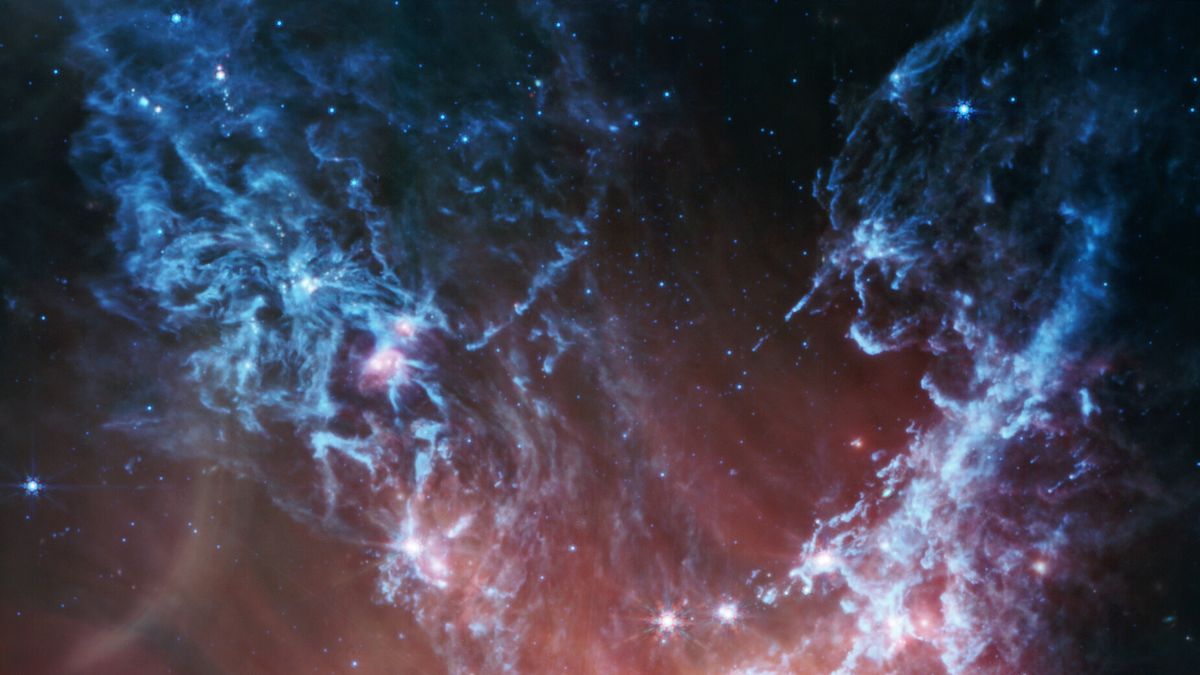
The James Webb Space Telescope has captured a stunning image of NGC 346, the brightest and largest star-forming region in the Small Magellanic Cloud. The image reveals the presence of ample cosmic dust within the region, contrary to previous expectations. The image showcases blue tendrils of material containing dusty silicates and sooty chemical molecules, as well as red emission from warm dust heated by massive stars. The image also highlights bright patches and filaments indicating the presence of numerous protostars. By combining data from both the near-infrared and mid-infrared, astronomers gain a better understanding of star formation in the early universe.

astronomy2 years ago

JWST discovers planet-forming ingredients in surprising nearby galaxy.

NASA's James Webb Space Telescope (JWST) has discovered the ingredients for planet formation in NGC 346, a star-forming region in the Small Magellanic Cloud. The discovery suggests that planet formation may be more common throughout the Universe than previously thought. The researchers used JWST's infrared capabilities to see through the dust emitted by low-mass stars as they form, and found enough dust to indicate planet formation was possible. The discovery broadens understanding of where planets can exist and could help explain the birth of the Solar System. Follow-up observations will target the potential planetary systems reported in the latest study.