
JWST discovers planet-forming ingredients in surprising nearby galaxy.
TL;DR Summary
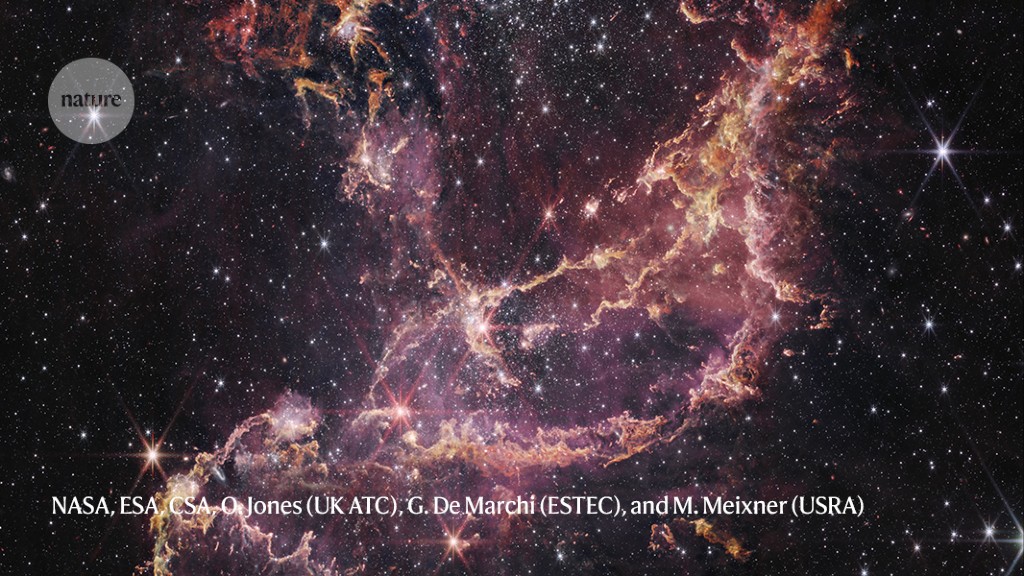
NASA's James Webb Space Telescope (JWST) has discovered the ingredients for planet formation in NGC 346, a star-forming region in the Small Magellanic Cloud. The discovery suggests that planet formation may be more common throughout the Universe than previously thought. The researchers used JWST's infrared capabilities to see through the dust emitted by low-mass stars as they form, and found enough dust to indicate planet formation was possible. The discovery broadens understanding of where planets can exist and could help explain the birth of the Solar System. Follow-up observations will target the potential planetary systems reported in the latest study.
- JWST spots planetary building blocks in a surprising galaxy Nature.com
- Rocky planets might have been able to form in the early universe Science News Magazine
- A Tiny Nearby Galaxy Has More Planet-Building Potential Than We Thought Inverse
- JWST/NIRCam detections of dusty subsolar-mass young stellar objects in the Small Magellanic Cloud Nature.com
- James Webb Space Telescope detects planet-forming ingredients in a neighbouring galaxy ABC News
- View Full Coverage on Google News
Reading Insights
Total Reads
0
Unique Readers
6
Time Saved
3 min
vs 4 min read
Condensed
85%
684 → 100 words
Want the full story? Read the original article
Read on Nature.com