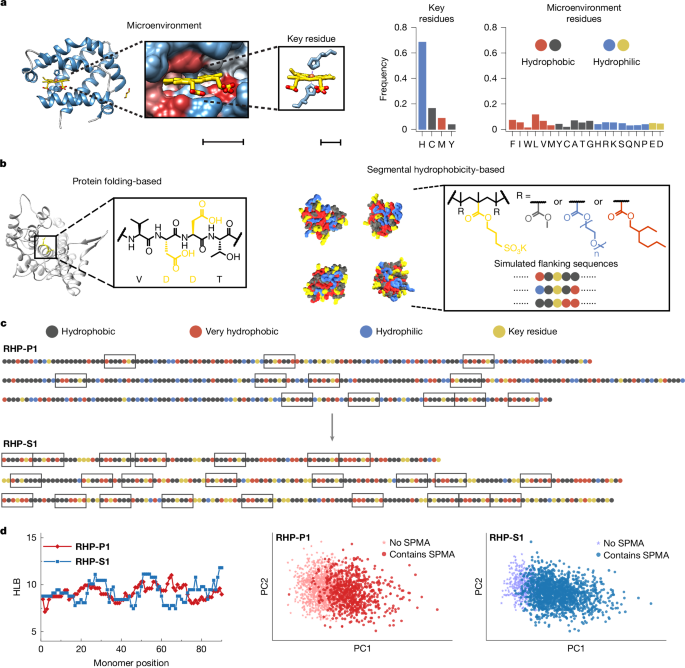
The article discusses the design and analysis of random heteropolymers as enzyme mimics, including data and code availability, experimental methods, and computational studies to understand their structure and function, supported by extensive references and acknowledgments.
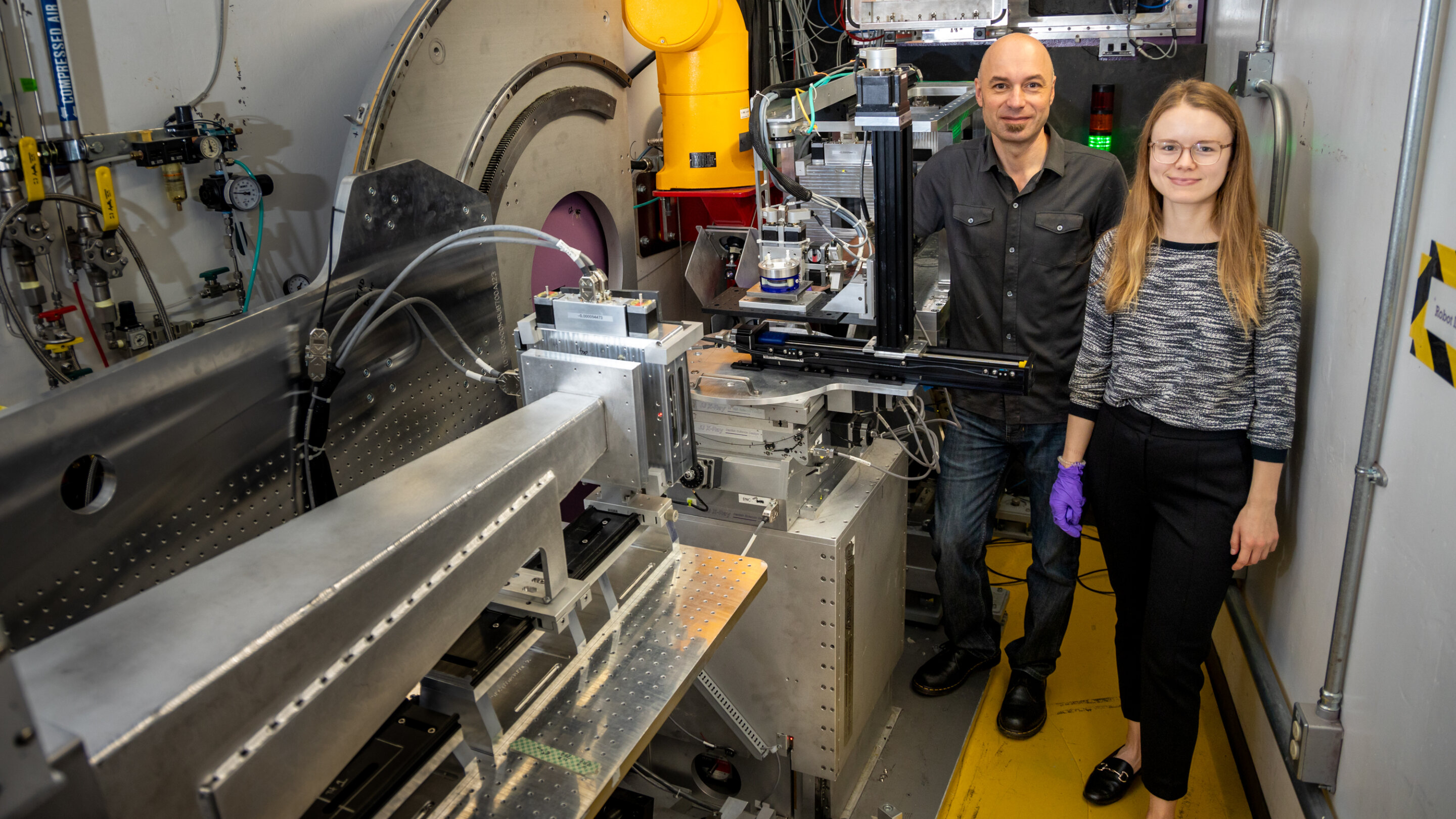
Scientists developed the vsPDF camera, capable of capturing atomic movements at a trillionth of a second, revealing dynamic atomic behaviors in materials like germanium telluride that are crucial for energy applications. This breakthrough allows researchers to distinguish between static and dynamic disorder in materials, potentially leading to improved energy efficiency and new material designs.
Scientists from Stanford University and Oak Ridge National Laboratory have developed an electrochemical process for producing ammonia, a key ingredient in nitrogen fertilizer, without emitting carbon dioxide. By using neutron scattering, the researchers discovered that cycling an electric current during the conversion of nitrogen to ammonia increases the amount of ammonia produced. This sustainable method could help meet carbon-neutral goals and provide a solution for producing fertilizers without relying on the carbon-intensive Haber-Bosch process. The insights from this study could also be applied to other applications, such as recycling fertilizer runoff and producing ammonia for fueling ships.
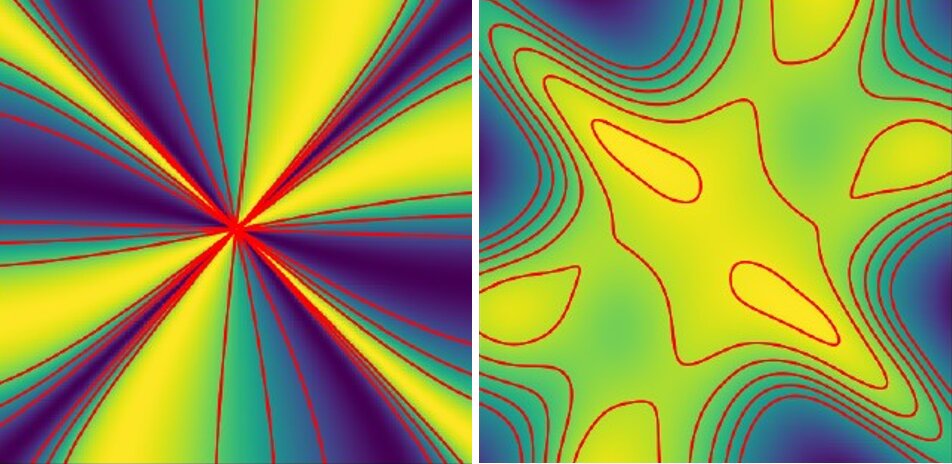
Fractons, fractions of spin excitations, are immobile and could be used for secure information storage. Theoretical physicists have modeled octahedral crystal structures with antiferromagnetically interacting corner atoms to reveal special patterns with characteristic pinch points in the spin correlations, which can be detected experimentally in a real material with neutron experiments. Quantum fluctuations do not enhance the visibility of fractons, but on the contrary, completely blur them, even at absolute zero temperature. The next step is to develop a model in which quantum fluctuations can be regulated up or down to study the extended quantum electrodynamic theory with its fractons in more detail.
Physicists at Rice University have discovered "spin excitons" that can ripple through a nickel-based magnet as a coherent wave. In a study published in Nature Communications, the researchers reported finding unusual properties in nickel molybdate, a layered magnetic crystal. The researchers found that two outermost electrons from each nickel ion behaved differently, and rather than aligning their spins like compass needles, the two canceled one another in a phenomenon physicists call a spin singlet. The resulting effect on the nickel spin is called a spin exciton, and one would normally expect the effect of the exciton-producing "kick" to be confined to a single atom.