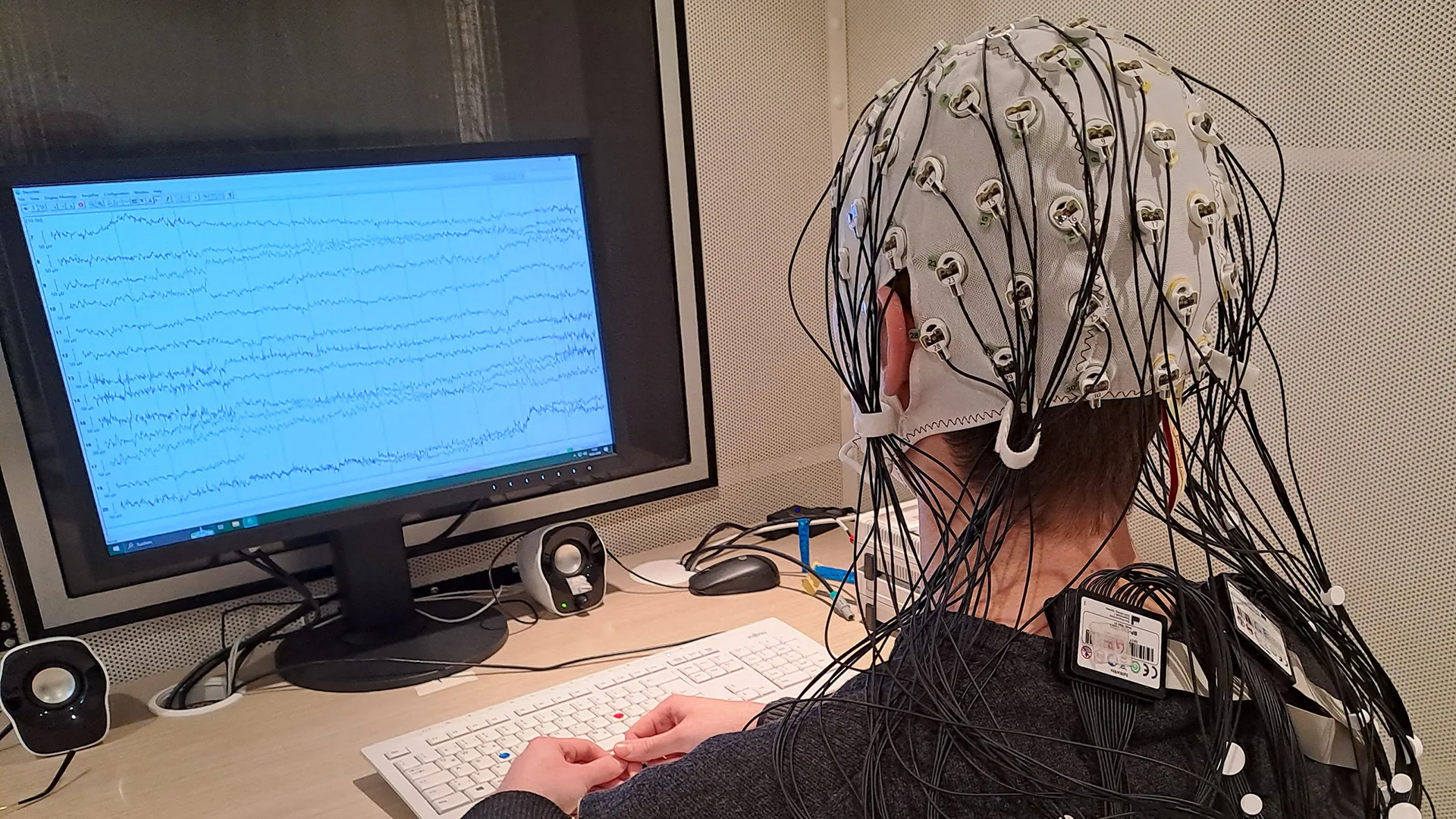
A study from Johannes Gutenberg University Mainz reveals that the brain's ability to synchronize theta waves in the midfrontal region is linked to higher cognitive abilities, especially during demanding tasks, and that this neural coordination is flexible and adaptable, resembling an orchestra following a conductor.
A new study emphasizes the significance of brain rhythms in understanding cognition, suggesting that these rhythms play a crucial role in organizing and processing information. The research explores how rhythmic electrical fields influence and align neighboring neurons, enhancing cognitive function and providing insights that could lead to improved interventions for conditions like schizophrenia and epilepsy. The study highlights the role of "ephaptic coupling" and the regulation of sensory information encoding by lower-frequency "beta" rhythms. The authors argue that understanding these dynamics is vital for developing treatments for neurological disorders and advancing comprehension of cognitive processes.