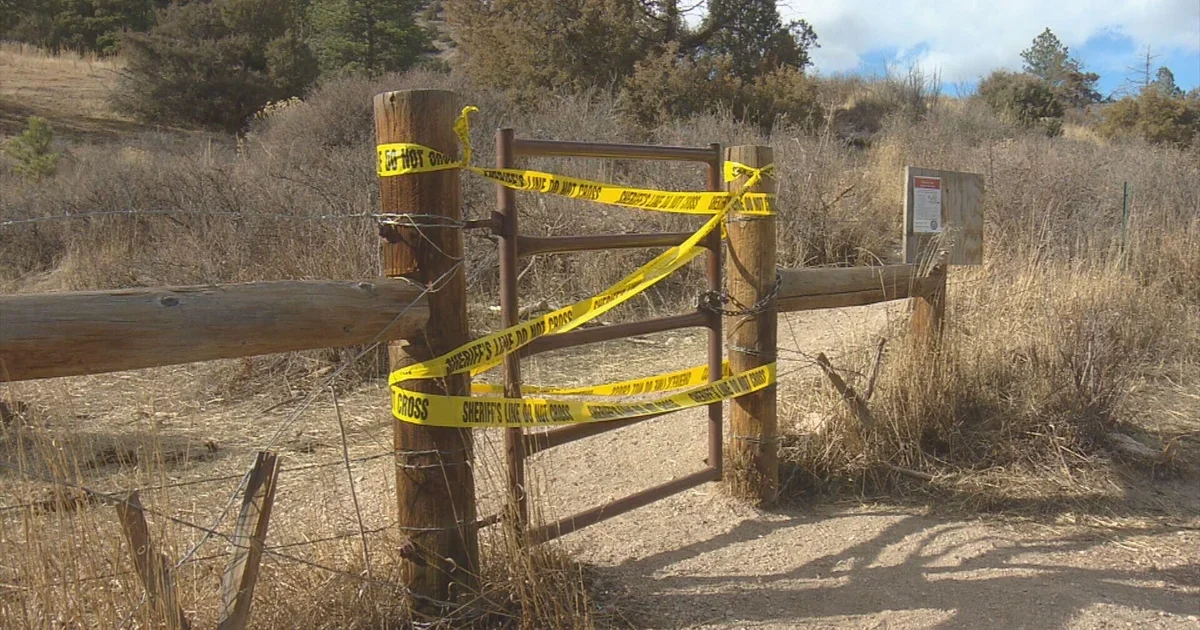
A solo hiker was fatally attacked by a mountain lion in Colorado, leading to the killing of two lions by wildlife officials; the search for a third lion ended with no further sightings, and the incident was ruled an accident.
A woman was killed by a mountain lion on a trail in Northern Colorado, where recent encounters with multiple lions have heightened fears. Hikers and residents report aggressive lion behavior, including near-misses and attacks on pets, prompting Colorado Parks and Wildlife to increase safety measures and euthanize some lions. The incident underscores the dangers of wildlife encounters and the need for caution in the area.
A Wyoming study found that mountain lions are highly resilient to human disturbance at feeding sites, often returning quickly after being displaced, which challenges previous assumptions about human impact on these predators.
The construction of a large wildlife crossing over the Los Angeles County’s 101 Freeway, aimed at providing safe passage for wildlife, especially mountain lions, will lead to weeks of overnight closures on weekdays starting Monday. The crossing, spanning 10 lanes of highway, is part of an effort to address the impact of major highways as barriers to wildlife movement and gene pools. The project, set for completion in 2025, is named the Wallis Annenberg Wildlife Crossing and is expected to serve as a global model for urban wildlife conservation. The crossing will provide crucial habitat access for various wildlife, including mountain lions, addressing genetic diversity issues and allowing for the movement of animals across the area.
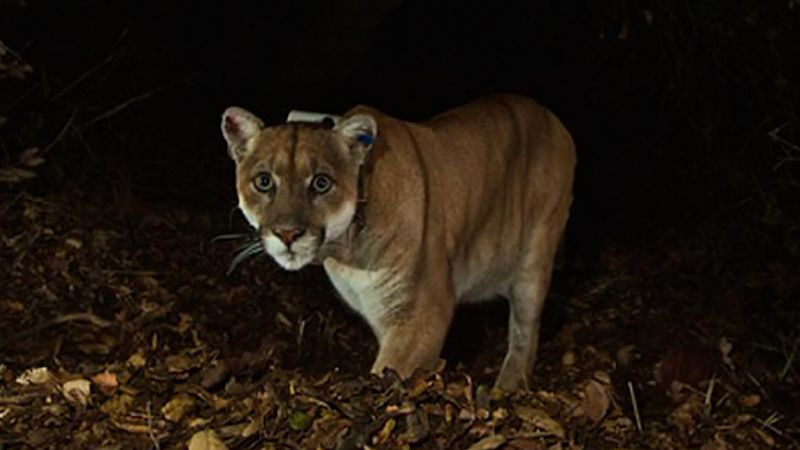
A mountain lion named P-22, trapped by L.A. freeways, became a celebrity and inspired the construction of the world's largest wildlife overpass. The Wallis Annenberg Wildlife Overpass, funded by private donations including $26 million from philanthropist Wallis Annenberg, aims to help animals safely cross the busy six-lane 101 Freeway in Los Angeles. The overpass includes specially designed sound walls and light barriers to reduce noise and deter animals from turning back. Wildlife crossings have proven successful in other countries, and this project will also restore the surrounding landscape and create an ecosystem on top of the overpass. P-22's story has ensured a future for other mountain lions in the region.
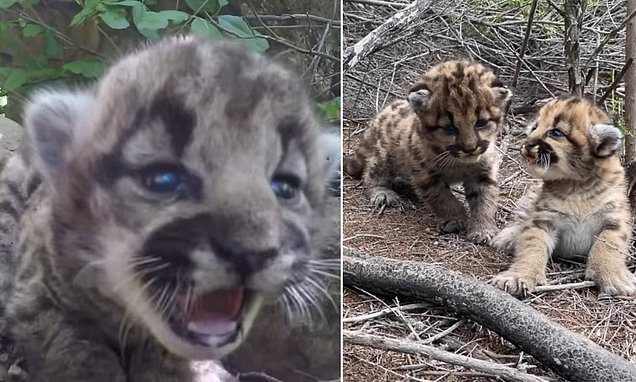
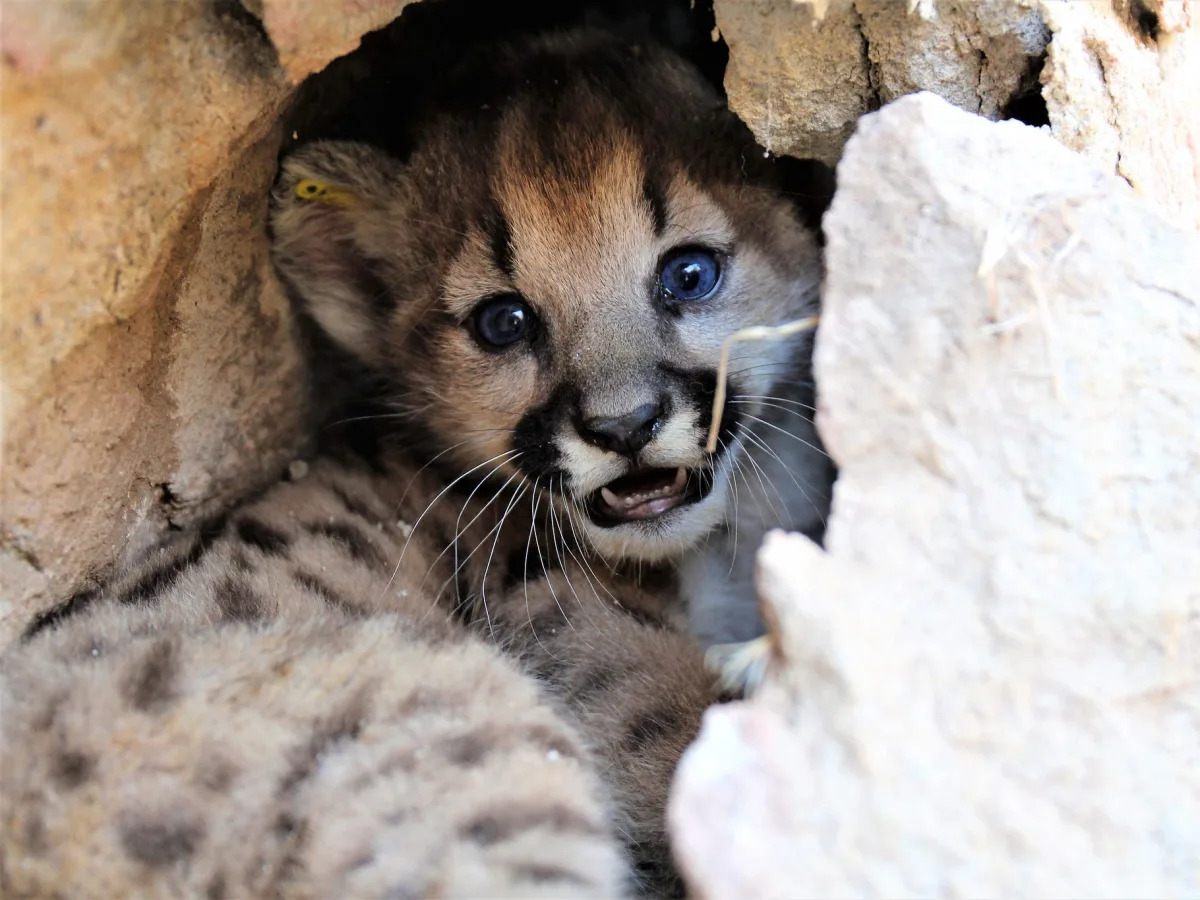
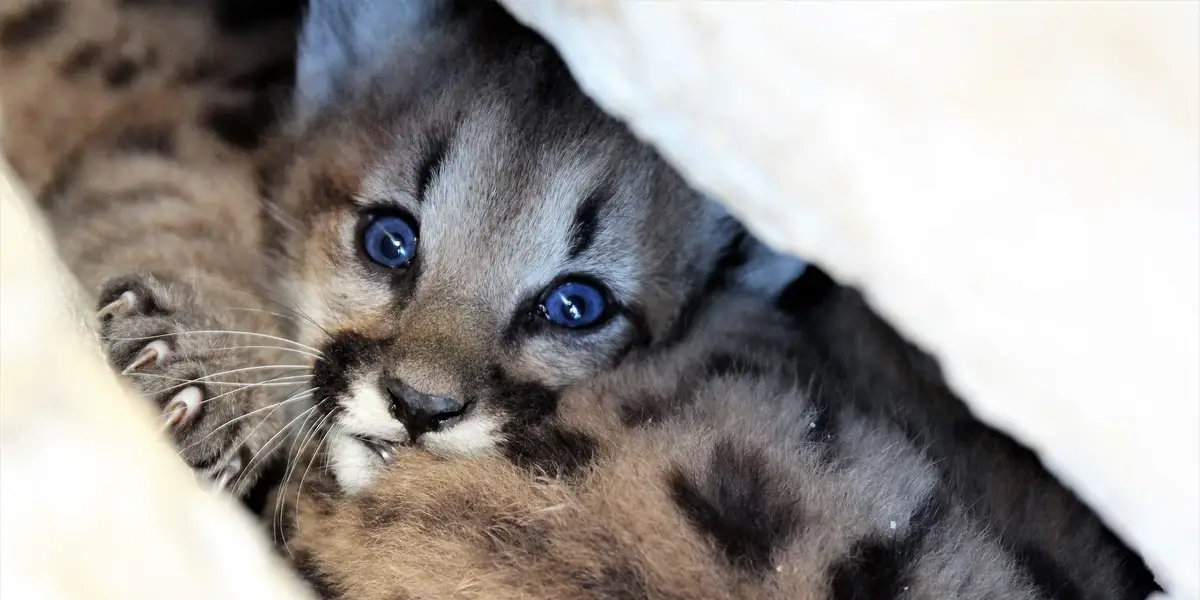
Biologists entered the den of two newborn mountain lions in the Santa Monica Mountains and were met with adorable purrs and growls instead of roars. The footage, shared by the Santa Monica Mountains National Park Service, shows the cubs attempting to intimidate the scientists. The video has gained popularity on social media and has been re-shared by The US Department of the Interior. The biologists assessed the cubs' health and tagged their ears with uniquely numbered tags while their mother was away hunting. The practice of studying mountain lions in the area has been ongoing since 2002 to understand their survival in an urbanized environment.
Biologists with the National Park Service discovered three 24-day-old mountain lion kittens in the Simi Hills, west of Los Angeles. The kittens, identified as P-113, P-114, and P-115, must now survive in an increasingly urbanized area of Southern California. Mountain lions in Los Angeles County are significantly threatened by the development of roads and cities, with vehicle strikes being a leading cause of mountain lion deaths. The new kittens are an "encouraging" sign for the small population of mountain lions in the area.
Biologists discovered three 24-day-old mountain lion kittens in the Simi Hills, west of Los Angeles. The kittens, identified as P-113, P-114, and P-115, must now survive in an increasingly urbanized area of Southern California. The NPS tracks the cats to determine how urbanization and habitat fragmentation affect these animals' lives. Mountain lions in Los Angeles County are significantly threatened by the development of roads and cities, with vehicle strikes being a leading cause of mountain lion deaths. However, the discovery of the new kittens is an "encouraging" sign for the small population of mountain lions in the area.
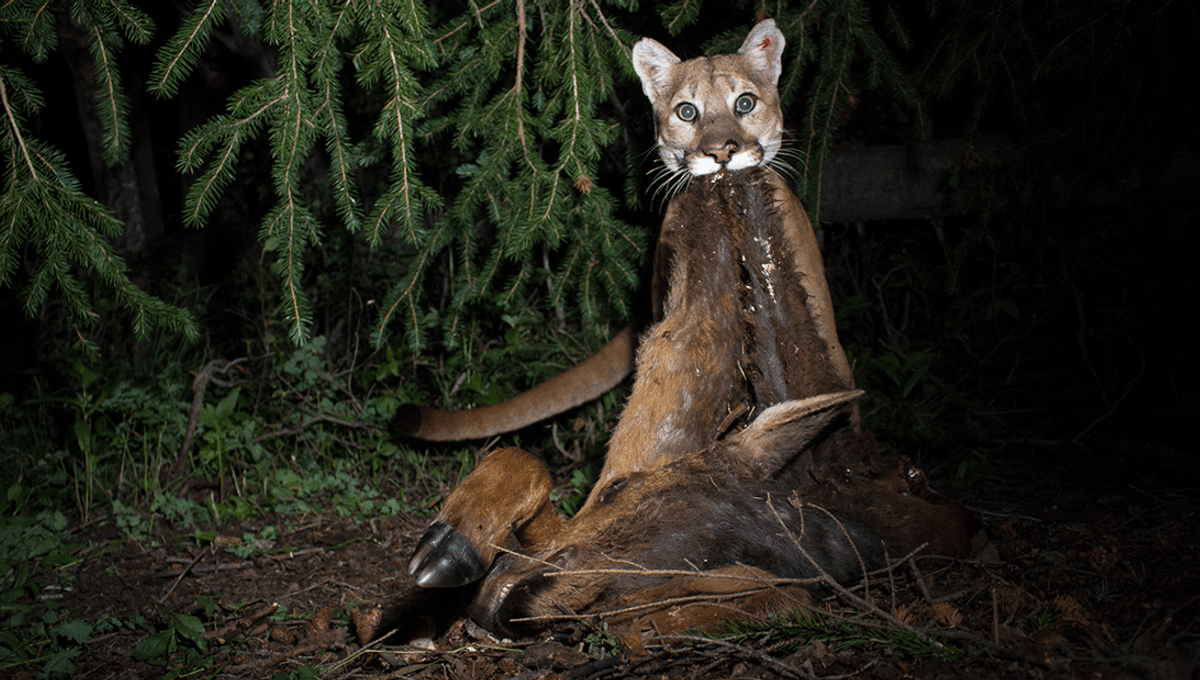
Mountain lions in the Teton Mountain range of Wyoming, USA, have been found to fertilize their hunting grounds with carcasses to attract prey. The nutrients deposited in the soil from mountain lion kills improve plant quality, making them more attractive to ungulates. The study found that each mountain lion created around 482 hotspots of soil with increased nutrients over a nine-year lifespan. The preferred areas for making successful kills were low elevation habitats with steeper slopes, high tree canopies, and close to areas like forest edges, roads, and streams.
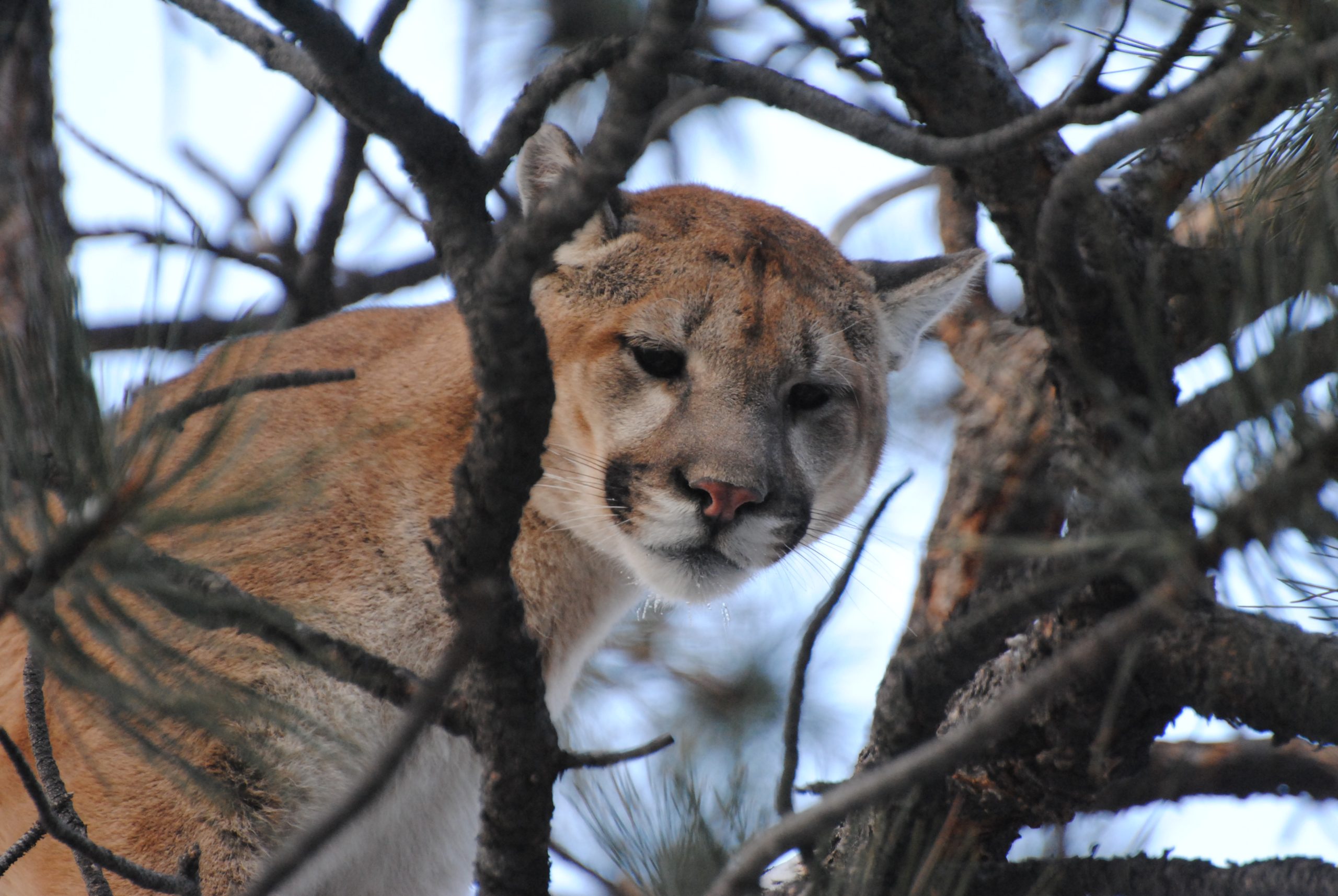
Colorado Parks and Wildlife warns residents of Woodland Park to be cautious after a family of mountain lions, likely a mother and three kits, was spotted on a local public trail. The warning follows a number of recent mountain lion sightings in the area. CPW advises people to carry pepper spray and a walking stick, keep pets leashed, and avoid going alone. Mountain lion attacks on humans are rare but can occur if the animal feels threatened or is defending young.