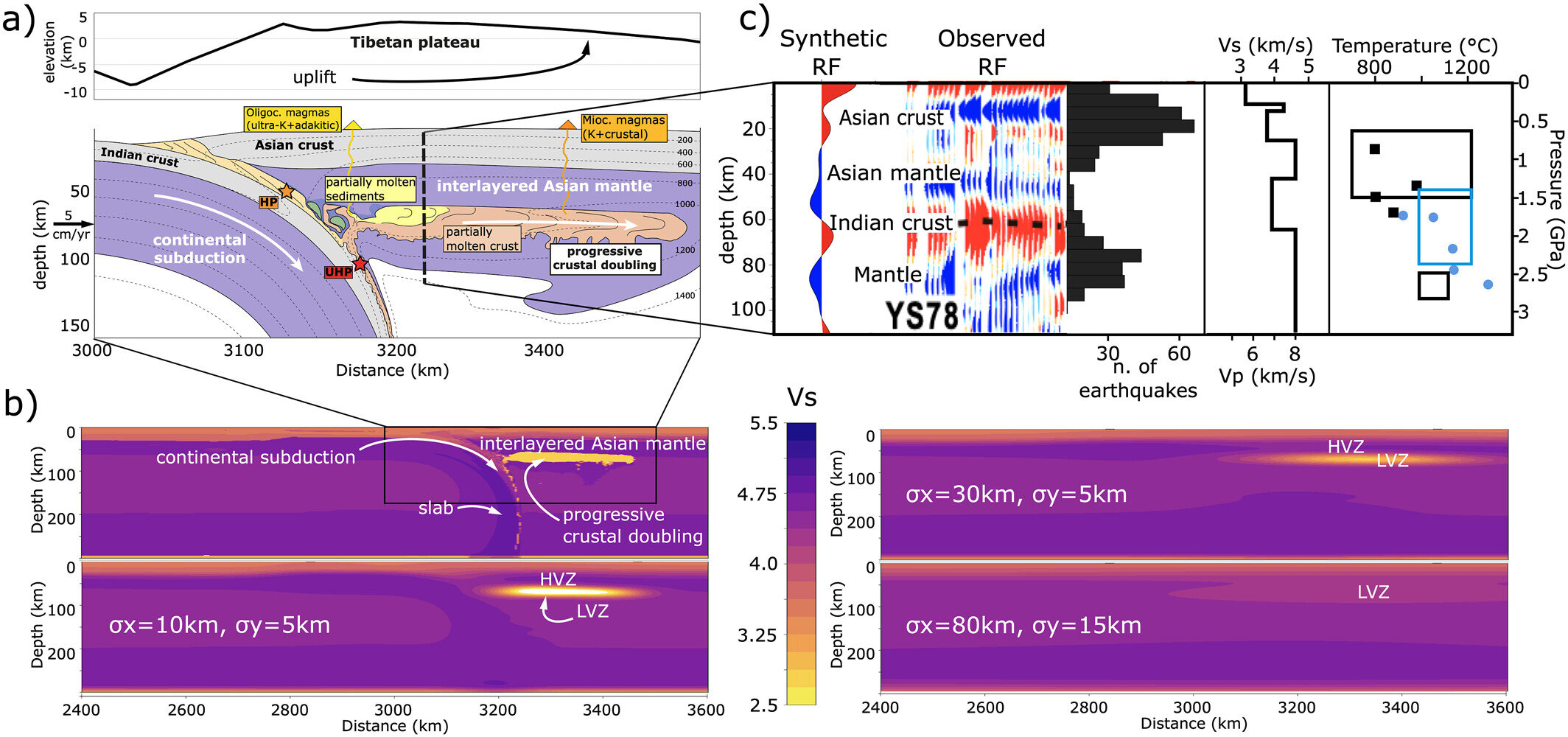
A new study challenges the century-old theory of Himalayas formation, proposing that instead of an ultra-thick crust, a 'crust-mantle-crust' sandwich formed through viscous underplating of Indian crust beneath Asian lithosphere better explains the mountain range's geology, with significant implications for understanding mountain-building processes.
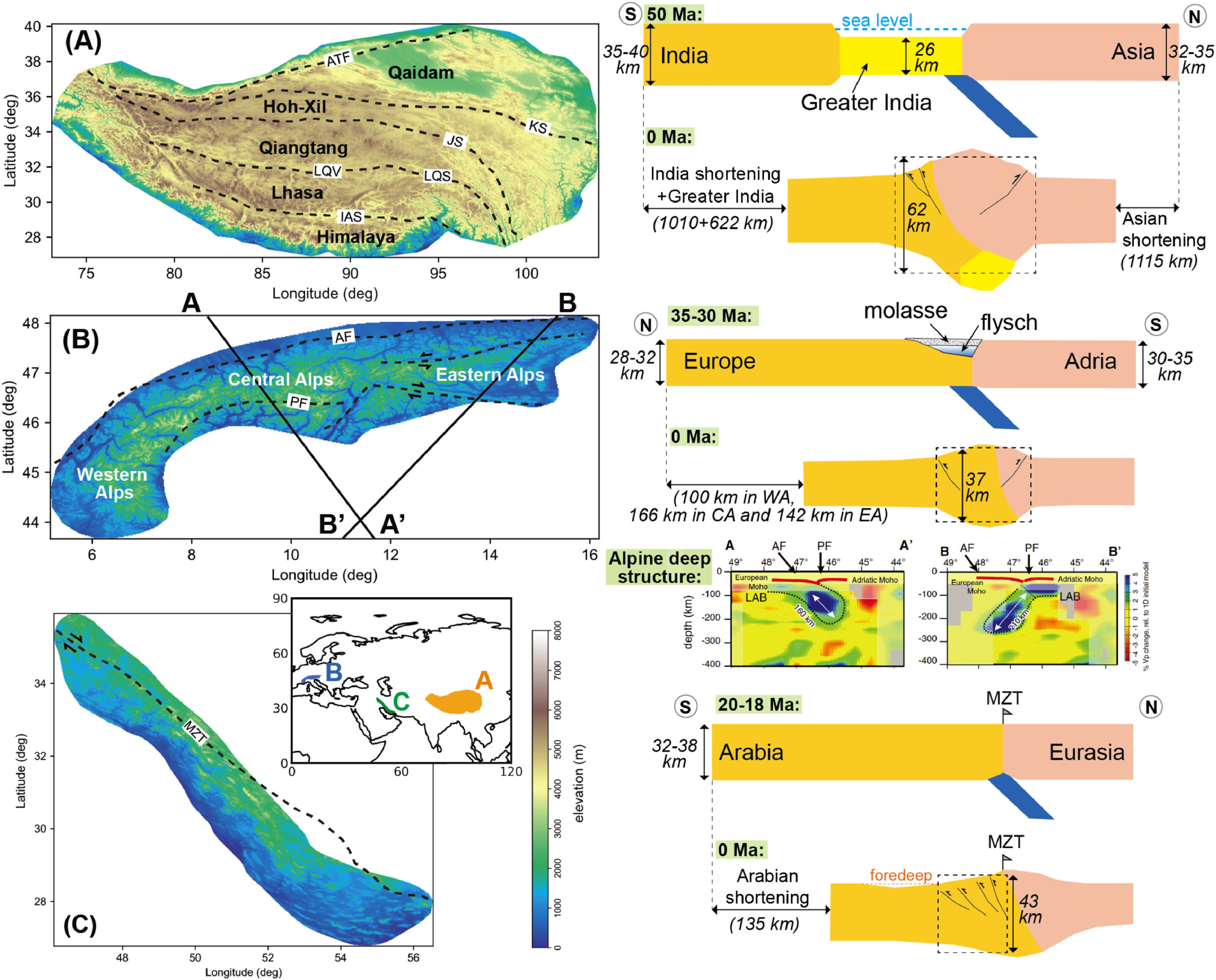
New research indicates that the formation of the Himalaya-Tibetan Plateau, European Alps, and Zagros Mountains has resulted in significant loss of continental crust to the mantle, with at least 30% lost in the Himalayas and up to 50% in the Alps. This crustal loss, primarily through a process called delamination, is double that of surface erosion. The study highlights the impact of deep crustal processes on mountain formation and climate change, suggesting that similar processes have recycled continental materials into the mantle throughout geological history.
The Earth's lithosphere, consisting of rigid plates that float on the convecting mantle below, has undergone continual movement and reshaping due to plate tectonics over hundreds of millions of years. However, recent research suggests that the vigorous plate tectonics we see today may be a relatively recent phenomenon, dating back only a billion years or less. Without this modern version of plate tectonics, the formation of large mountain ranges like the Himalayas would not have been possible, resulting in a flatter Earth for the first three billion years of its existence.
A groundbreaking study led by Colorado State University challenges traditional views on mountain formation, particularly in subduction zones like southern Italy. The research suggests that the descension of a tectonic plate through Earth's mantle and its alteration of mantle flow may play a significant role in mountain building, contrary to the belief of crust crumpling and thickening. The study utilized landscapes in southern Italy to reconstruct extensive histories of mountain formation, revealing that the primary factor controlling rock uplift is the descension of the lower plate through the mantle. This finding challenges previous models and offers a new understanding of the mountain building process.
New field research in the mountains of Calabria, Italy, suggests that deeper forces in Earth's mantle, such as convection cells, are responsible for driving some of the uplift we see on the surface, in addition to tectonic plate activity. The study analyzed the ages and chemical composition of rock layers to come up with a history of mountain uplift over 30 million years. The findings challenge the typical way we view mountain building and could teach us more about mountain formation and elevation all across the world.