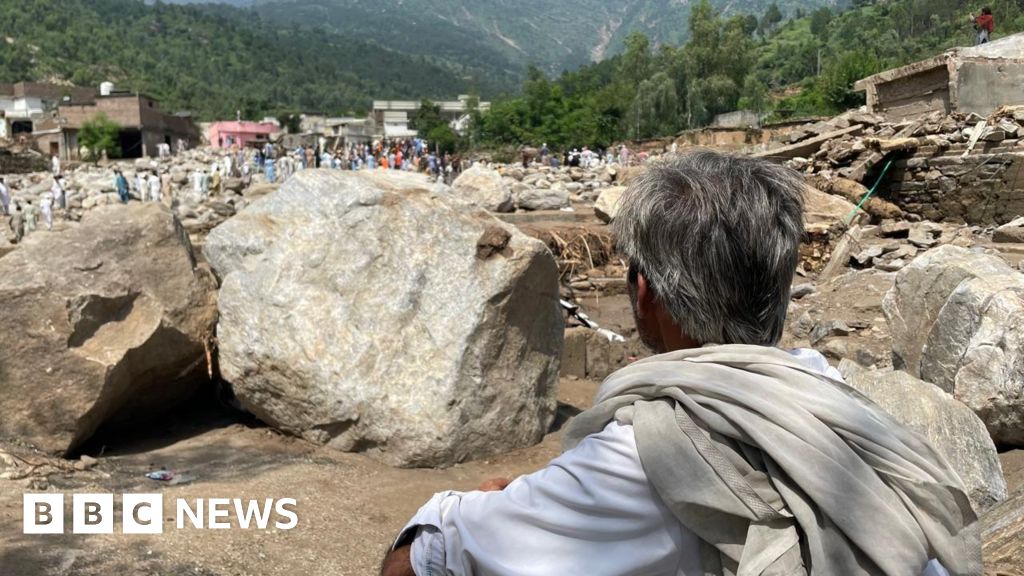
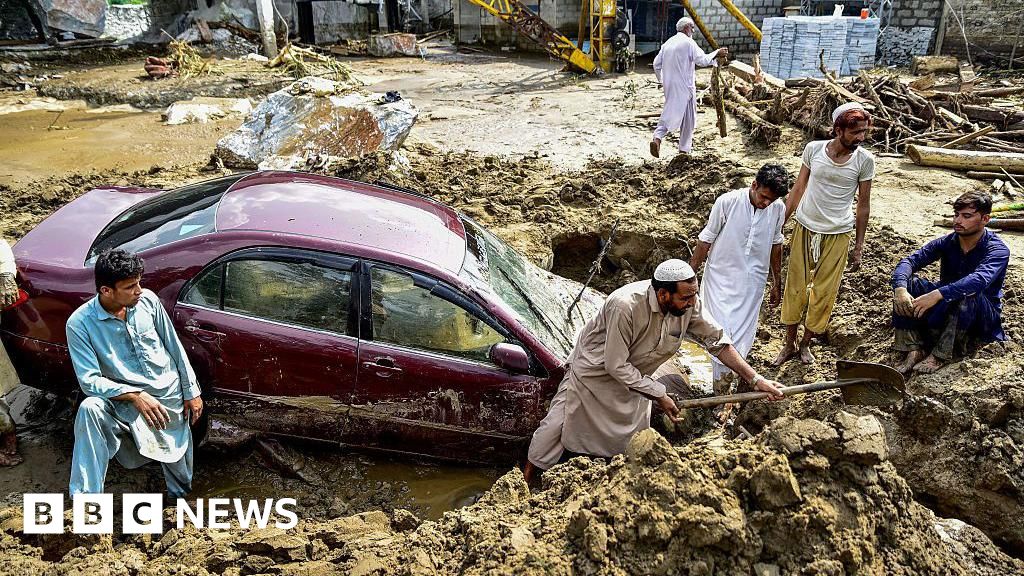
Heavy monsoon rains and flash floods in northern Pakistan have killed at least 314 people, destroyed homes, and caused widespread devastation, with climate change and glacier melt contributing to the severity of the disaster.
BBC Verify reports on devastating monsoon floods in Pakistan, with over 300 deaths and ongoing rescue efforts, and details a Russian attack on a residential building in Kharkiv, Ukraine, with at least seven casualties, while verifying footage and updates from both regions.
Over 200 people are missing in a district of northwest Pakistan due to severe monsoon flooding and landslides, which have caused over 300 deaths across Pakistan and Kashmir. The floods, intensified by climate change, have devastated villages, damaged infrastructure, and led to numerous casualties, with authorities warning of ongoing heavy rainfall and further risks.
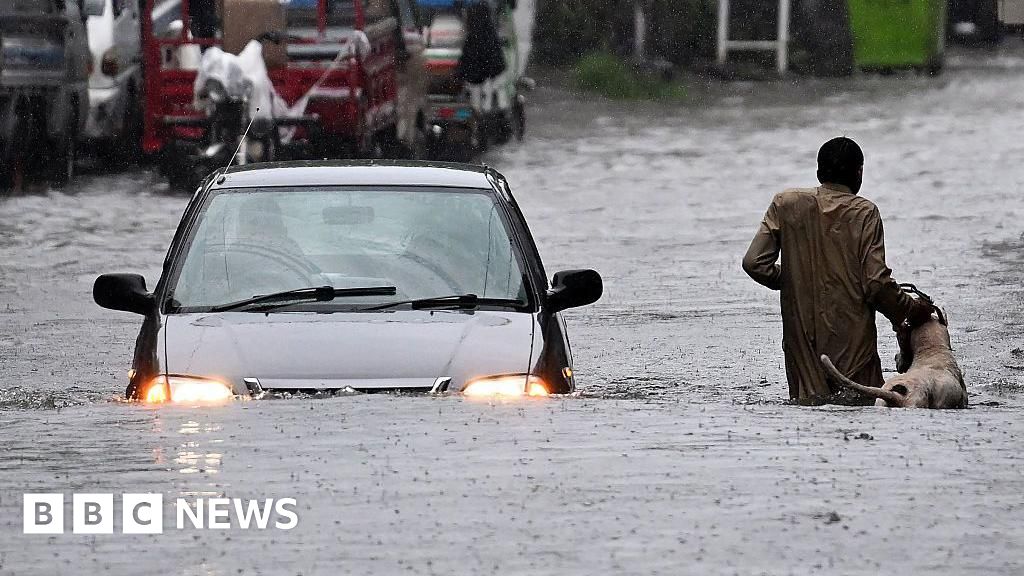
Torrential monsoon rains in Pakistan's Punjab province have caused at least 63 deaths and injured 290 in 24 hours, with the overall toll nearing 180 since June, highlighting the country's vulnerability to climate change and severe weather events.
Flash flooding caused by intense monsoon rains in Ruidoso, New Mexico, swept away a house and left at least three people missing, prompting numerous rescue efforts and raising concerns about ongoing flood risks in the area, which has been vulnerable due to recent wildfires and dry conditions.
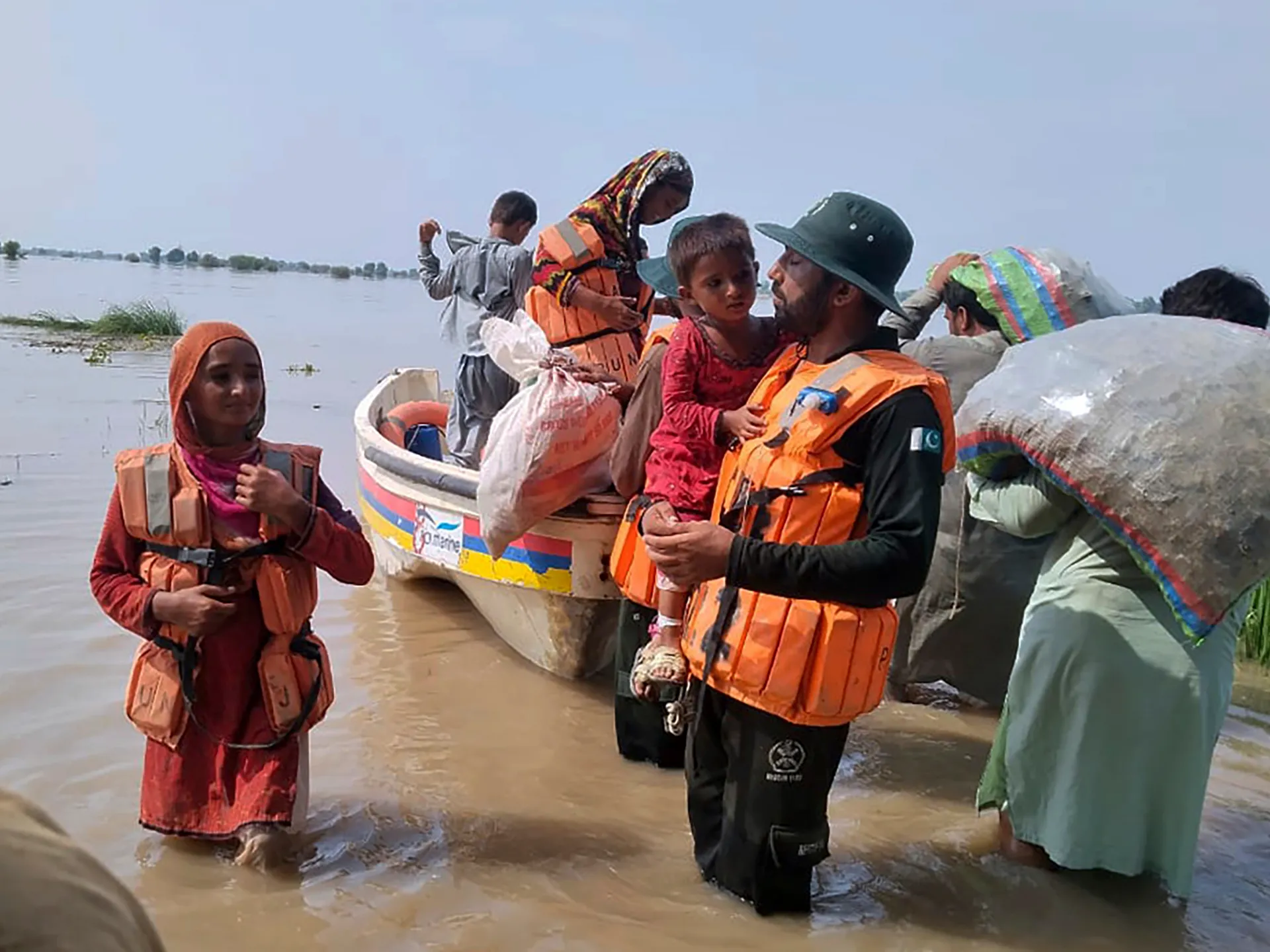
Nearly 100,000 people have been evacuated in Pakistan's Punjab province after the Sutlej River burst its banks, inundating hundreds of villages and thousands of acres of land. Rescue boats have been used to collect stranded individuals, while others have waded through water or held belongings above their heads. The river level is at its highest in 35 years, and the flooding is believed to be caused by excess reservoir water released by Indian authorities due to monsoon rains. Pakistan has been monitoring the situation and had enough warning time to evacuate communities. The monsoon season brings vital rainfall but also leads to frequent evacuations and damage.
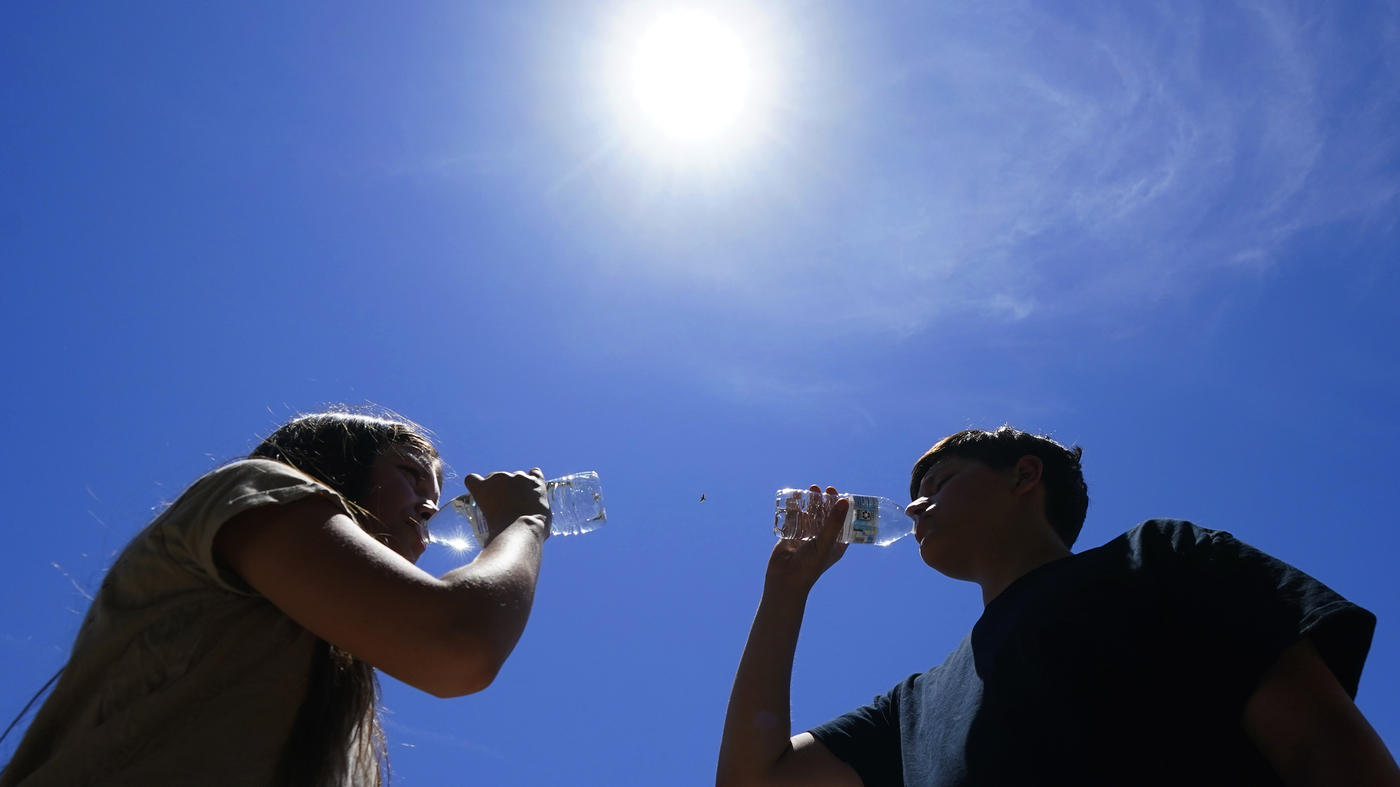
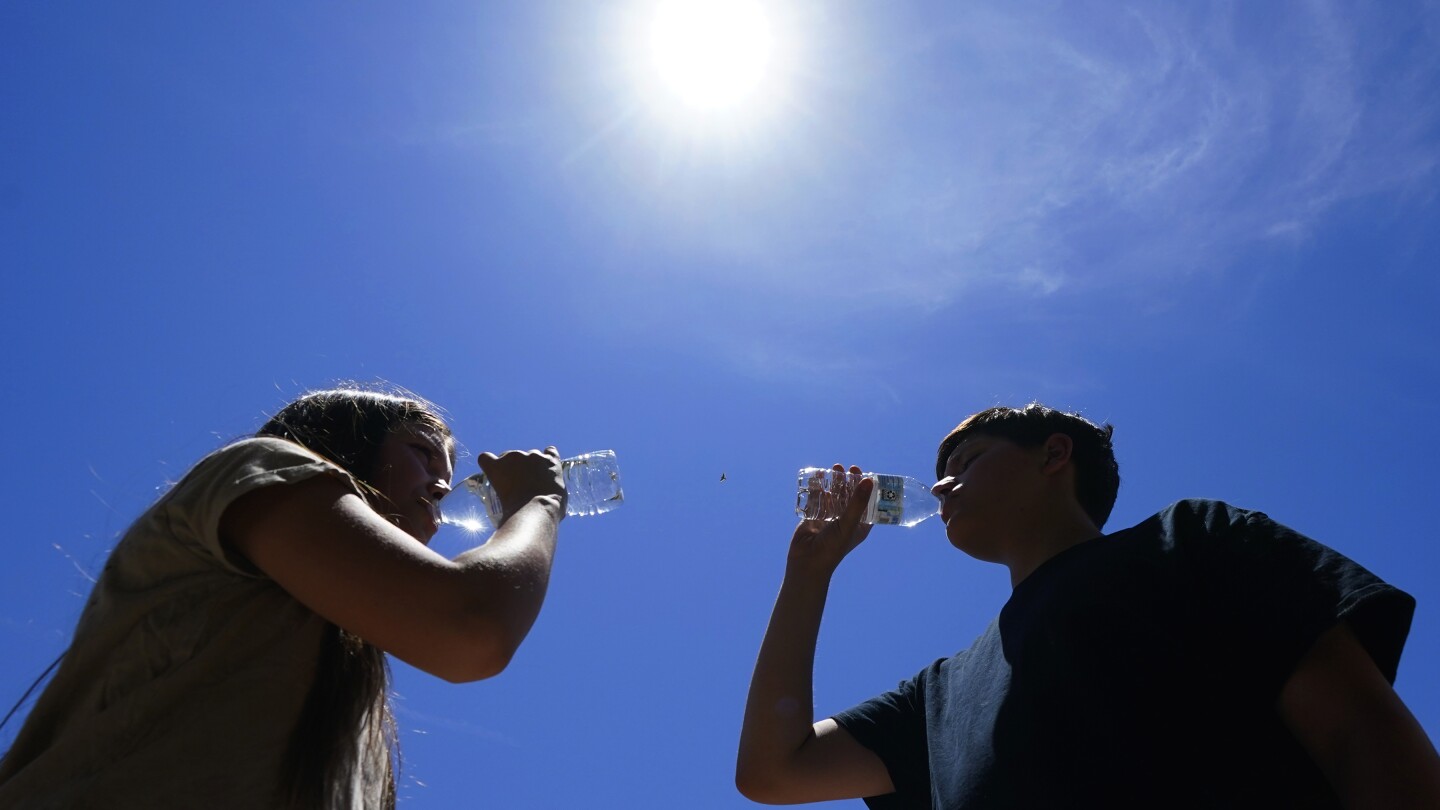
The historic heat wave in the U.S. Southwest is expected to abate with the arrival of monsoon rains, bringing relief to residents who have endured temperatures over 110 degrees Fahrenheit for 30 consecutive days in Phoenix. While the wet weather may bring damaging winds, blowing dust, and the risk of flash flooding, it will also help cool down the region. The extreme heat has also impacted other areas, including California, where wildfires and animal encounters have been reported. July is projected to be the hottest month globally on record, with the heatwave now spreading to the eastern part of the U.S.
The historic heatwave that has gripped the U.S. Southwest throughout July is beginning to cool down with the arrival of monsoon rains. Metro Phoenix is expected to see temperatures fall under 110 degrees Fahrenheit for the first time in a month, while other areas such as Las Vegas, Albuquerque, and Death Valley will also experience some relief. However, the monsoon thunderstorms bring the risk of damaging winds, blowing dust, and flash flooding. The heatwave has also impacted animals, with a bear found cooling off in a Jacuzzi in California. The extreme heat is now moving towards the eastern part of the U.S., setting new heat records and causing extreme weather events such as flash floods. The heatwave has resulted in heat-associated deaths, with Maricopa County reporting 25 confirmed deaths and 249 more under investigation.
After enduring a historic heat wave with temperatures over 110 degrees Fahrenheit for 30 consecutive days, residents in Phoenix, Arizona, can expect some relief as monsoon rains are forecasted to bring cooler temperatures. However, the wet weather also poses risks of damaging winds, blowing dust, and flash flooding. The extreme heat has also affected other parts of the Southwest, including Las Vegas, Albuquerque, and Death Valley. July is projected to be the hottest month globally on record, with the heatwave now spreading to the eastern part of the US. Authorities have warned of the dangers of the heat, particularly for vulnerable populations without access to air conditioning.
The historic heat wave that has plagued the U.S. Southwest is starting to subside as monsoon rains arrive, bringing relief to residents. Metro Phoenix is expected to see temperatures fall below 110 degrees Fahrenheit for the first time in a month. However, on Saturday, the city experienced its 30th consecutive day with temperatures surpassing 110 F. While the monsoon rains can bring damaging winds, blowing dust, and flash flooding, they also offer respite from the scorching heat. The extreme heat is now affecting the eastern part of the U.S., with soaring temperatures moving from the Midwest into the Northeast and Mid-Atlantic. The heatwave has resulted in numerous deaths, particularly among vulnerable populations without access to air conditioning.
The historic heat wave that has plagued the U.S. Southwest throughout July is finally beginning to subside with the arrival of late monsoon rains. Metro Phoenix is expected to see temperatures below 110 degrees Fahrenheit for the first time in a month, providing some relief from the scorching heat. The downward trend is also expected in Las Vegas, Albuquerque, and Death Valley. However, the extreme heat is now hitting the eastern part of the U.S., with soaring temperatures moving from the Midwest into the Northeast and Mid-Atlantic. July is projected to be the hottest month globally on record, and the new heat records are just one example of the extreme weather seen across the country this month.
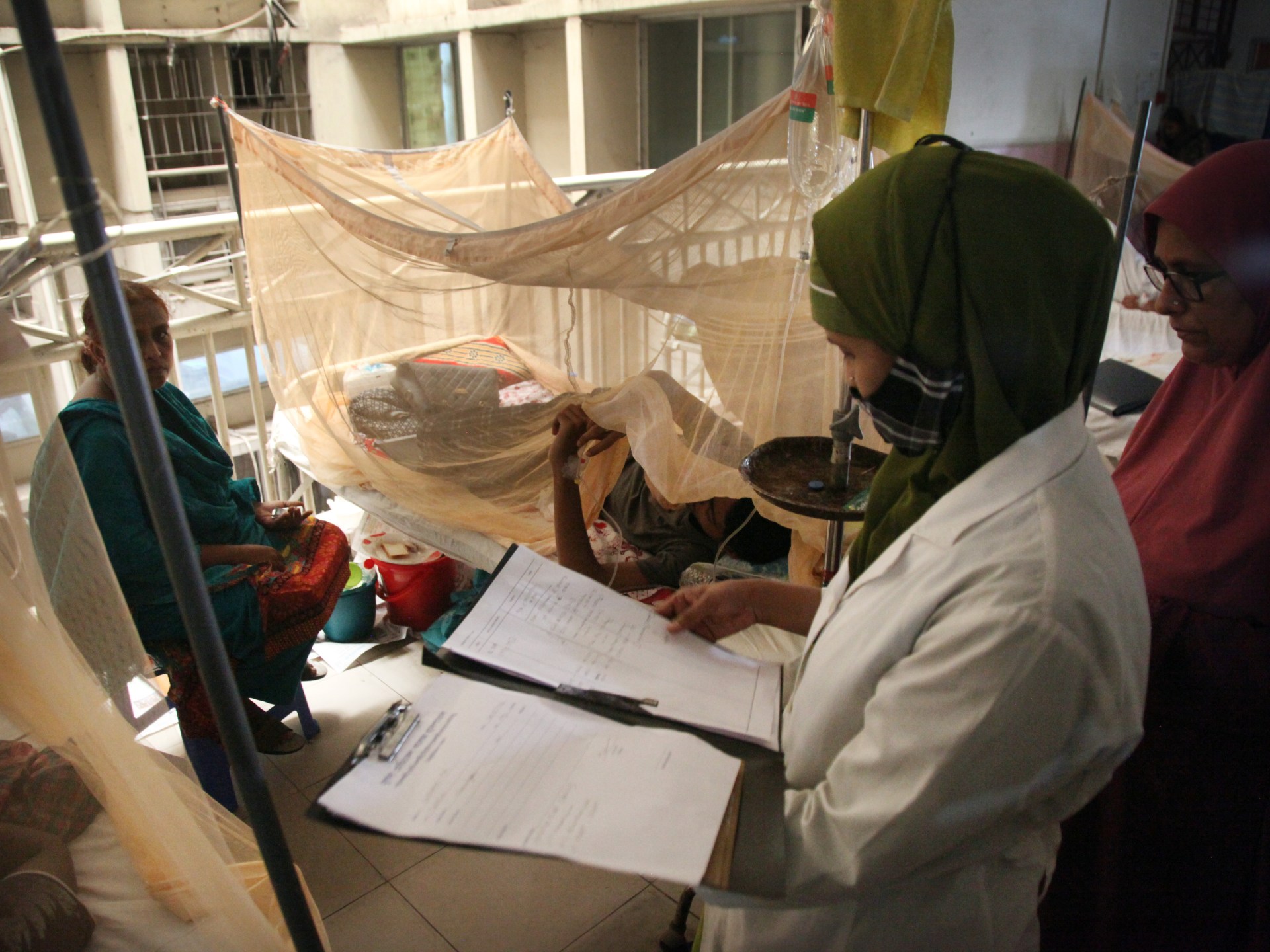
Bangladesh is facing a deadly dengue outbreak, with at least 176 people, including 31 children, having died from the mosquito-borne fever. The disease has reached an "epidemic" proportion, according to health experts, although the government has not officially declared it as such. The death rate from dengue this year is at a five-year high, and experts warn that the situation could worsen in the coming months. Social media is flooded with accounts of suffering and deaths, and parents are particularly concerned about their children, who are more prone to developing severe complications from the disease. The NGO Save the Children has called it the worst dengue outbreak in five years, with children aged five to 14 being the most affected group. Many blame the municipal corporations for not taking timely steps to control the breeding of mosquitoes.
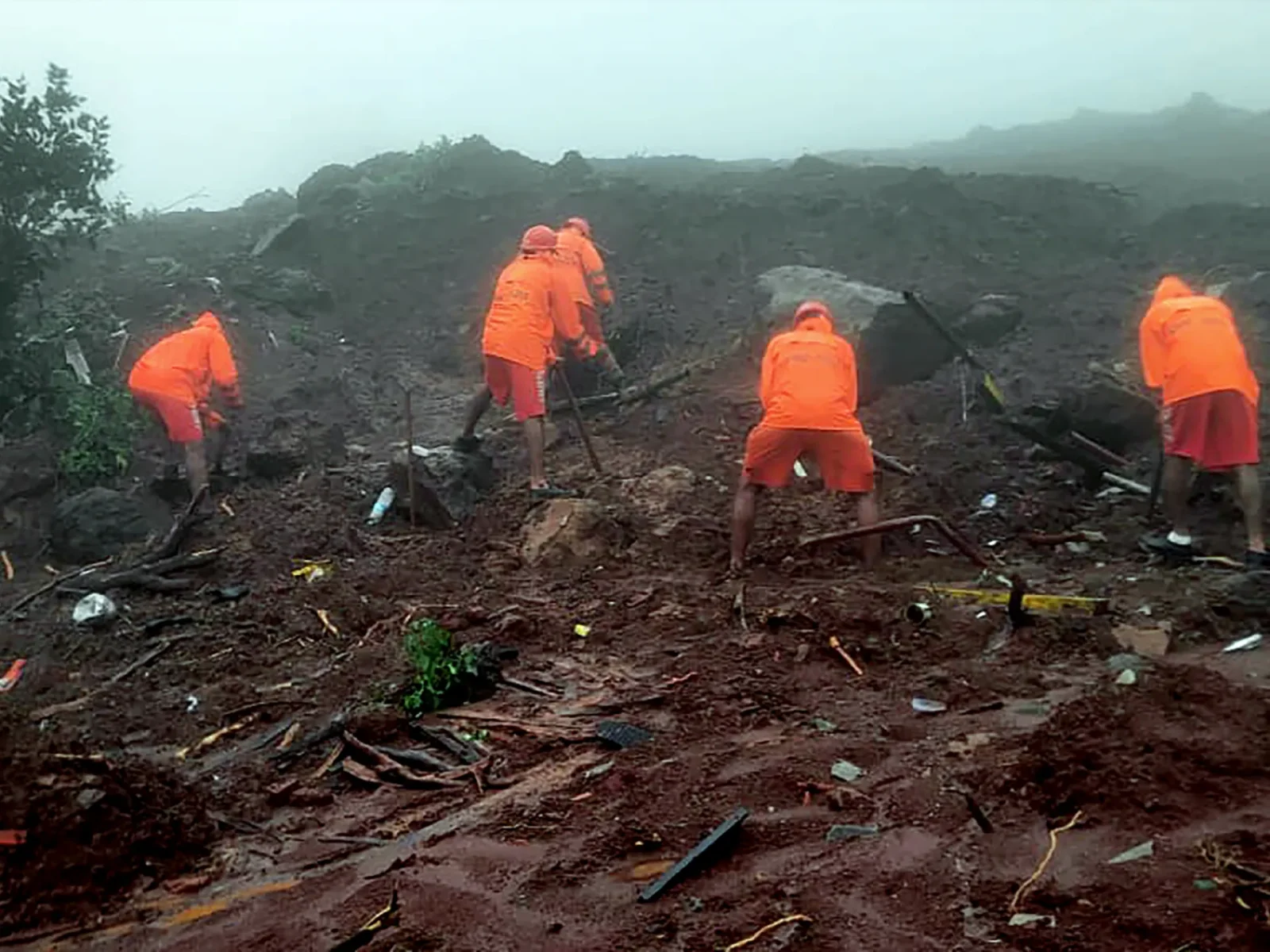
Rescuers have recovered 27 bodies and are searching for dozens more after a massive landslide hit Irshalwadi village in Maharashtra, India. The landslide, triggered by heavy monsoon rains, buried at least 17 houses under debris. The challenging hilltop location and tough terrain have hindered rescue efforts, with heavy equipment unable to reach the site. The monsoon season in India has caused widespread damage, with over 100 deaths reported due to floods, landslides, and collapsing homes.
Rescuers in western India have recovered 27 bodies and are still searching for dozens of missing villagers after heavy monsoon rains triggered a massive landslide in Irshalwadi village. Seventy-eight people are still unaccounted for, with at least 17 houses buried under debris. The rescue operation has been hampered by the lack of access roads and ongoing rainfall. The monsoon season in India has caused widespread damage and claimed over 100 lives in recent weeks, with scientists attributing the increased frequency of landslides and floods to climate change.
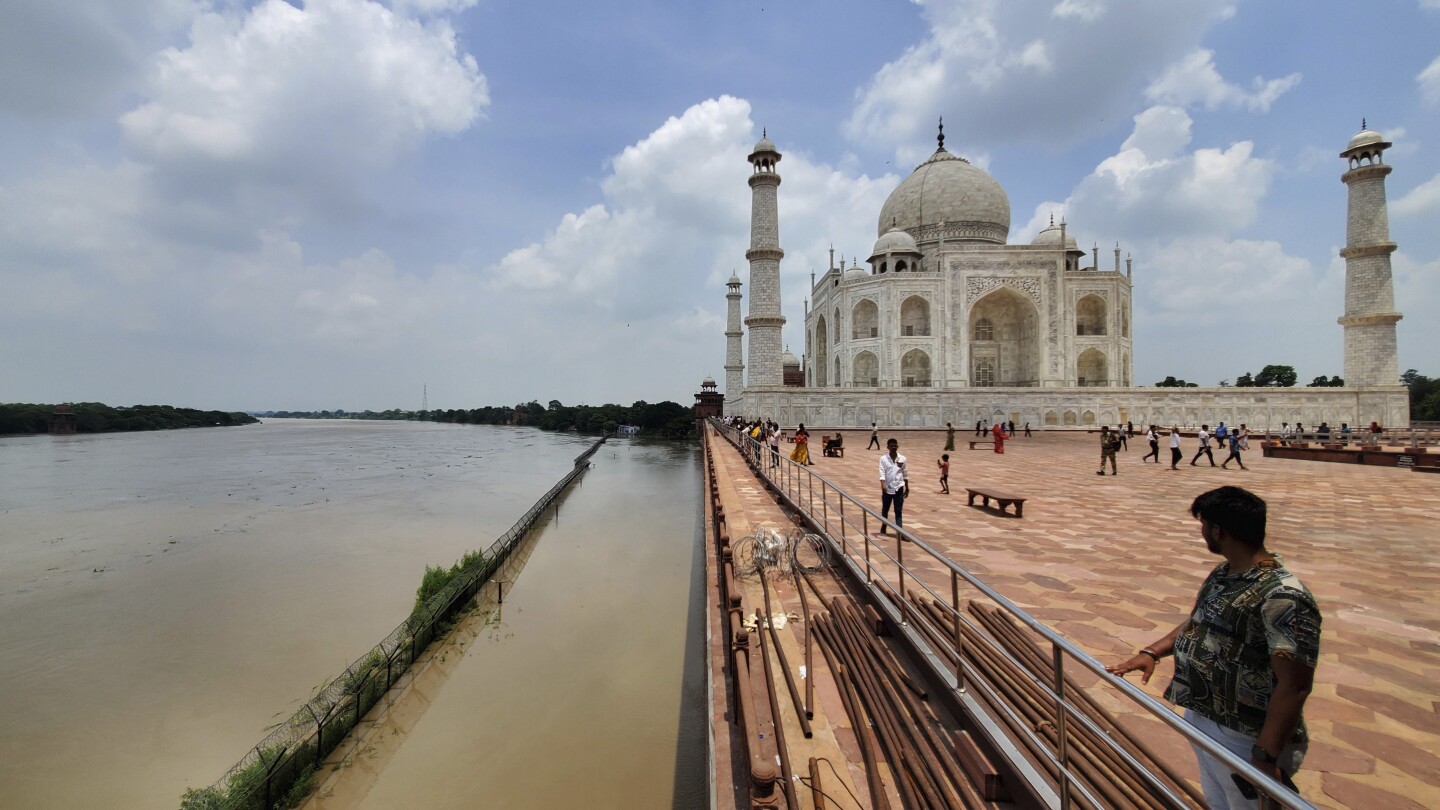
The Yamuna river in India has risen to the outer walls of the Taj Mahal and submerged nearby gardens due to heavy monsoon rains. The flooding comes as severe floods have killed at least 100 people in northern India, causing destruction and landslides. While the red sandstone walls of the Taj Mahal are surrounded by muddy water, the monument itself remains untouched. Some low-lying houses near the monument have been flooded, leading officials to relocate residents to safer areas.