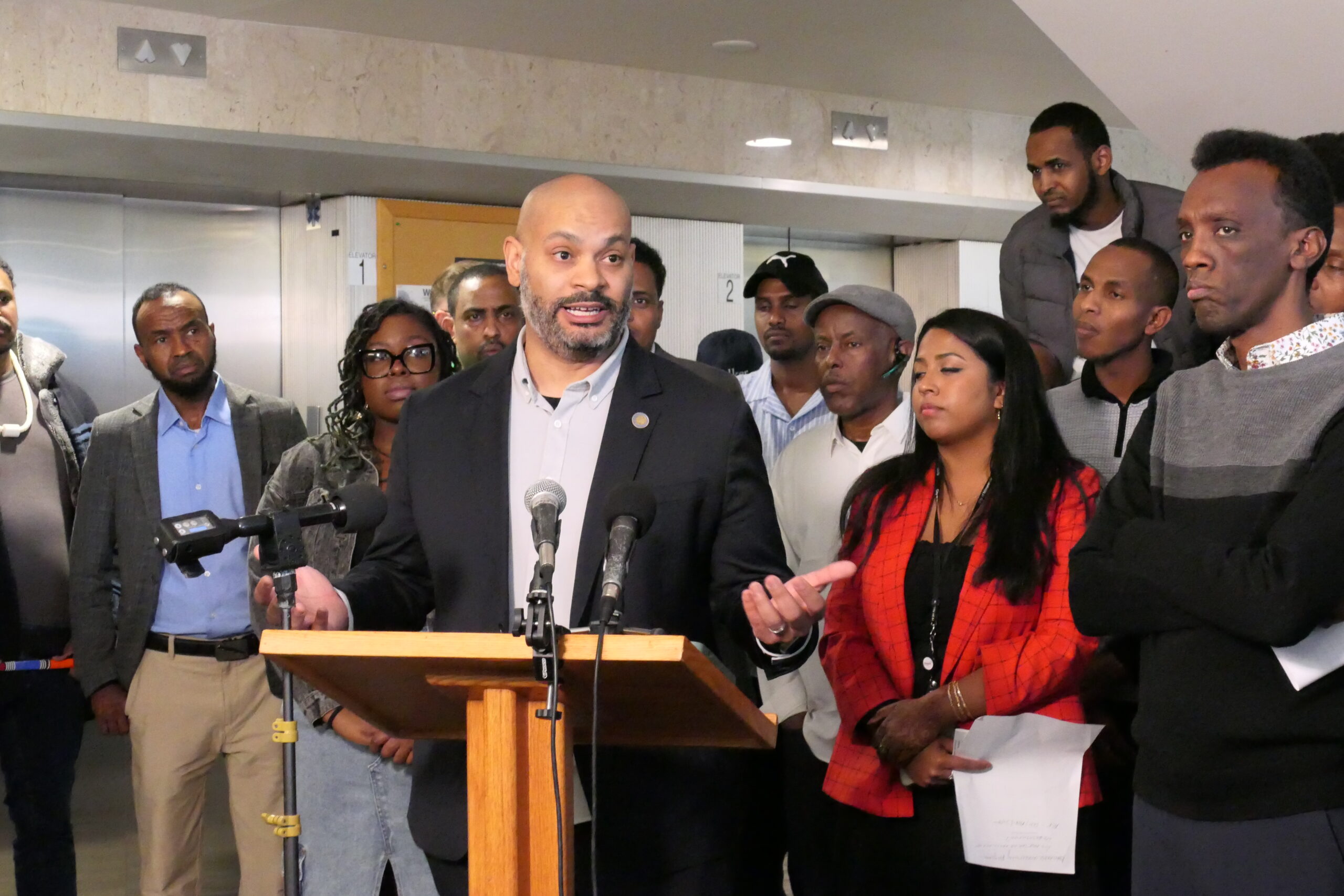
The Minneapolis City Council unanimously voted to delay the enactment of minimum pay rates for Uber and Lyft drivers for two months, offering a lifeline for Democratic legislators facing divisions over the issue. Legislative leaders fear the polarizing ride-hailing issue could disrupt the legislative session, which hangs on a one-vote majority in the Senate. The delay aims to allow for further study of state analysis on driver pay, provide breathing room for legislative leaders, and give alternative companies more time to launch. The decision comes amid pressure to reconsider the minimum rates, with concerns about the potential impact on drivers and transportation services in the city.
The Minneapolis City Council unanimously voted to delay the start of a rideshare ordinance, which sets minimum pay requirements for drivers, from May 1 to July 1. The decision aims to support new rideshare companies seeking licensing in the city and comes amid ongoing state-level rideshare legislation discussions. Uber and Lyft have confirmed they will stay in the city until July 1. The council also considered amendments, including one to rescind the ordinance entirely, but ultimately upheld the measure.
Uber and Lyft plan to exit the Minneapolis market on May 1 in response to a new city ordinance requiring them to pay drivers a higher rate. The ordinance mandates a minimum rate of $1.40 per mile and $0.51 per minute, which the companies argue is too high. The move has sparked debate, with some supporting the ordinance to ensure fair wages for drivers, while others oppose it due to concerns about losing access to ride-hailing services. The state government and city council are considering potential actions to address the situation, while residents and drivers are divided on the issue.
Uber and Lyft plan to exit the Minneapolis market on May 1 in response to a new city ordinance requiring them to pay drivers a higher rate, sparking concern and debate. The ordinance mandates a minimum rate for drivers, which the companies argue is too high and would force them to leave. State lawmakers and the governor are considering intervening, while city council members are divided on the issue. Residents have mixed opinions, with some supporting the ordinance to help marginalized workers and others opposing it due to concerns about losing access to ride-hailing services.
Minneapolis City Council member Andrea Jenkins has filed a notice to reconsider the controversial rideshare ordinance, which Uber and Lyft argue would make rider fares too expensive and drive away customers. This move comes as Uber plans to exit the metro, potentially leaving thousands of drivers without work. The Council is expected to address the reconsideration in Thursday’s meeting, and Jenkins changing her vote could impact the veto-proof majority needed to overturn the ordinance.
Uber is closing its only service center in the Twin Cities, Minnesota, as part of its plan to withdraw from the metro area due to a pay dispute with the Minneapolis City Council. The closure will leave drivers without a local location for in-person assistance with document renewals, vehicle approvals, and issue resolution. The company also reaffirms its intention to cease operations at the Minneapolis-St. Paul International Airport on May 1, coinciding with the implementation of new regulations.
The rise of Uber and Lyft in Minneapolis has disrupted the traditional taxi industry, leading to a debate over regulation and fair compensation for rideshare drivers. The article argues that the government's failure to exercise proper antitrust oversight allowed these companies to build monopolistic businesses, and questions whether it's reasonable to guarantee rideshare drivers a wage not guaranteed to other self-employed workers. The debate reflects the growing political influence of the region's Somali immigrant population, who make up a large proportion of rideshare drivers, and raises concerns about the impact of potential rate increases on various segments of the population, including the working poor and those reliant on transportation services.
Uber and Lyft are threatening to cease operations in the Twin Cities due to an ordinance guaranteeing rideshare drivers increased pay and protections, which the companies argue will make rides unaffordable for most residents. This move mirrors their departure from Austin, Texas in 2016, where they left due to a measure requiring fingerprint background checks for drivers. Governor Tim Walz and Mayor Jacob Frey have condemned the ordinance, suggesting a statewide solution may be necessary. Without an agreement, Lyft plans to end service in Minneapolis, while Uber intends to cease operations in the entire metro area. Experts believe smaller companies may emerge to meet demand if the rideshare giants leave.
The Minneapolis City Council has overridden the mayor's veto to implement a new ordinance setting minimum pay requirements for rideshare drivers, leading Uber and Lyft to announce plans to pull out of the city on May 1st. This decision has sparked concerns about transportation for both late-shift workers and upcoming summer events, while some in the business community worry about the impact on downtown travel. Rideshare drivers express mixed feelings, with some hoping for relief from competition and others already exploring opportunities with alternative rideshare services.
The Minneapolis City Council overrode Mayor Jacob Frey's veto of a resolution calling for a permanent cease-fire in the Israel-Hamas war, prompting chants of "From the river to the sea, Palestine will be free" from a crowd at the meeting place. The resolution also calls for the release of Israeli hostages held by Hamas and the release of Palestinians held in Israeli military prisons, drawing criticism from Jewish groups. Mayor Frey, while supporting a cease-fire, vetoed the resolution as "one-sided," emphasizing the need for inclusivity and unity. The override signals a shift in acceptable criticism of Israel, according to a leader of the American Muslims for Palestine’s Minnesota chapter.
The Minneapolis City Council is expected to shift towards a more progressive majority after recent elections, potentially impacting the council's relationship with the mayor and the issues prioritized at city hall. The progressive faction, which includes Democrats and democratic socialists, is likely to hold at least seven of the 13 seats. However, the strong mayor system may require the progressive faction to collaborate with colleagues in the minority to pass their priorities. Key issues such as police accountability, rent stabilization, and affordable housing are expected to motivate council members to find common ground. The council will choose a new president, and outside groups played a significant role in the election. The mayor plans to run for re-election in 2025.