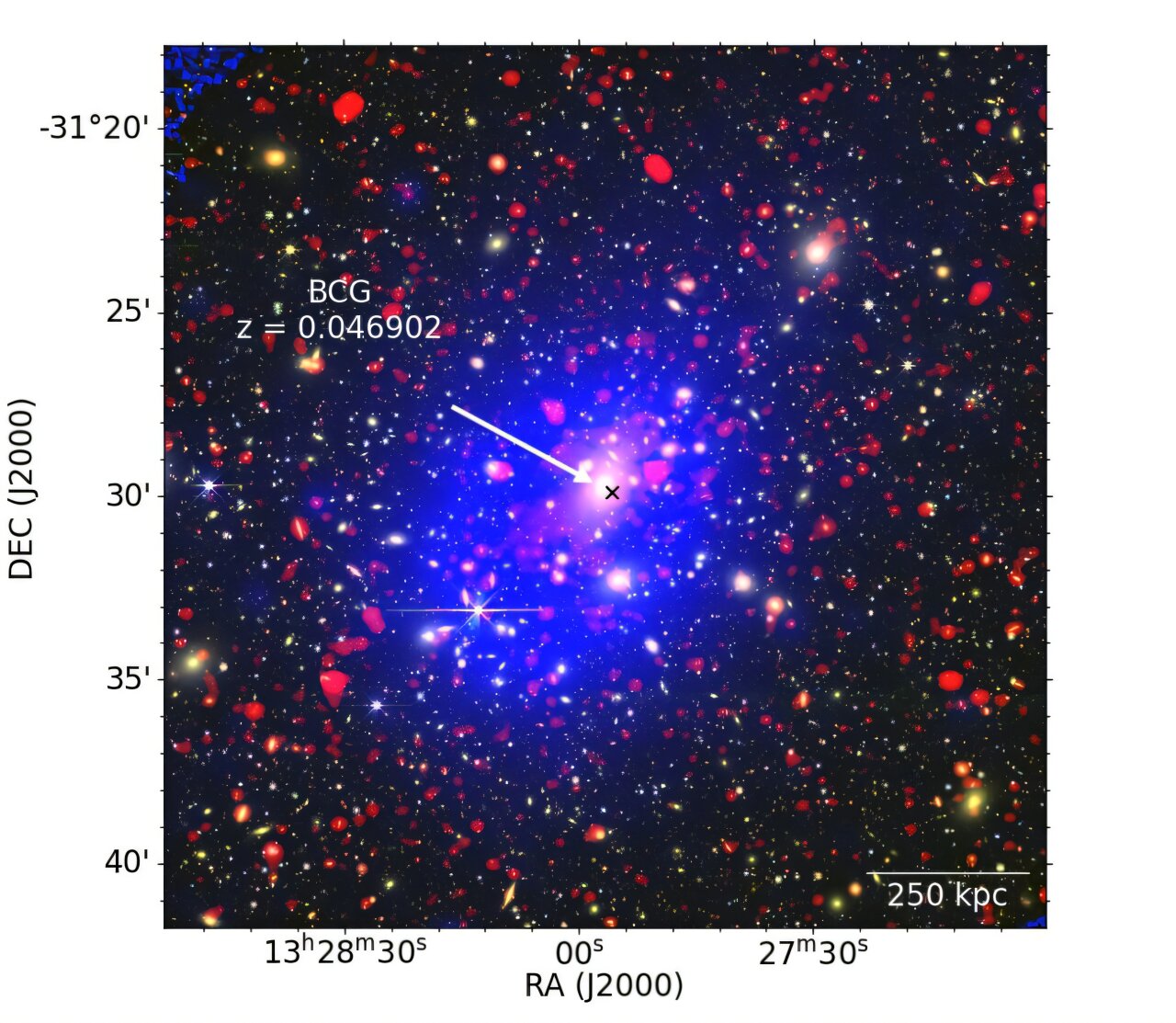
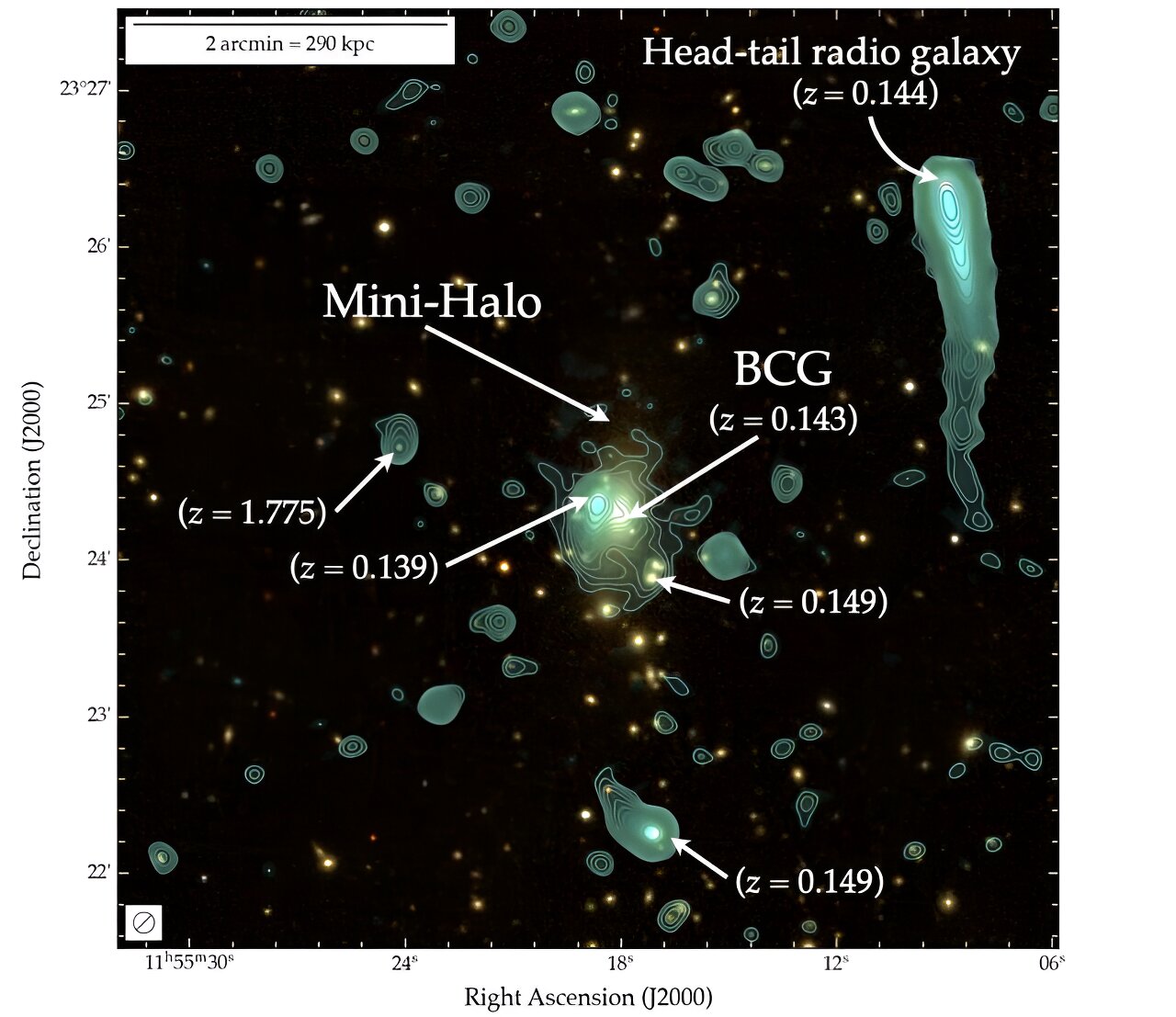
Astronomers using radio telescopes discovered a peculiar mini-halo in the galaxy cluster Abell 3558, extending about 1.8 million light years and likely powered by turbulence from gas sloshing, providing insights into galaxy cluster dynamics and evolution.
Astronomers detected ancient radio signals from a distant galaxy cluster, indicating the presence of high-energy particles and magnetic fields that could shed light on the early universe's formation, with potential origins linked to black holes or cosmic particle collisions.
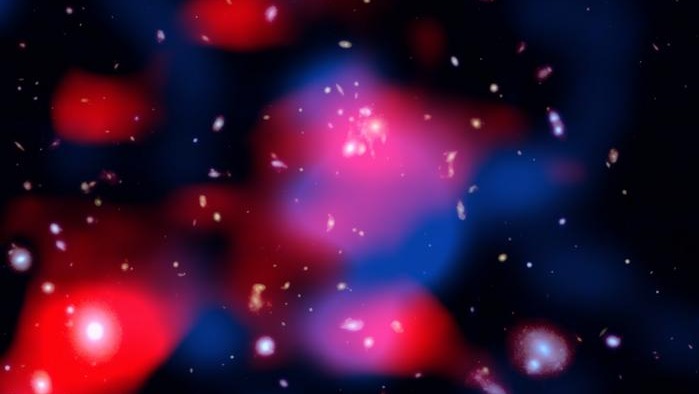
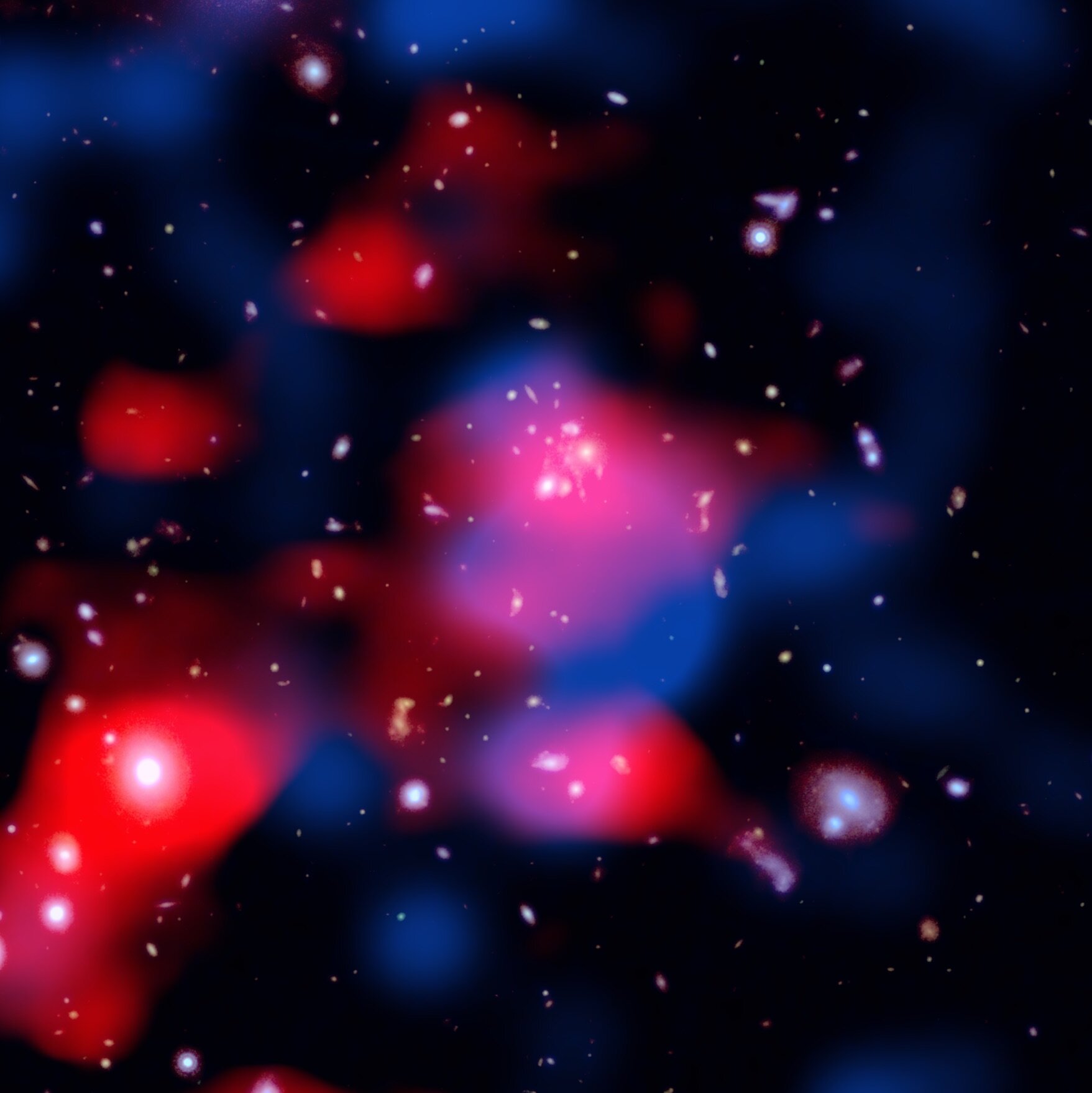
Astronomers have detected the most distant mini-halo, a cloud of energetic particles around a galaxy cluster from 10 billion years ago, which could shed light on the early universe and galaxy formation processes. The discovery suggests such particles have existed since galaxy cluster formation and may be caused by black holes or particle collisions, impacting star formation and cosmic magnetic fields. Future telescopes like the SKA will help further explore these phenomena.
Astronomers have discovered the most distant mini-halo surrounding a galaxy cluster from 10 billion years ago, revealing that energetic processes involving black holes and cosmic collisions have shaped galaxy clusters throughout most of the universe's history, providing new insights into the early universe's formation.
European astronomers have used the LOFAR and MeerKAT telescopes to conduct radio observations of the galaxy cluster Abell 1413. The observations revealed new insights into the cluster's morphology and properties, including the detection of compact radio sources and tailed radio galaxies. The study found that the mini-halo of Abell 1413 is asymmetric and larger than previously thought, with a spectral steepening. The radio/X-ray surface brightness of the cluster was strongly correlated, providing further evidence of spectral steepening. The researchers proposed a hybrid model to explain the mechanism powering the mini-halo, suggesting the presence of large-scale turbulence in the cluster.