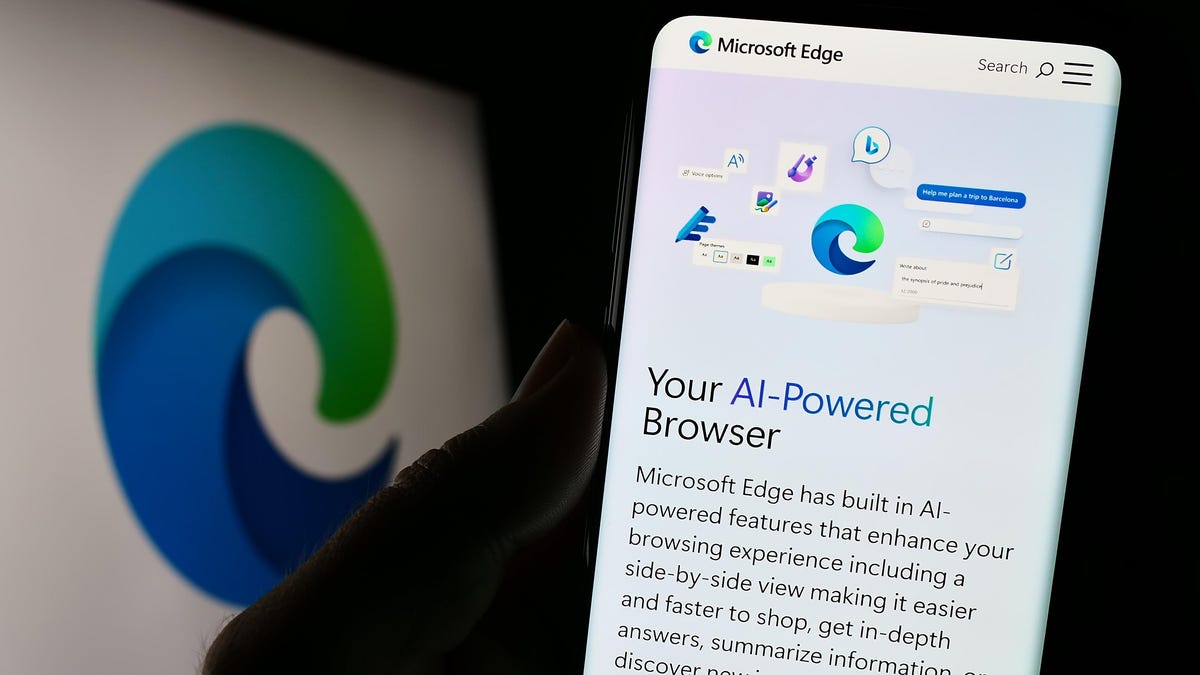
Microsoft is rebranding its Edge browser as an "AI Browser," emphasizing its integration with AI capabilities like Bing AI and OpenAI's DALL-E 3. The company has updated its app store descriptions to highlight these features and privacy aspects, although the AI branding is not present in the Microsoft Store. This move is part of a broader trend where companies are increasingly branding their products with "AI" to signify the integration of advanced deep learning algorithms, as seen with LG's latest TVs. The trend is expected to continue, with AI becoming a common feature in a wide range of consumer devices, potentially diluting the term's significance.
Microsoft has rebranded its Edge browser as an "AI Browser" on Android and iOS platforms, emphasizing its integration with AI features like Copilot and GPT-4. The new tagline, which has been in use since at least November 2021, positions Edge as a smarter browsing option that leverages AI to enhance user experience with capabilities such as refining searches, summarizing content, and creating images with DALL-E 3. This change aligns with Microsoft's broader strategy of infusing AI into its products and services.
Microsoft has rebranded its Edge browser as the "AI browser," emphasizing the integration of artificial intelligence features. This change is reflected in the browser's marketing on mobile platforms such as iOS and Android, where it is promoted for its AI capabilities. The move signals Microsoft's continued investment in AI technology for its products in 2024.
The latest Statcounter report shows Microsoft Edge reaching a new all-time high with nearly 12% market share, surpassing Safari, which experienced a significant drop. Chrome continues to dominate the desktop browser market with over 65% share. On mobile, Chrome and Safari lead, while Edge has a minor presence. The data indicates shifting preferences among desktop users, with Edge gaining traction and Safari losing ground.