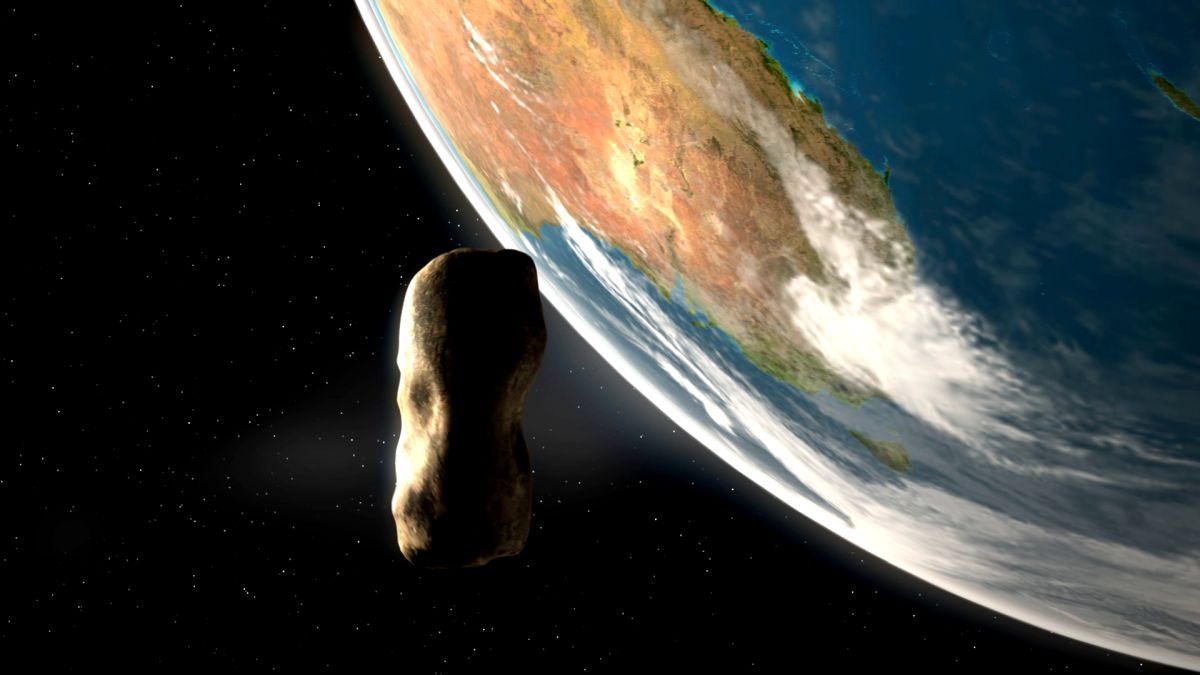
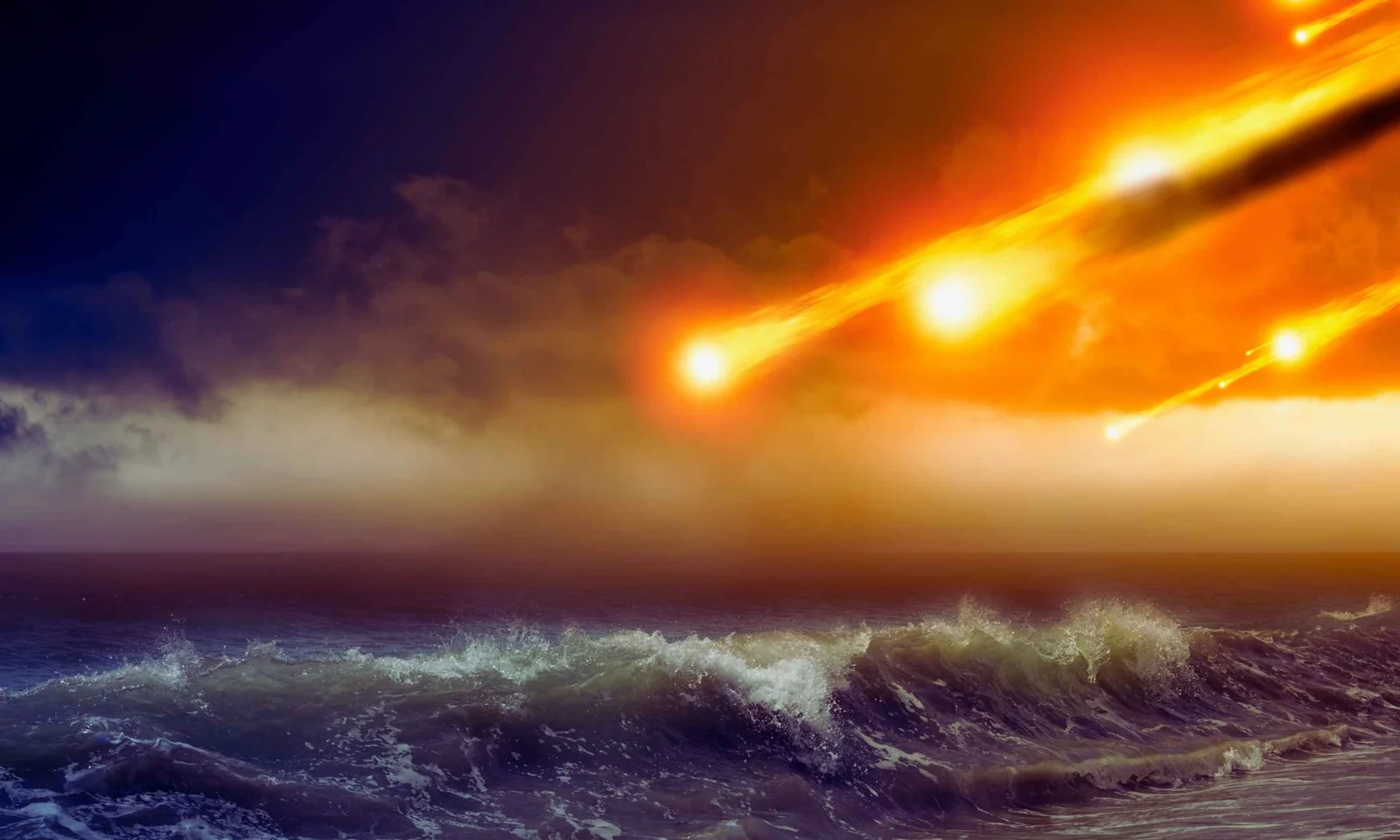
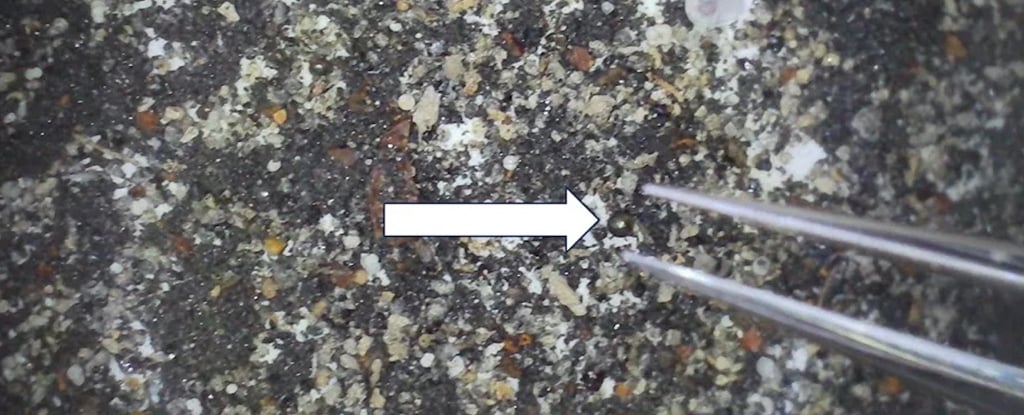
Scientists discovered tiny glassy blobs called ananguites in Australia, revealing an 11-million-year-old meteorite impact that left no known crater, suggesting a previously unknown and massive event in Earth's history.
Scientists discovered tiny glassy blobs called ananguites in Australia, revealing an 11-million-year-old meteorite impact that left no visible crater, providing new insights into Earth's impact history.
A new study revises the date of a Scottish meteorite impact from 1.2 billion to about 990 million years ago, providing a precise timestamp that links the event to the emergence of complex life on land, and offering insights into Earth's geological and biological evolution.
A recent study suggesting the discovery of interstellar material on the ocean seabed has been challenged by a new study, which found that the iron isotopes of the spherules in question indicate a local origin, likely from the Australasian tektite strewn field caused by a large impact 790,000 years ago. While these particular spherules have a local origin, the search for interstellar objects on Earth continues.
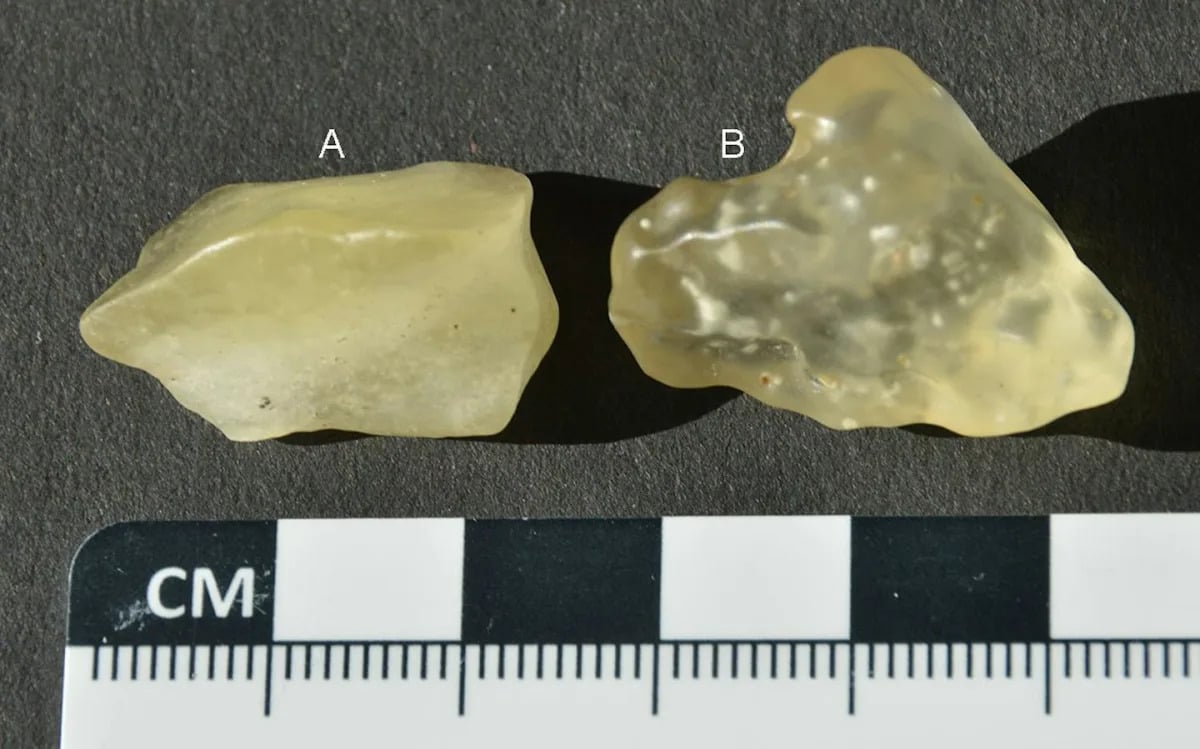
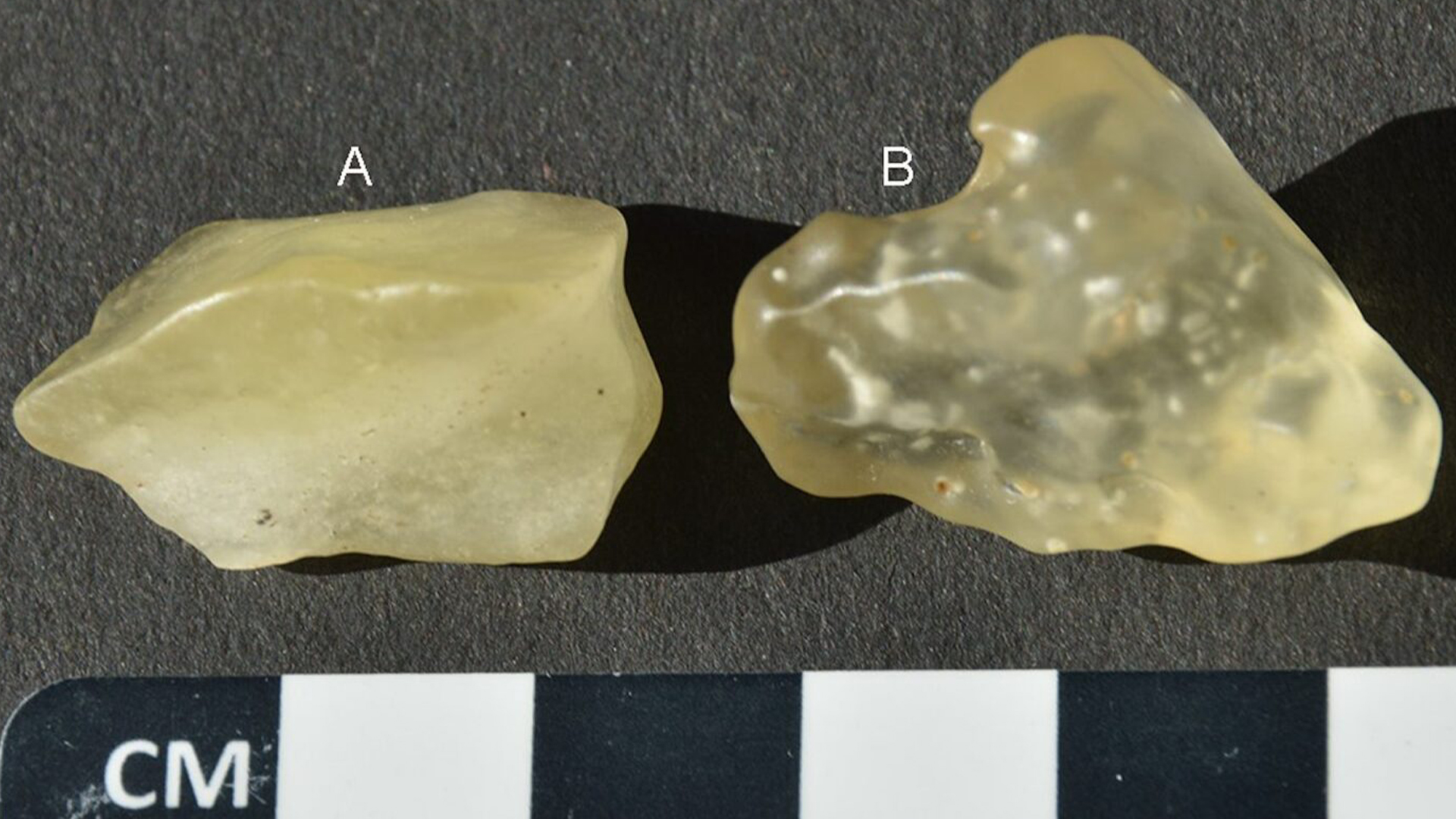
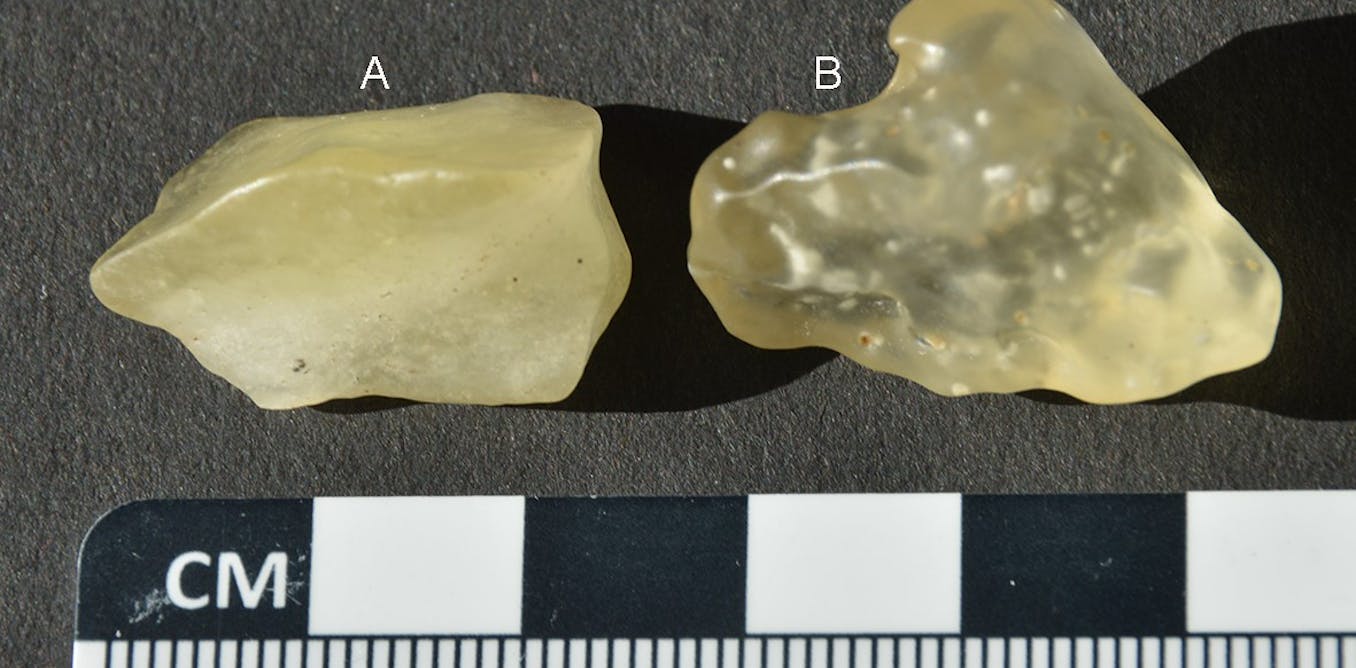
Scientists have used advanced microscopy technology to determine that Libyan desert glass, a rare and mysterious yellow glass found in the Great Sand Sea Desert, originated from a meteorite impact on Earth's surface. The glass, which is rich in silica and found in large quantities, has puzzled scientists for almost a century. The study revealed the presence of zirconium oxide minerals, including cubic zirconia and a rare polymorph called ortho-II, indicating high temperatures and pressures consistent with a meteorite impact. However, the exact location and size of the parental crater remain unknown, requiring further investigation.
Researchers have traced the origin of a mysterious yellow glass found in the Great Sand Sea Desert in Africa to an extraterrestrial impact from a meteorite 29 million years ago. The glass, which has high levels of silica, has remained a mystery for almost a century. Advanced microscopy technology revealed the presence of zirconium oxide, indicating the intense pressure and temperature needed to create it. While researchers believe it was an extraterrestrial impact, they still need to find the parental crater to confirm their findings. The yellow glass was also found attached to a pendant in Tutankhamun's tomb, highlighting its significance during ancient Egyptian times.
Scientists have used advanced microscopy technology to determine that Libyan desert glass, a rare and mysterious yellow glass found in the Great Sand Sea Desert, originated from a meteorite impact on Earth's surface. The glass, close to 29 million years old, contains small minerals such as cubic zirconia and ortho-II, which can only form under high temperature and pressure conditions. However, the exact location of the parental crater, where the meteorite hit, remains unknown, posing more questions for future investigations.