Tag

Megastorms

All articles tagged with #megastorms

Centuries-Long Megastorms on Saturn: Unveiling the Lingering Scars
space2 years ago

Centuries-Long Megastorms on Saturn: Unveiling the Lingering Scars

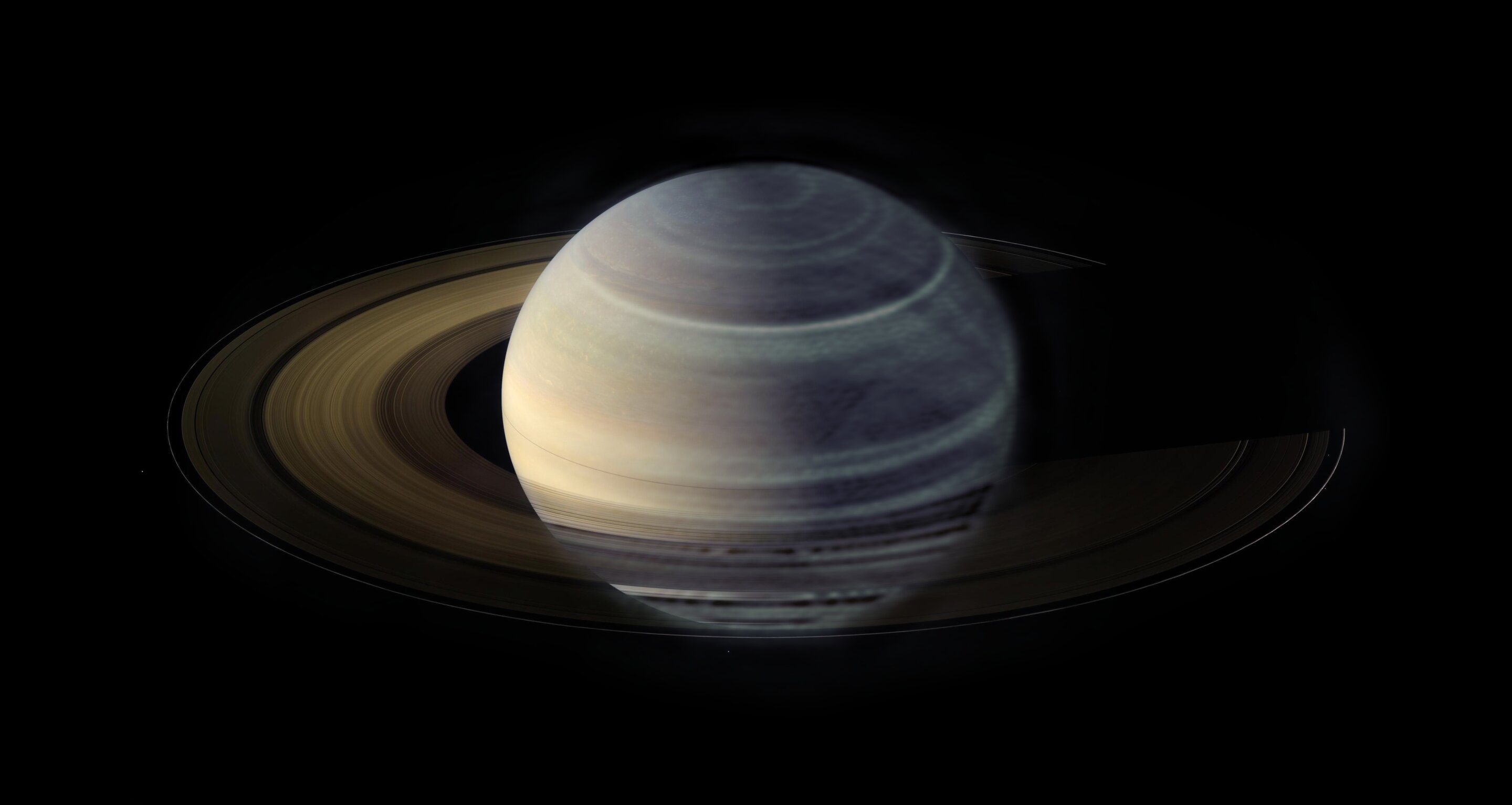
Megastorms on Saturn can last for centuries, leaving marks on its atmosphere. Researchers from UC Berkeley and the University of Michigan studied radio emissions from Saturn and discovered long-term disruptions in the distribution of ammonia gas. These megastorms, which occur every two to three decades, resemble Earth's hurricanes but on a much larger scale. The driving force behind these storms remains a mystery, but the findings provide a broader perspective on the largest storms in the solar system and challenge current knowledge of terrestrial meteorology.
Centuries-Long Megastorms Ravage Saturn's Skies
space2 years ago

Centuries-Long Megastorms Ravage Saturn's Skies

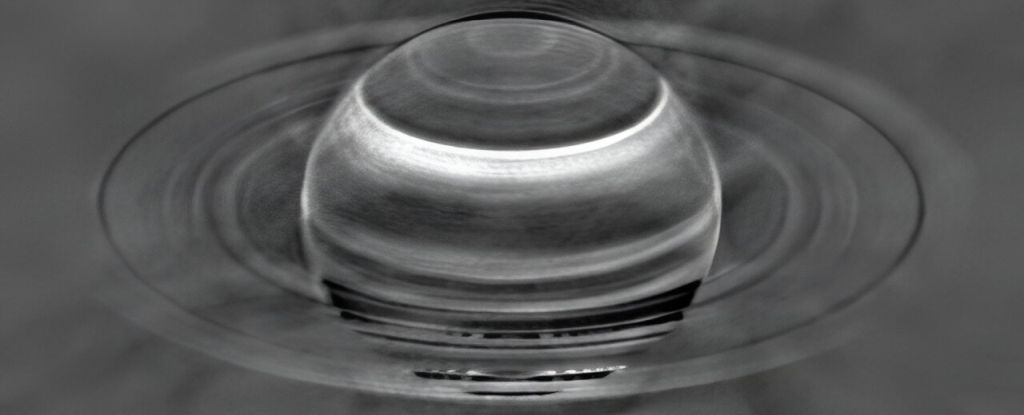
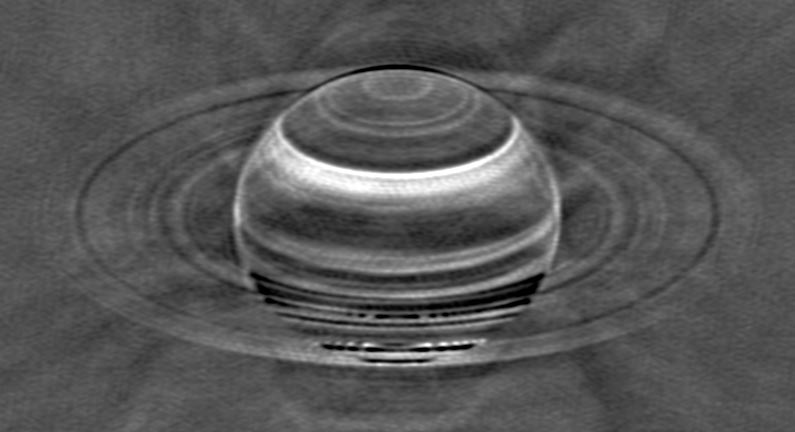
A new study has revealed that Saturn, like Jupiter, experiences persistent megastorms that can last for centuries and leave deep atmospheric scars. By analyzing radio waves emitted by Saturn, astronomers have discovered long-lasting signatures of giant storms, including equatorial storms that occurred hundreds of years ago. The research provides insights into the dynamics of Saturn's megastorms and challenges our current understanding of hurricanes. The study also found anomalous concentrations of ammonia deep in Saturn's atmosphere, which are records of ancient megastorms that can persist for hundreds of years. The findings highlight the differences between Saturn and Jupiter and can help in understanding the evolution of gas giant exoplanets.

Unraveling the Mysteries of Saturn's 100-Year-Long Megastorms
space-science2 years ago

Unraveling the Mysteries of Saturn's 100-Year-Long Megastorms

Researchers have discovered long-lasting megastorms on Saturn, similar to Jupiter's Great Red Spot, through the study of radio emissions and ammonia gas disruptions. These megastorms occur approximately every 20 to 30 years and have impacts deep in Saturn's atmosphere that persist for centuries. The findings challenge the current understanding of megastorms and atmospheric differences between gas giants, offering new insights that may affect future studies on exoplanets.

Unraveling the Enigma of Saturn's Centuries-Long Megastorms
space-science2 years ago

Unraveling the Enigma of Saturn's Centuries-Long Megastorms

Scientists have discovered that the impacts of megastorms on Saturn, which occur once every 20 or 30 years, can last for centuries. Using radio telescope scans, researchers found traces of megastorms that occurred over 100 years ago, as well as a potentially new storm. These storms drive a mysterious ammonia transport process, dragging ammonia gas from the upper atmosphere into the lower atmosphere. The mechanisms behind these atmospheric anomalies and the formation of megastorms remain a mystery, but studying them could broaden our understanding of giant planet formation and storm systems.

"Saturn's Epic Megastorms: Earth-Sized and Centuries-Long"
space2 years ago

"Saturn's Epic Megastorms: Earth-Sized and Centuries-Long"

A new study has revealed that Saturn, often considered more subdued than Jupiter, experiences colossal megastorms that can last for centuries. Using radio emissions analysis, researchers discovered disturbances in ammonia gas distribution linked to past megastorms in Saturn's northern hemisphere. The study found that these storms can cause long-lasting shifts in the planet's atmosphere, challenging current knowledge of terrestrial meteorology. The findings highlight the differences between Jupiter and Saturn's atmospheric behaviors and could reshape our understanding of megastorms on other planets and exoplanets.
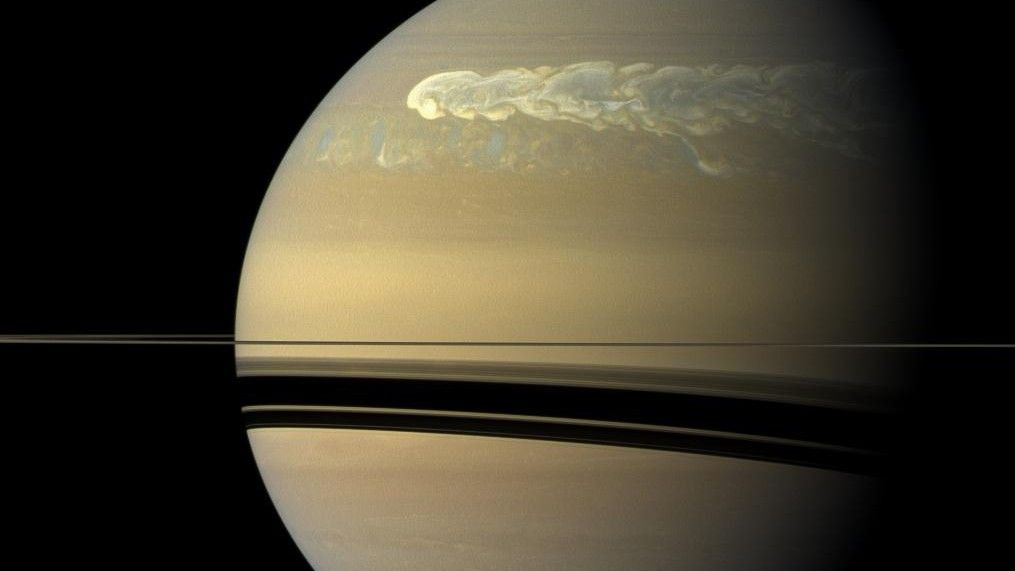
Centuries-Long Impact: Saturn's Giant Storms Leave Lasting Traces
space2 years ago

Centuries-Long Impact: Saturn's Giant Storms Leave Lasting Traces

A new study reveals that Saturn, like Jupiter, experiences long-lasting megastorms that persist for centuries and have deep impacts in the atmosphere. These megastorms occur every 20 to 30 years and are similar to hurricanes on Earth but much larger. The study, conducted by astronomers from the University of California, Berkeley, and the University of Michigan, Ann Arbor, used radio emissions to observe disruptions in the distribution of ammonia gas in Saturn's atmosphere. The concentration of ammonia is lower at midaltitudes but becomes enriched at lower altitudes, indicating transport from the upper to the lower atmosphere. The findings challenge current knowledge about megastorm formation on gas giants and may have implications for studying exoplanets in the future.