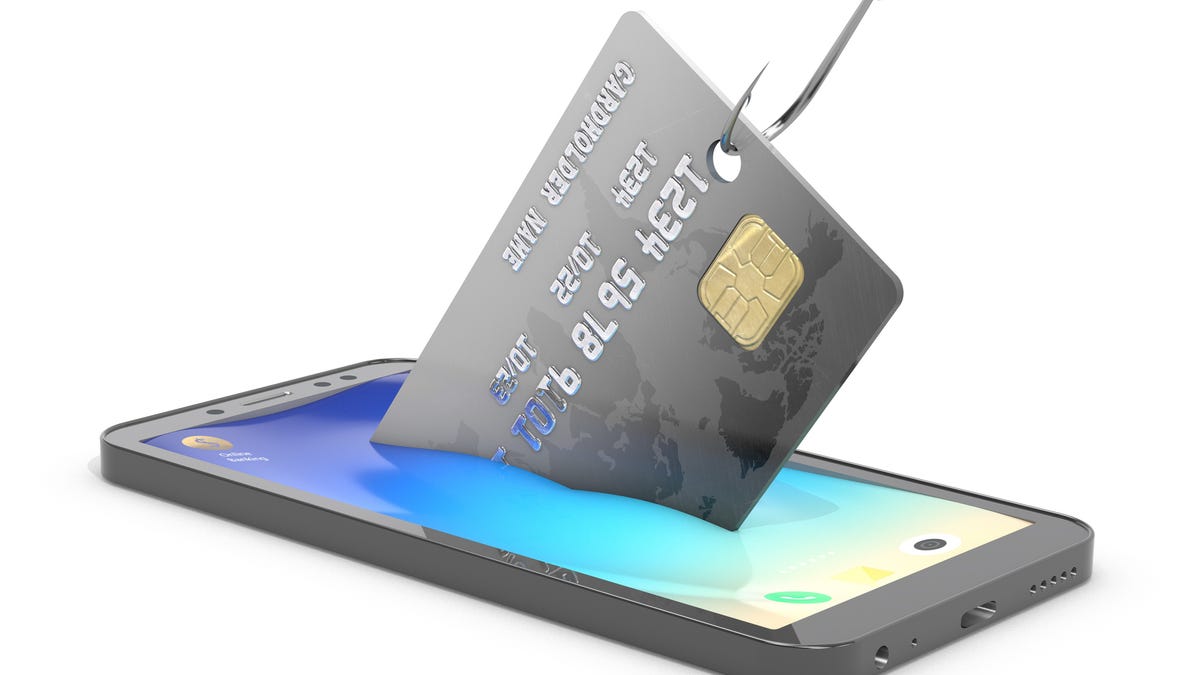
Scammers are exploiting Google Forms, a popular tool in Google Drive, to trick users into providing personal information. Users are advised to be cautious and verify the legitimacy of forms before filling them out to avoid falling victim to malicious schemes.
Google will verify all Android app developers in Brazil, Indonesia, Singapore, and Thailand starting September 2026 to enhance security and prevent malicious apps, with phased invitations beginning October 2025. This move aims to increase accountability, reduce impersonation, and protect users from malware, especially from third-party app stores, while maintaining user choice and preparing for potential Play Store reforms.
The FBI warns against installing apps from unsolicited messages and highlights the rise of sophisticated scam tactics involving fake calls, texts, and apps that aim to steal money and personal information. Citizens are advised to never download software or click links from unknown sources, and to independently verify any suspicious contact, especially from impersonated authorities or banks, to avoid falling victim to these scams.
The FBI warns against installing apps from unsolicited messages and advises never to engage with scam calls or texts, as these are increasingly used to steal money through fake tech support, government impersonations, and malicious links, with victims losing their savings. Staying safe involves ignoring suspicious communications and reporting scams promptly.
Three malicious Android apps containing XploitSPY malware are targeting users' personal and financial information, even after being removed from the Google Play Store. Despite passing through Google Play Protect, these apps can still steal sensitive data and compromise financial accounts. Users are advised to immediately uninstall the apps Dink Messenger, Sim Info, and Defcom, and watch for signs of XploitSPY malware on their devices.
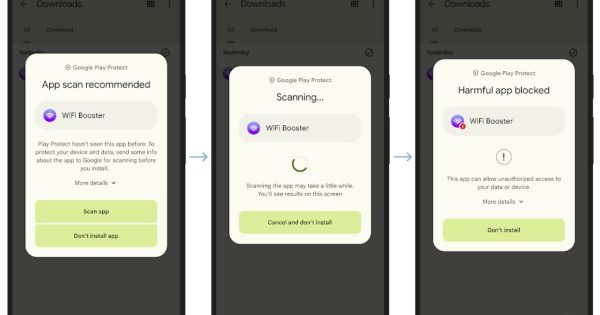
Google has introduced a new real-time app scanning feature in its Google Play Protect security engine for Android. The feature conducts a code-level analysis of an app and blocks its installation if it is deemed potentially harmful. This is aimed at combating the proliferation of malicious sideloaded apps, which often evade detection by morphing their appearance or altering their code. While Google's Play Store screens apps for malware, many users still resort to sideloading, which poses security risks. The enhanced scanning feature is particularly important in countering predatory loan apps that have led to harassment and even suicides. Google plans to expand the feature internationally after its initial launch in India.
Google Play Protect is introducing real-time app scanning, utilizing on-device machine learning and similarity comparisons to detect malicious code in apps. The software extracts important signals from the app and sends them for code-level evaluation, providing users with a result indicating whether the app is safe to install or potentially harmful. The feature will initially roll out in India and then become available to users worldwide in the coming months.
Malicious Telegram clones for Android on Google Play have infected over 60,000 users with spyware, stealing user messages, contacts lists, and other data. The apps, targeted at Chinese-speaking users and the Uighur ethnic minority, may have ties to state monitoring and repression mechanisms. The malicious apps were discovered by Kaspersky and reported to Google, but some were still available for download at the time of the report. The apps appear as faster alternatives to the original Telegram app but contain additional code to steal data. Google has since removed the apps from Google Play and banned the developers. Users are advised to stick to genuine versions of messaging apps and avoid downloading forked apps that promise enhanced features.
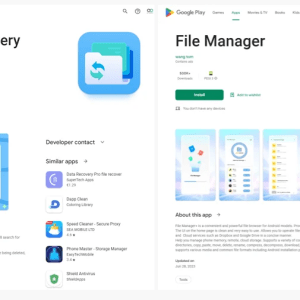
Two file management apps on the Google Play Store, with over 1.5 million downloads combined, have been found to contain spyware that sends user data to servers in China. The apps, named "File Recovery and Data Recovery" and "File Manager," were discovered by cybersecurity firm Pradeo. The spyware is designed to steal various types of sensitive information, including contact lists, media files, real-time location, and device details. The apps have advanced permissions to hide their icons and make uninstallation difficult. Users are advised to delete the apps, and organizations are encouraged to educate employees about mobile threats and implement mobile detection and response measures. This discovery highlights the need for improved app analysis processes in app stores to prevent the distribution of malicious apps.
Two apps with a combined 2 million downloads from the Google Play Store have been found to contain hidden spyware linked to China. The apps, disguised as file management software, can self-launch without user interaction and secretly exfiltrate sensitive user data to malicious servers in China. The spyware collected personal data such as device information, location, media content, and contact lists. Users are advised to delete the apps and avoid downloading apps without reviews or from third-party stores. Organizations should automate mobile detection and response to ensure compliance with security policies.
Two file management apps on Google Play, with a combined installation count of over 1.5 million, have been found to collect excessive user data and send it to servers in China. The apps, named File Recovery and Data Recovery, were reported to Google but are still available on the platform. The apps hide their icons and abuse permissions to launch in the background. The collected data includes users' contact lists, pictures, audio, video, real-time location, and device information. Google has since removed the apps and assured users that Google Play Protect will continue to safeguard against such malware.
Malicious apps are a constant threat to smartphone users, with some apps stealing user data or infecting devices with malware. Users should be cautious of free apps, especially those with connections to China, and avoid downloading apps that mimic popular ones. Recently, cybersecurity researchers have found spyware and adware in popular Android apps, and malware like SpinOK and fleeceware in other apps. To stay safe, users should keep their devices updated, only download apps from official app stores, and pay attention to app permissions.
Malicious apps that steal personal information and money are still making their way into Apple and Google's app stores, despite their efforts to keep them out. Researchers have identified "fleeceware" apps that masquerade as ChatGPT-based chatbots and overcharge users for their use. The apps offer "near-zero functionality" and inundate users with ads, prompting them to sign up for paid subscriptions that could cost hundreds of dollars per year. Users should be cautious of app permissions, audit their apps, be skeptical of big claims, and avoid third-party app stores.
Google has warned Android smartphone owners about malicious apps that could steal their data, including personal files, passwords, and location. Malicious apps contain malware like trojans, spyware, and keyloggers. To combat these apps, Google has developed a tool called "Play Protect," which can scan for unnecessary or untrusted apps on your device. Google recommends keeping Play Protect on for security and uninstalling any suspicious apps found during the scan.
Android phone users are being warned to watch out for malicious apps that can cause chaos in their digital and real life. Cybersecurity expert Kristina Balaam has highlighted three warning signs that an Android app may be unsafe: unusual requests for permissions, strange behavior after downloading, and seemingly innocent requests for Accessibility Services that can be abused by threat actors to monitor everything a user does on their device. Users are advised to keep a close eye on any apps they install, even from the Google Play Store, to avoid being spied on, defrauded, stolen from, blackmailed, and more.