Tag

Magma Plumes

All articles tagged with #magma plumes

Unraveling the Enigma of the Indian Ocean's Giant Gravity Hole
science-and-environment1 year ago

Unraveling the Enigma of the Indian Ocean's Giant Gravity Hole

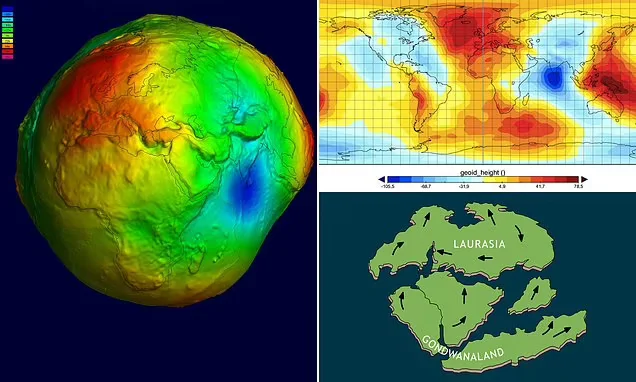
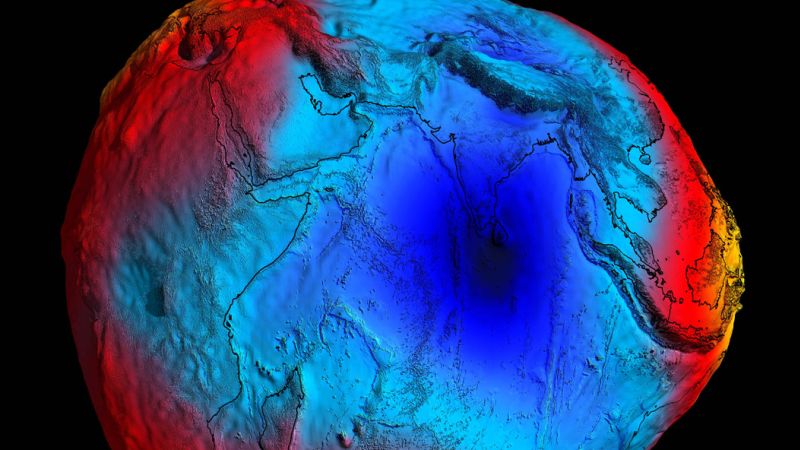
Researchers have proposed that the mysterious 'gravity hole' in the Indian Ocean, causing a significant depression in sea level, is likely formed by magma plumes originating from deep within the Earth. Using computer simulations spanning 140 million years, they observed the movement of tectonic plates and magma within the mantle, finding that the anomaly emerged in six out of nineteen simulations. The 'gravity hole' is believed to have formed approximately 20 million years ago due to the disappearance of an ancient ocean as India's landmass shifted and collided with Asia. The future of this phenomenon remains uncertain, with some experts expressing intrigue and others raising concerns about the study's modeling strategy.
Unraveling the Mystery of the Indian Ocean's Gravity Hole
science-and-technology2 years ago

Unraveling the Mystery of the Indian Ocean's Gravity Hole

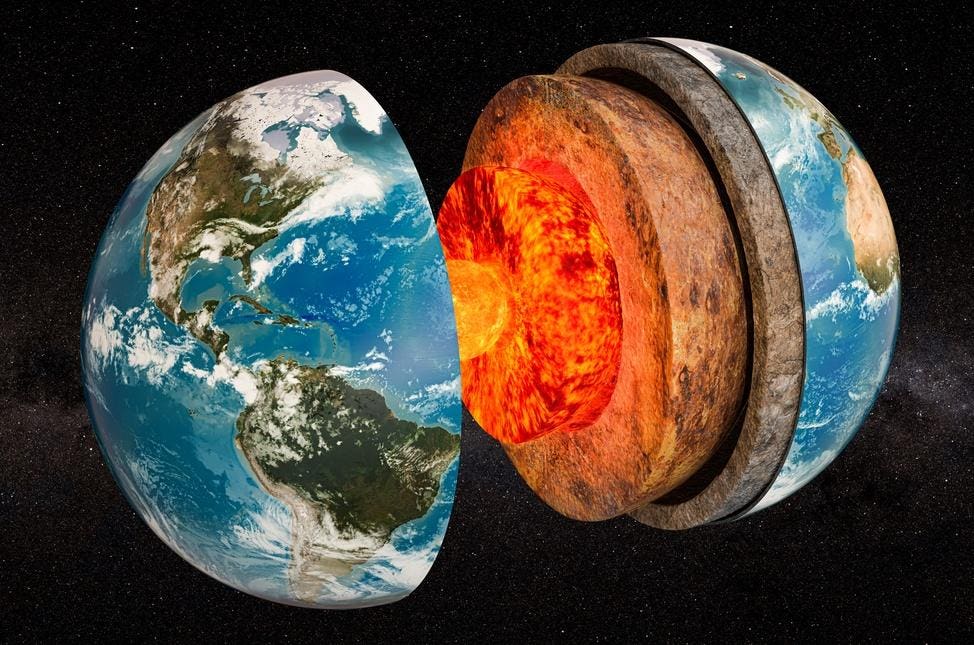
Scientists have used supercomputers to simulate the formation of the "gravity hole" in the Indian Ocean, a depression that experiences less gravity than the rest of the planet. The study suggests that the cause of the gravity hole is likely due to plumes of magma under the Earth's crust, formed by the drifting and collision of India's subcontinent with Asia 40 million years ago. The researchers ran simulations dating back 140 million years, with six of them leading to the formation of the gravity hole. However, some experts argue that the study fails to account for certain factors and that the simulated geoid differs from Earth's real surface shape.

Unraveling the Mystery of the Indian Ocean's 'Gravity Hole'
science2 years ago

Unraveling the Mystery of the Indian Ocean's 'Gravity Hole'

Scientists from the Indian Institute of Science have proposed a credible explanation for the "gravity hole" in the Indian Ocean, where Earth's gravitational pull is weaker and the sea level dips significantly. Using computer simulations, they found that plumes of magma originating from the disappearance of an ancient ocean between India and Asia could be responsible for the formation of this gravitational anomaly. The simulations showed that the presence of these magma plumes, along with the mantle structure, led to the formation of the "gravity hole." The research provides insights into Earth's complex structure and its impact on gravity.

Unraveling the Mystery of the Gravity Hole in the Indian Ocean
earth-science2 years ago

Unraveling the Mystery of the Gravity Hole in the Indian Ocean

Scientists have discovered a 'gravity hole' in the Indian Ocean, where the sea level is around 340 feet lower than the surrounding area. A team of researchers in India believe that this gravity hole was formed by plumes of low-density magma that rose up from Earth's mantle. These plumes were generated by the remains of a sunken tectonic plate called Tethys, lost when India became part of Asia 50 million years ago. The study used computer simulations to track the movement of tectonic plates and suggests that the violent interactions between these plates may hold clues to the existence of this gravitational anomaly.

Unraveling the Mystery of the Indian Ocean's Gravity Hole
science2 years ago

Unraveling the Mystery of the Indian Ocean's Gravity Hole

Scientists from India's Institute of Science have proposed a potential explanation for the mysterious gravity hole in the Indian Ocean. They believe that a cold and dense area, the remains of an old ocean plunged into a "slab graveyard" beneath Africa 30 million years ago, along with plumes of hot and low-density magma, are causing the gravity hole. However, further research is needed to confirm this theory.

Unraveling the Mystery of the Gravity Hole in the Indian Ocean
science2 years ago

Unraveling the Mystery of the Gravity Hole in the Indian Ocean

Scientists have discovered a "gravity hole" in the Indian Ocean, where the pull of gravity is lower than average, resulting in a lower sea level. This phenomenon is likely caused by magma plumes that have been flowing for the past 20 million years. The researchers believe that when these plumes eventually stop, the gravity hole will dissipate. This finding provides valuable insights into Earth's geoid and gravitational variations.