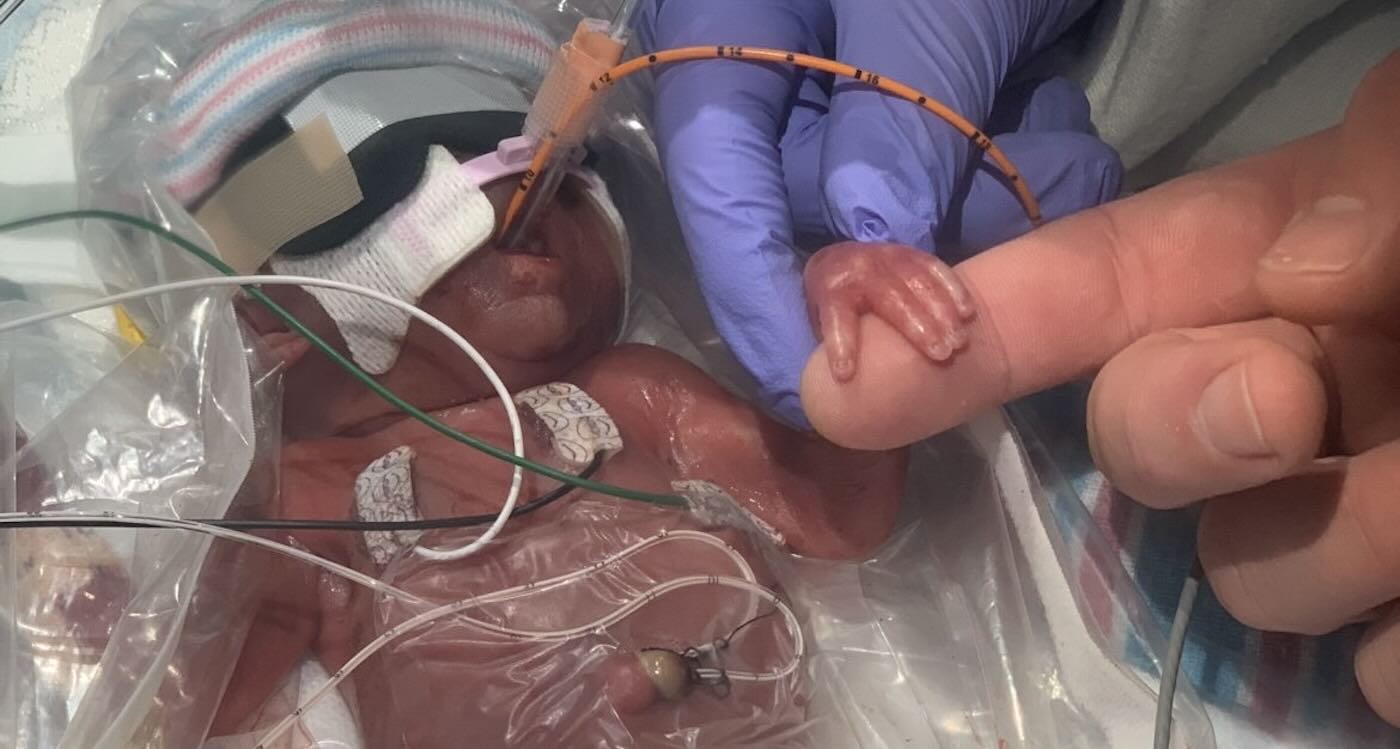
A micro-preemie born at 22 weeks weighing just one pound has spent nearly a year in the NICU battling severe health issues but is now home and developing normally, highlighting remarkable medical advances and family resilience.
Diane Ladd, a renowned actress with a career spanning over six decades and multiple Oscar nominations, has died at age 89 at her home in Ojai, California, with her daughter Laura Dern by her side. Her death follows her recent diagnosis with idiopathic pulmonary fibrosis and the passing of her husband, raising questions about the impact of these losses. Ladd's legacy includes a diverse body of work in film and television, and she was celebrated for her versatility and depth as an actress.
Scientists are exploring a novel 'butt breathing' technique, which involves delivering oxygen rectally, as a potential treatment for lung problems. Initial human trials have shown that the method is safe and well tolerated, paving the way for further research to assess its effectiveness in improving oxygen levels in patients with respiratory failure.
A novel 'butt breathing' technique, initially considered a satirical Ig Nobel award winner, has shown promising safety results in human trials and could potentially help patients with severe lung problems by delivering oxygen rectally, inspired by fish and artificial blood research.
aTyr Pharma's experimental drug efzofitimod failed to meet its primary goal in a late-stage trial for pulmonary sarcoidosis, causing its shares to plummet over 80% to a record low, though the company sees potential benefits and plans to discuss next steps with the FDA.
A new study highlights that COPD can affect people under 50, with 4.5% of adults in this age group diagnosed, and that early onset COPD is linked to higher risks of hospitalization and death. Smoking remains the primary risk factor, but non-smokers can also develop COPD. Early diagnosis and lifestyle changes, including quitting smoking and vaccination, are crucial for managing the disease and improving outcomes.
Insmed received FDA approval for its lung disease drug brensocatib, marketed as Brinsupri for bronchiectasis, with potential peak sales of $5 billion, positioning it as a major growth driver for the company, which is also seeking approvals in Europe, the U.K., and Japan.
A 68-year-old man was diagnosed with idiopathic pulmonary fibrosis (IPF), a serious and often underdiagnosed lung disease that causes lung scarring and difficulty breathing. Despite a grim prognosis, he underwent a lung transplant and has regained much of his lung capacity, highlighting the importance of early detection and awareness of symptoms like persistent dry cough and shortness of breath. IPF's cause remains unknown, and it primarily affects older adults, making awareness and prompt diagnosis crucial for better management.
A healthy 68-year-old man with no symptoms was diagnosed with a severe lung disease, idiopathic pulmonary fibrosis, and after a series of tests, underwent a successful double-lung transplant, which significantly improved his quality of life and allowed him to continue his passion for training therapy dogs, highlighting the importance of medical advancements and hope in treating terminal diseases.
Merck is acquiring Verona Pharma for $10 billion to expand its portfolio with the lung-disease drug Ohtuvayre, aiming to diversify as its top-selling drug Keytruda faces patent expiration. The deal, Merck's largest since 2021, reflects its strategy to offset revenue decline from Keytruda and capitalize on promising COPD treatments, with analysts optimistic about Ohtuvayre's potential to become a multibillion-dollar therapy.
Doctors are raising alarms about a rising epidemic of silicosis, a deadly lung disease caused by inhaling silica dust from cutting quartz countertops. The condition, which causes irreversible lung scarring, is increasingly affecting workers in the stone-cutting industry, particularly those handling engineered quartz with high silica content. Many cases are underdiagnosed, delaying critical treatment. The disease is incurable and can lead to severe health issues, including the need for lung transplants. Researchers emphasize the need for better workplace safety and early screening, especially for vulnerable immigrant workers.
Silicosis, a severe lung disease caused by inhaling silica dust, is increasingly affecting American stone and construction workers, leading to a surge in lawsuits against stone manufacturers. The disease, once thought to primarily affect miners, is now recognized as a significant risk for workers cutting quartz and granite countertops. Many affected workers, like Gustavo Reyes Gonzalez, face dire health consequences, including the need for lung transplants. The situation highlights the urgent need for better safety protocols and awareness in the industry.
Marek Marzec, a 48-year-old father of three, is taking legal action against his former employers after being diagnosed with silicosis, a severe lung disease caused by inhaling crystalline silica dust from cutting quartz worktops. Marzec, who is now on end-of-life care, claims he worked in "appalling" conditions and hopes to prevent others from suffering similar fates. His legal team is calling for urgent safety measures to protect stone workers from the lethal dust, which has already claimed other lives.
New research suggests that reproductive factors such as early onset and late onset periods, childbirth, infertility, miscarriage, and early-onset menopause may be linked to an increased risk of developing chronic obstructive pulmonary disease (COPD) in women. The study, which pooled data from over 850,000 women in 12 countries, found that the age at which women started their periods, childbirth, and menopausal age were significant predictors of COPD risk. While the findings are purely observational and do not prove causation, they shed light on how reproductive histories may impact women's overall health and provide new insights for medical professionals.
Ian Pritchard, a 29-year-old chef from Detroit, Michigan, contracted a severe fungal infection called blastomycosis, which left holes in his lungs and led to his hospitalization and eventual death. His family made the difficult decision to take him off life support after his condition deteriorated rapidly, and he passed away on February 2. The family expressed gratitude for the support received through a GoFundMe page set up to help with medical expenses.