

Tag

Luminous Fast Blue Optical Transient

All articles tagged with #luminous fast blue optical transient

astronomy2 years ago

Resurrected Dead Star Unleashes Unprecedented Cosmic Flares

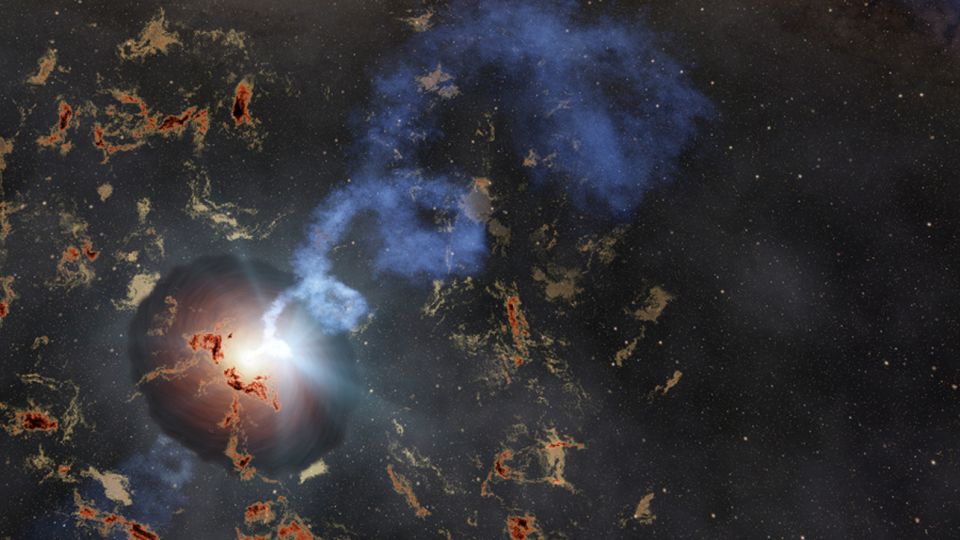
Scientists at Cornell University have made a remarkable discovery by detecting intermittent flashes of blue light from a deceased star, known as the Tasmanian Devil, located a billion light-years away. The star had previously emitted a luminous fast blue optical transient (LFBOT) before fading, but the recent observations show that it is still radiating powerful flares similar to its original cataclysmic event. This unprecedented finding offers valuable insights into the mysterious world of star births and deaths, challenging previous assumptions about the behavior of dead stars.
astronomy2 years ago

Unprecedented Astronomical Discovery: 'Tasmanian Devil' Stellar Corpse Unveils Unseen Phenomenon

Astronomers have observed a rare and peculiar cosmic event dubbed the "Tasmanian devil," which involves a stellar corpse releasing energetic signs of life following its initial explosion. The explosion, known as a luminous fast blue optical transient (LFBOT), is a type of explosion that shines brightly in blue light and fades within days. However, the Tasmanian devil exhibited unexpected behavior by repeatedly exploding and briefly brightening again. The cause of these repetitive explosions remains unknown, and the phenomenon challenges current understanding of stellar remnants. Further observations and studies are needed to unravel the mysteries behind this cosmic event.

astronomy2 years ago

Resurrected Dead Star Shocks Astronomers with Supernova-like Flares

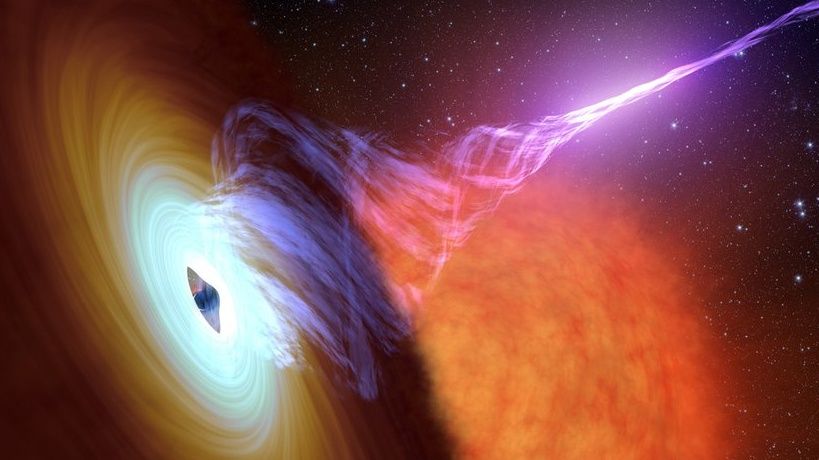
Astronomers have observed a distant star, officially designated AT2022tsd and nicknamed "the Tasmanian devil," that has come back to life after its explosive death. This rare type of stellar cataclysm, called a luminous fast blue optical transient (LFBOT), has been emitting repeated energetic flares that are brighter and fade more rapidly than usual. The behavior suggests that the engine driving LFBOTs could be a black hole or a neutron star. The discovery settles years of debate about the power source of LFBOTs and offers a new method of studying the activity of stellar corpses. Further research will investigate the processes behind these bursts of light and their implications for understanding how stars die and the remnants they leave behind.

astronomy2 years ago

Unexplained Cosmic Flash Baffles Astronomers

NASA's Hubble telescope has detected a mysterious burst of blue light in empty space, challenging previous theories about Luminous Fast Blue Optical Transients (LFBOTs). These rare explosions, which burn at extremely high temperatures, were previously believed to be caused by core-collapse supernovae. However, the latest observation, nicknamed "Finch," occurred 15,000 light years away from the nearest galaxy, making it unlikely for a supernova to travel that far. Scientists are now considering alternative explanations, such as black holes swallowing stars or the collision of rogue neutron stars. Further research is needed to determine the cause of these enigmatic flashes.