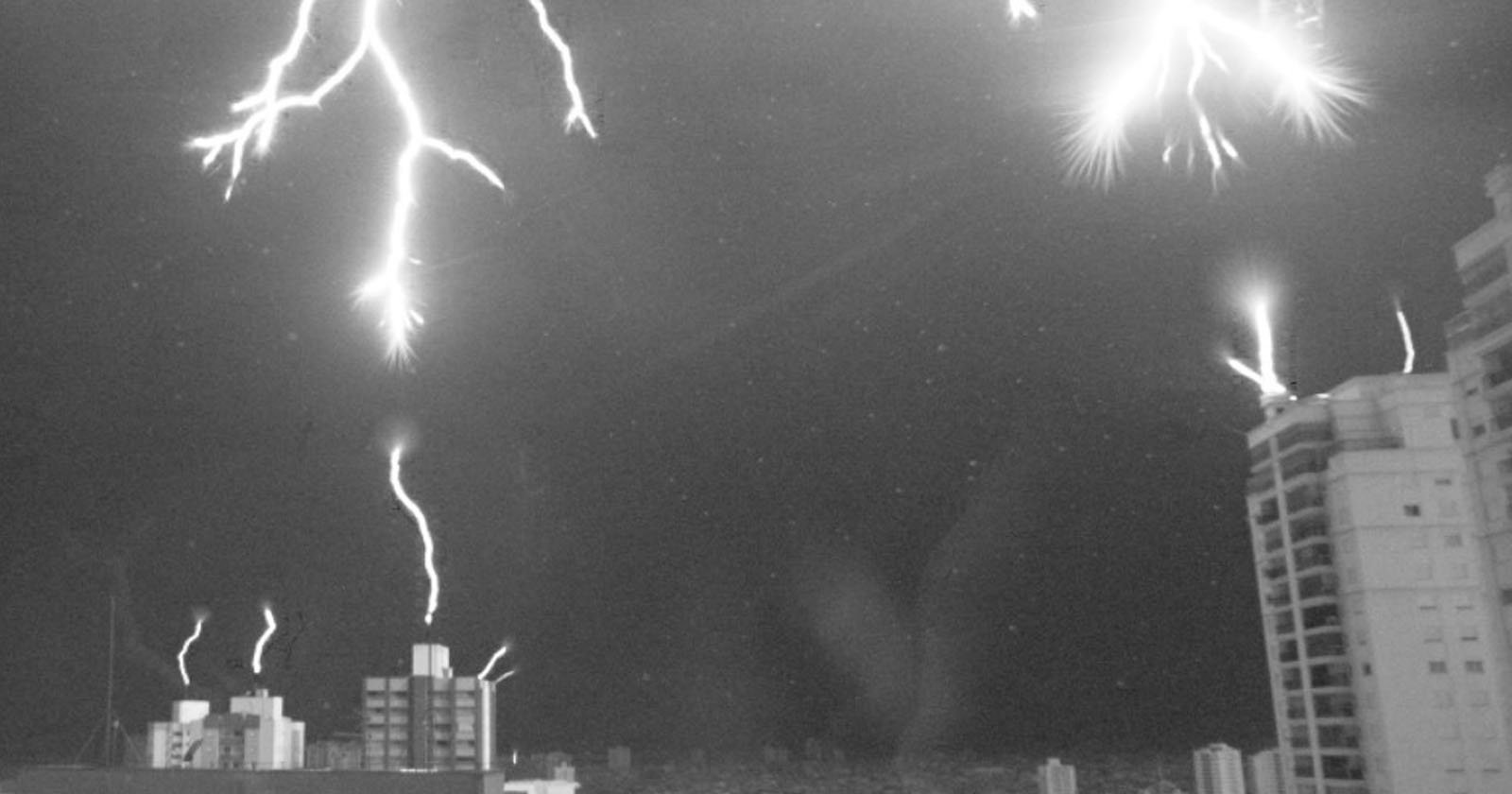
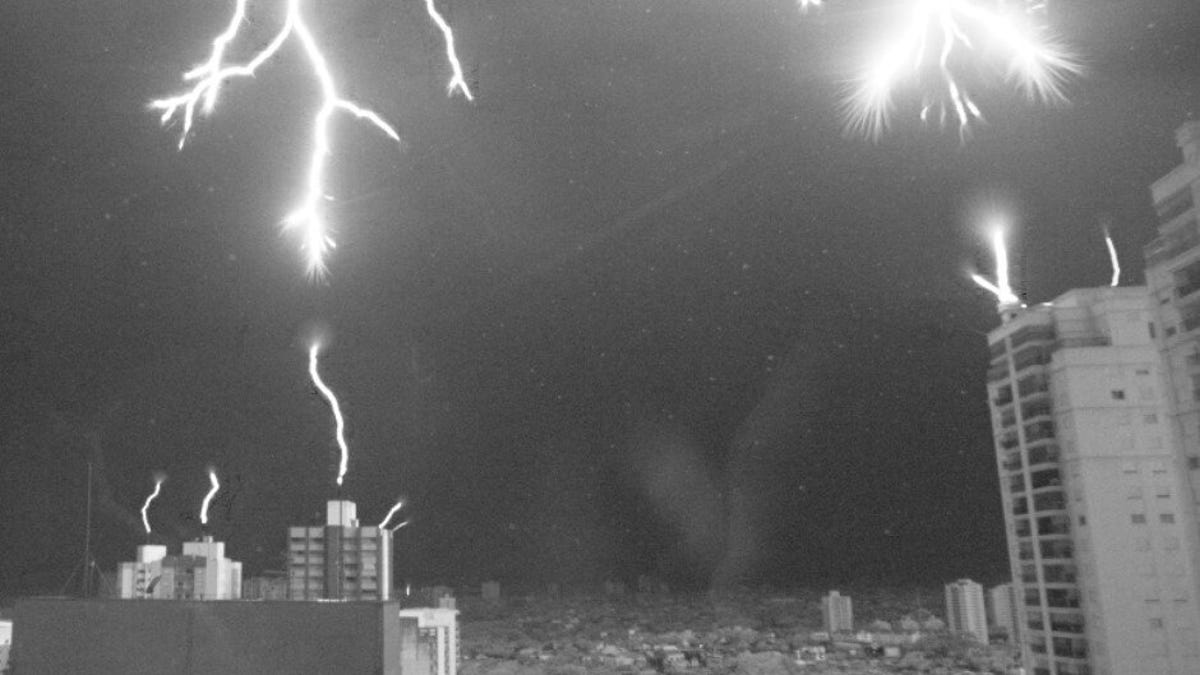
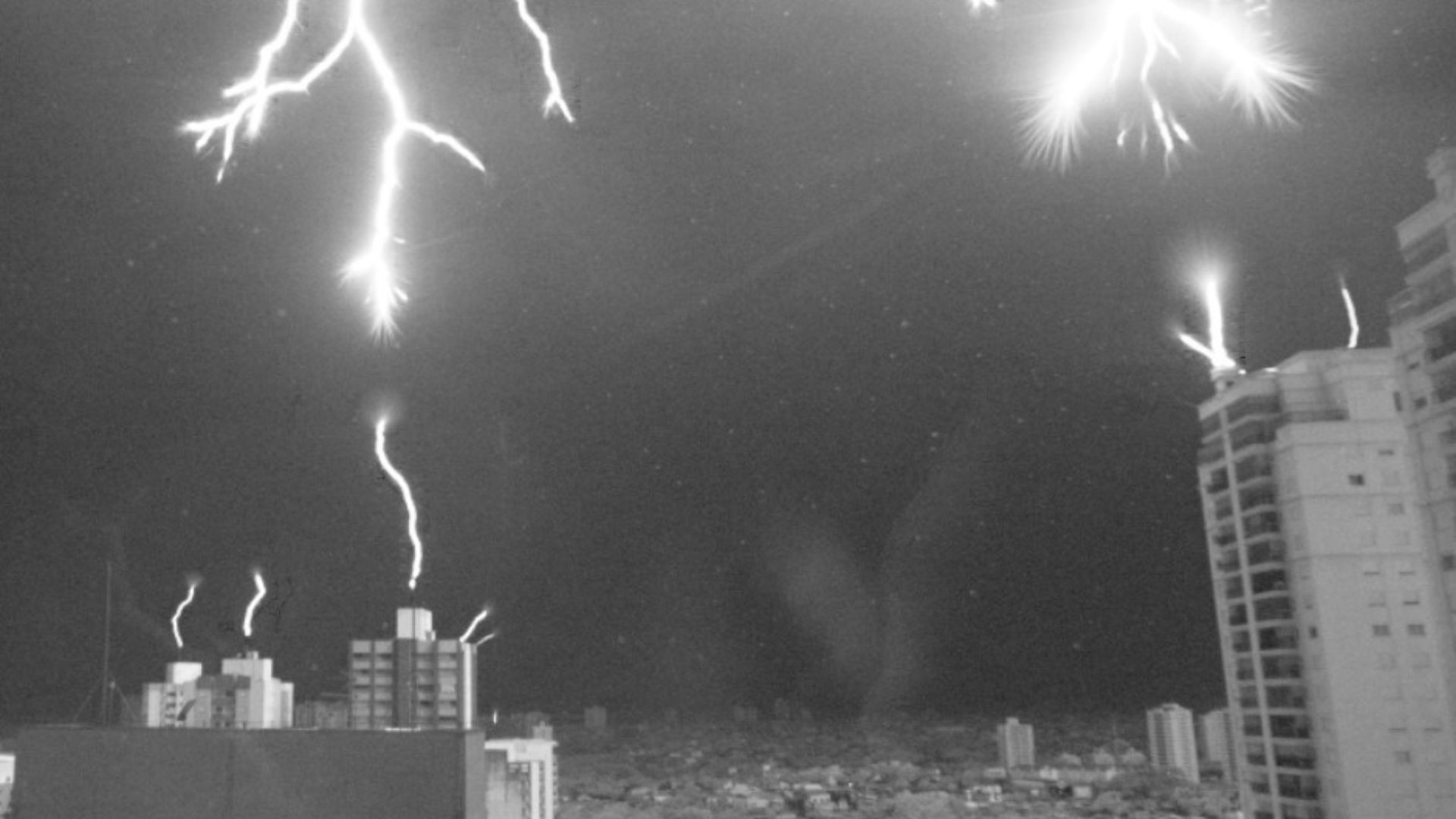
A high-speed camera that records at 40,000 frames per second has captured a photo revealing how lightning rods behave. The image shows several lightning rods attempting to connect with a negatively charged lightning bolt that was nearing the ground at 230 miles per second. The lightning strike actually connects with a smokestack on top of one of the buildings and not one of the 30 lightning rods that are in the vicinity. On average, 20% of all lightning strikes involve an exchange of electrical discharges between clouds and the ground with the other 80% occurring inside clouds.
A high-speed photo of lightning rods at work during an electrical storm in Brazil is helping scientists understand how the devices compete to attract strikes and keep buildings safe from damage. The image shows a lightning bolt heading towards the ground at 230 miles per second, and the researchers' analysis of the lightning rods' reactions to the bolt was published in the Geophysical Research Letters in December 2022. Lightning rods were invented in the mid-18th century by Benjamin Franklin and are used to safely disperse electrical discharges on the ground.
Rare images of lightning bolts in Brazil have helped researchers understand how lightning rods work. Lightning strikes can be as long as 100 kilometers and transport currents as strong as 30,000 amps. Lightning rods do not repel or attract electrical discharges but provide lightning with an easy and safe route to the ground. Vulnerable people are advised to take shelter during thunderstorms.