Tag

Light Waves

All articles tagged with #light waves

"Unveiling Light Waves: The 350-Year-Old Theorem's Quantum Insights"

Originally Published 2 years ago — by Interesting Engineering

Featured image for "Unveiling Light Waves: The 350-Year-Old Theorem's Quantum Insights"
Source: Interesting Engineering

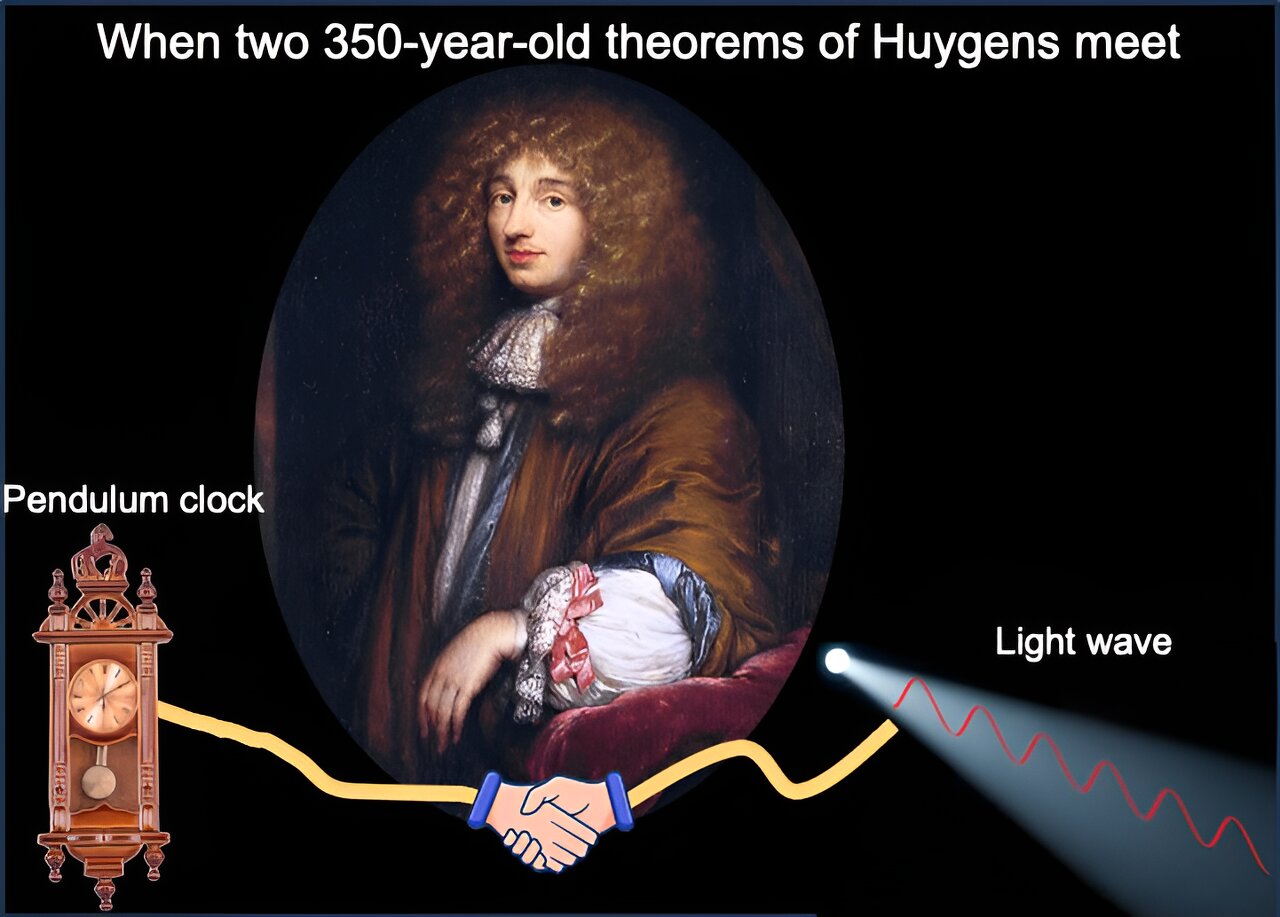
Researchers at the Stevens Institute of Technology have used a mechanical theorem from a book written by Christiaan Huygens in 1673 to explain the complex behaviors of light waves. The nature of light has long been debated, with scientists divided on whether it should be classified as a wave or a particle. Quantum physics further complicated the understanding by suggesting that light exists as both simultaneously.

"Unveiling Light Waves: Physicists Harness 350-Year-Old Theorem for New Insights"

Originally Published 2 years ago — by Phys.org

Featured image for "Unveiling Light Waves: Physicists Harness 350-Year-Old Theorem for New Insights"
Source: Phys.org

Physicists at Stevens Institute of Technology have used a 350-year-old mechanical theorem to reveal new properties of light waves. By applying a theorem originally used to describe the movement of physical objects, such as pendulums and planets, the researchers found a connection between wave and particle concepts in light. They discovered that the degree of non-quantum entanglement in a light wave is directly related to its degree of polarization. This relationship allows for the inference of difficult-to-measure optical properties from easier-to-measure properties like light intensity. The findings could have practical implications for understanding optical and quantum systems and may lead to the use of mechanical systems to simulate and better understand quantum wave behaviors.

Simulated 3D Materials Can Freeze Waves of Light

Originally Published 2 years ago — by ScienceAlert

Featured image for Simulated 3D Materials Can Freeze Waves of Light
Source: ScienceAlert

Scientists have used a new method for crunching vast sums in a model of particle interactions to reveal conditions under which a wave of light can be brought to a standstill by defects in the right kind of material. Using a new tool called FDTD Software Tidy3D, researchers were able to run calculations that would normally take days in just 30 minutes, speeding up the simulation process. The researchers found that light couldn't be localized in 3D in dielectric (insulating) materials such as glass or silicon, but there was clear numerical evidence of 3D Anderson localization in random packings of conductive metallic spheres. The discovery may be significant in the development of optical sensors, and the building of energy conversion and storage systems.

Physicists Discover Time-Bending Nature of Light in Famous Experiment

Originally Published 2 years ago — by ScienceAlert

Featured image for Physicists Discover Time-Bending Nature of Light in Famous Experiment
Source: ScienceAlert

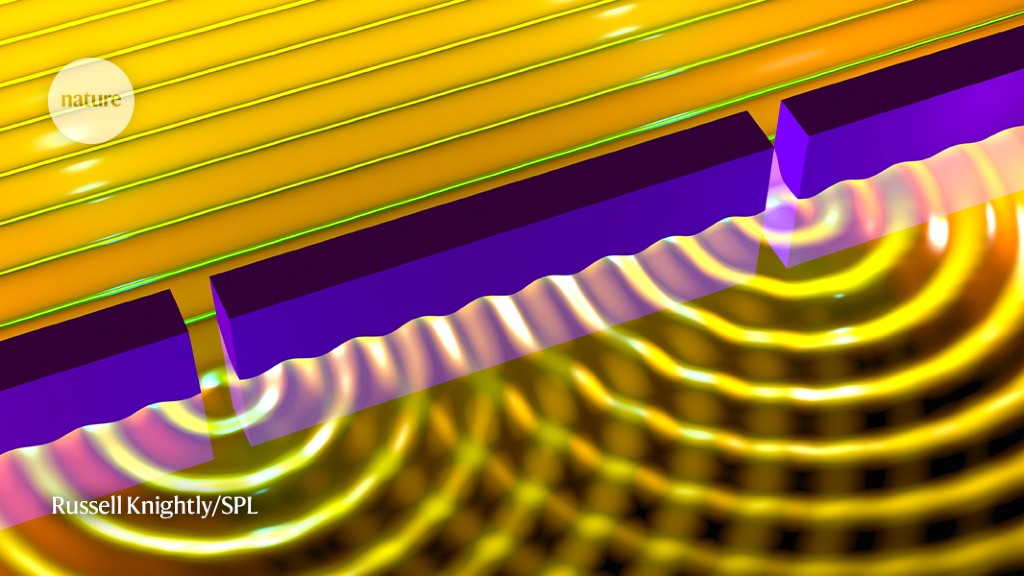
Scientists have recreated the famous 'double slit' experiment with a modern twist, using 'time slits' created by rapid adjustments in the reflectivity of a material to test the ability for a wave of light to interfere with its own past and future. The experiment revealed more about the fundamental nature of light and could lead to the development of new technology and improvements in electronics. The research has been published in Nature Physics.

"Time-Squeezed Light Waves Reveal Unexpected Physics"

Originally Published 2 years ago — by Nature.com

Featured image for "Time-Squeezed Light Waves Reveal Unexpected Physics"
Source: Nature.com

Physicists have demonstrated that a single mirror that rapidly turns on and off causes interference in a laser pulse, making it change colour, adding a new twist to the classic double-slit experiment. The rapid switching of the mirror shows that certain materials can change their optical properties much faster than previously thought possible, which could open new paths for building devices that handle information using light rather than electronic impulses. The researchers have shown that it is “possible to change the properties of ITOs very quickly”.