

Tag

Anderson Localization

All articles tagged with #anderson localization

science2 years ago

Simulated 3D Materials Can Freeze Waves of Light

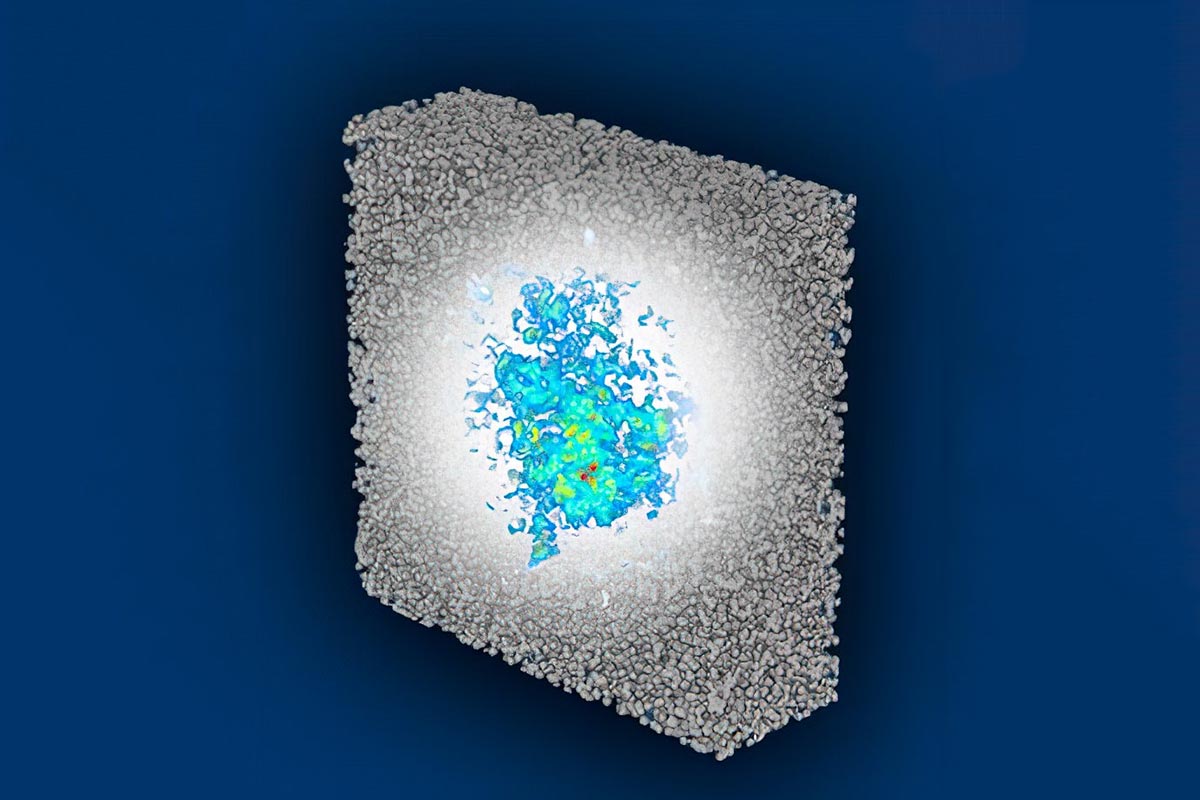
Scientists have used a new method for crunching vast sums in a model of particle interactions to reveal conditions under which a wave of light can be brought to a standstill by defects in the right kind of material. Using a new tool called FDTD Software Tidy3D, researchers were able to run calculations that would normally take days in just 30 minutes, speeding up the simulation process. The researchers found that light couldn't be localized in 3D in dielectric (insulating) materials such as glass or silicon, but there was clear numerical evidence of 3D Anderson localization in random packings of conductive metallic spheres. The discovery may be significant in the development of optical sensors, and the building of energy conversion and storage systems.
science-and-technology2 years ago

Physicists Unravel Mystery of Trapped Waves and Localizing Light in 3D

Researchers have used advanced computing to solve a decades-long mystery about the potential for optical waves to be trapped in three-dimensional structures of randomly packed micro- or nanoparticles. The study found that light can be trapped or “localized” in random packings of metallic spheres, paving the way for potential developments in lasers and photocatalysts. The research opens new possibilities for enhancing optical nonlinearities, light-matter interactions, and controlling random lasing as well as targeted energy deposition.

science2 years ago

Trapped Waves Settle Debate on Localizing Light.

Researchers have used numerical simulations to definitively show that Anderson localization of electromagnetic waves in three dimensions is possible in random packings of metallic spheres, despite the loss of common metals such as aluminum, silver, and copper. This discovery could have applications in enhancing optical nonlinearities, light-matter interactions, and controlling random lasing, among other possibilities. The team's simulations were made possible by a recent breakthrough in accelerating numerical solutions by orders of magnitude with FDTD Software Tidy3D.