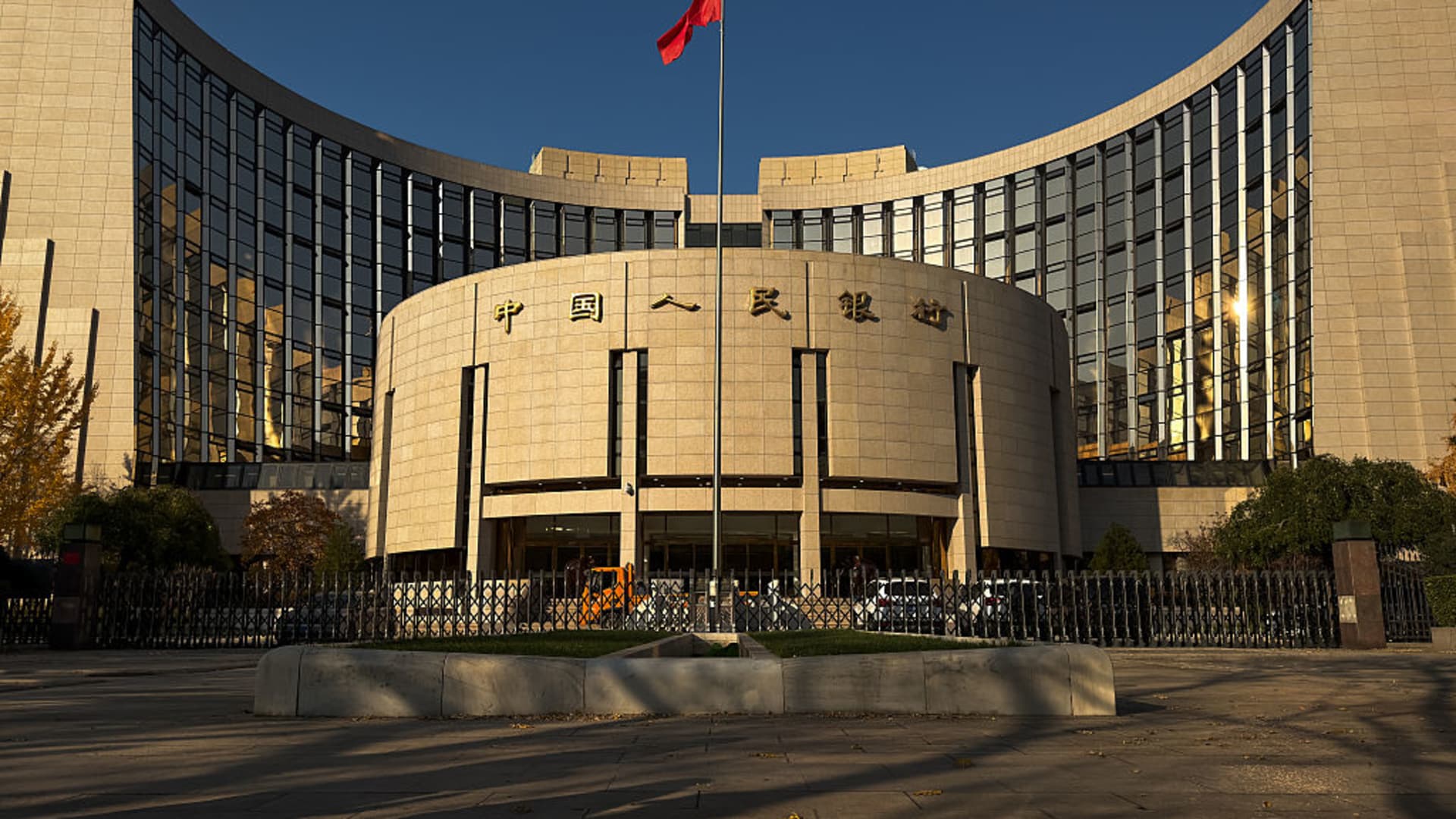
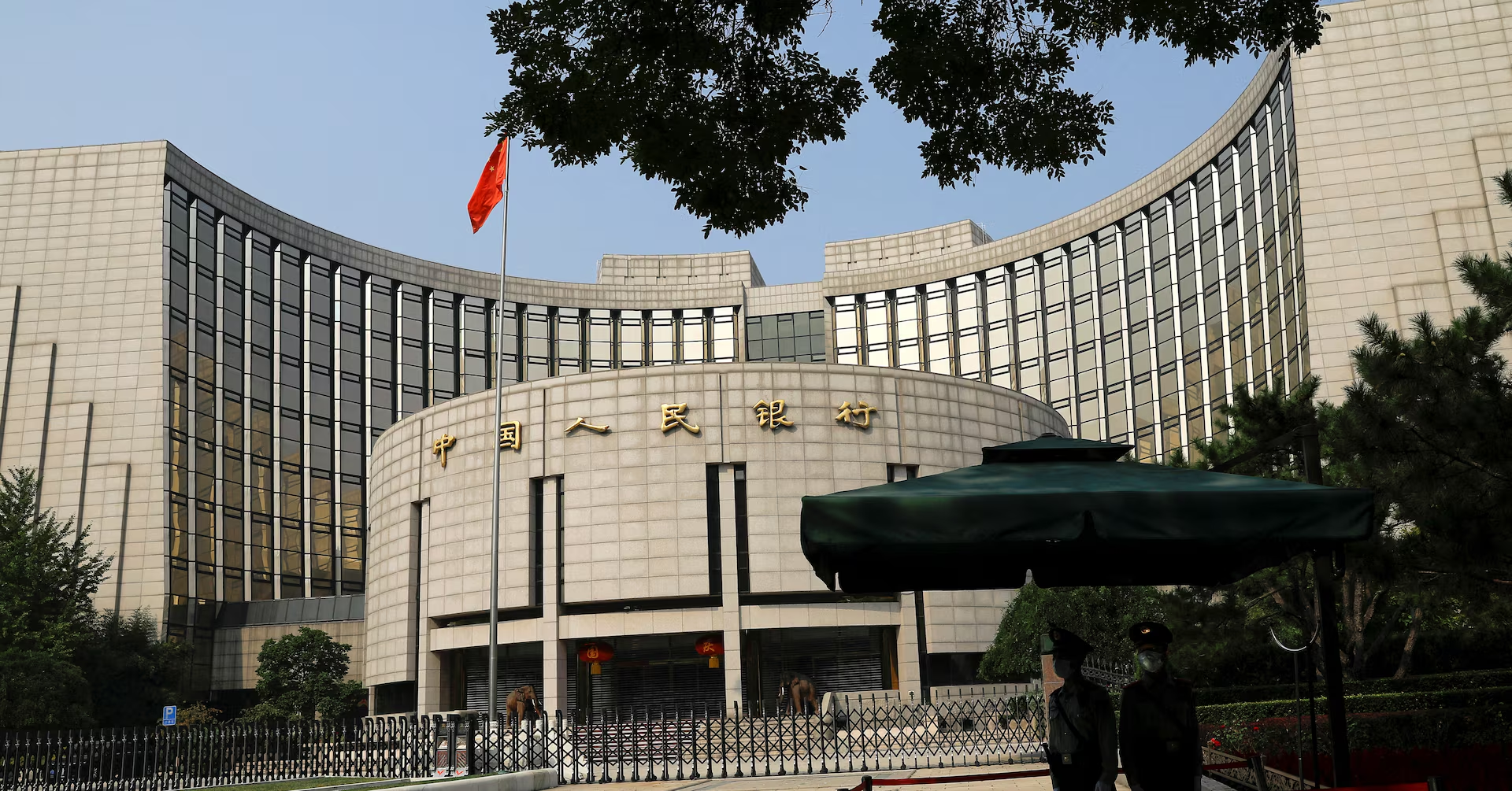
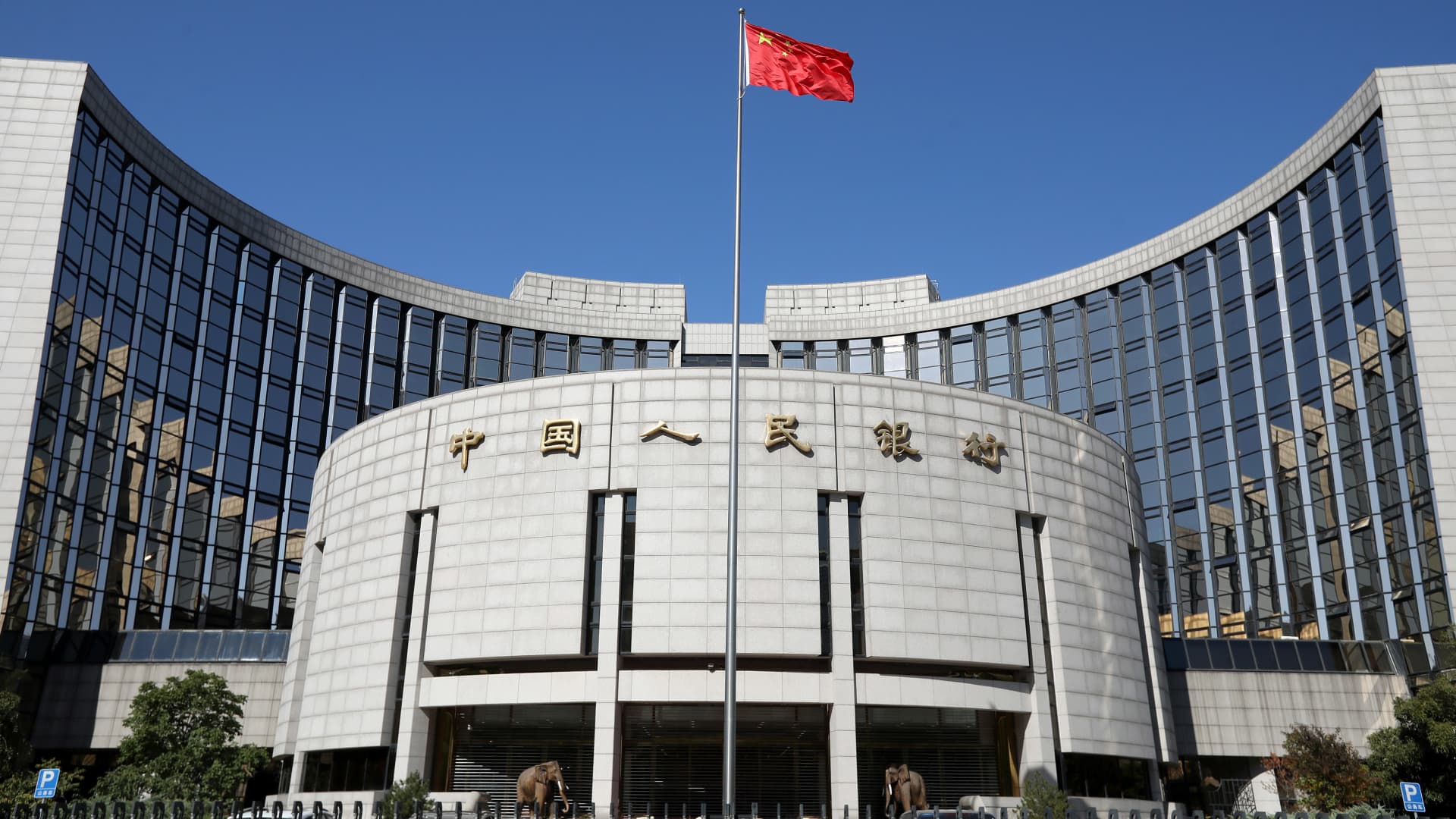
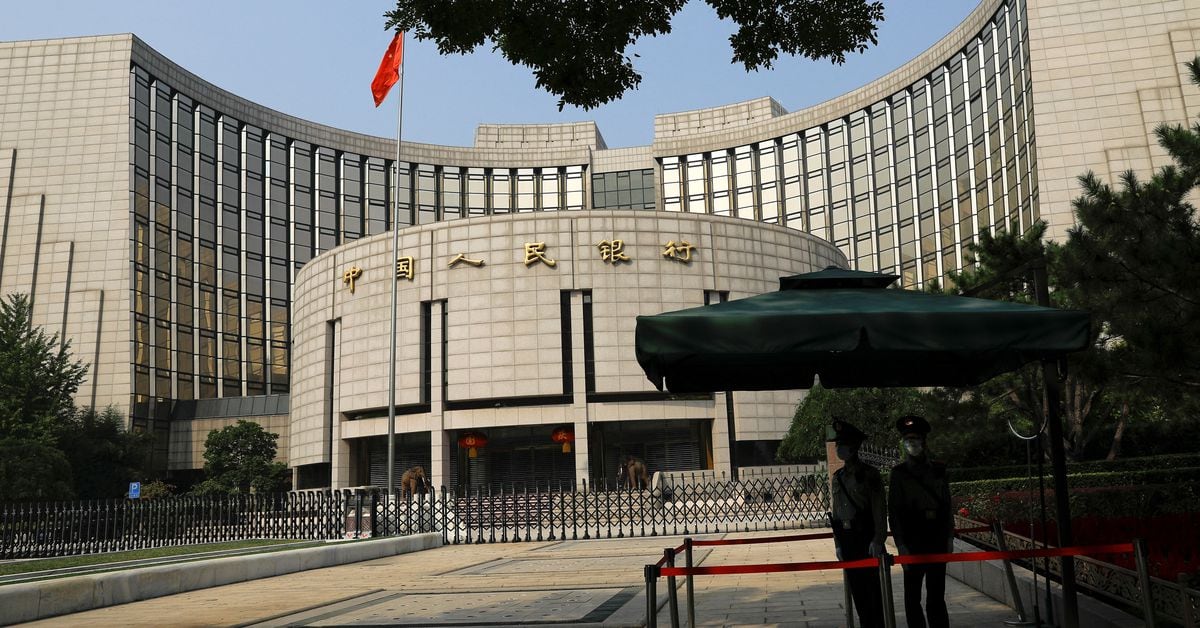
China's central bank kept its benchmark lending rates steady for the seventh consecutive month despite weak economic indicators and a prolonged slump in the property market, as the country faces deflationary pressures and aims to support growth through government bonds and policy measures.
China kept its benchmark lending rates unchanged in September for the fourth consecutive month amid easing trade tensions and signs of domestic economic slowdown, reflecting a cautious monetary policy stance despite recent stock market gains and weak economic data.
China's central bank kept its benchmark lending rates unchanged for the fourth consecutive month despite the U.S. Federal Reserve's rate cut, signaling a cautious approach amid mixed economic signals and recent stock market rally, with expectations of slight easing later in the year to meet growth targets.
China's central bank has left its benchmark lending rates unchanged, in line with market expectations. The one-year loan prime rate (LPR) remains at 3.45%, while the five-year LPR stands at 4.20%. Despite this decision, analysts anticipate further monetary easing in the coming year to support the country's struggling economic recovery. The LPR is loosely tied to the medium-term lending facility (MLF) rate, and changes in the MLF are often seen as a precursor to changes in the LPR. Some experts believe that the central bank may prioritize lowering deposit rates rather than loan prime rates due to tight interest margins for Chinese banks.
China has kept its benchmark lending rates unchanged at a monthly fixing, in line with expectations, as a weaker yuan limits further monetary easing and policymakers wait to assess the impact of previous stimulus measures on credit demand. The one-year loan prime rate (LPR) remains at 3.45% and the five-year LPR at 4.20%. While the economy still requires more policy stimulus, an escalation of monetary easing could put unwanted downward pressure on the Chinese currency.
Asia-Pacific markets rebounded after a previous session of declines, with Hong Kong's Hang Seng index opening higher and China's CSI 300 falling slightly. Japan's Nikkei 225 briefly touched a 33-year high before recording a small loss. China's central bank kept its one-year and five-year loan prime rates unchanged for November, marking the third consecutive month of no changes. Analysts expect the rates to remain steady as commercial banks continue to lower effective lending rates. Shares of Alibaba tumbled after the company scrapped plans to spin off its cloud computing business. Oil prices bounced back after a recent selloff, and a record amount of options is set to expire, potentially injecting volatility into the market.
China is planning to cut lending rates as its economic recovery continues to lag. The move is aimed at stimulating borrowing and investment to boost economic growth. The decision comes as China's central bank seeks to implement a more accommodative monetary policy to support the country's post-pandemic recovery.
China's central bank, the People's Bank of China, has cut key lending rates, including a mortgage-linked benchmark, in an effort to boost investment and consumption after the country's post-pandemic recovery slowed over the last five months. The move will lower borrowing costs for companies and households.
China kept its benchmark lending rates unchanged for the ninth month in May, as a weakening yuan and widening yield differentials with the United States limited the scope for any substantial monetary easing. Some analysts now expect the People's Bank of China (PBOC) could lower the amount of cash banks must set aside as its next policy move. The steady LPR fixings also came after the PBOC rolled over maturing medium-term lending facility (MLF) loans while keeping the interest rate unchanged last week.