Restocking Lake Victoria with fish that eat schistosomes could reduce the prevalence of bilharzia, a parasitic disease affecting 200 million people in Africa, which causes significant health and economic issues.
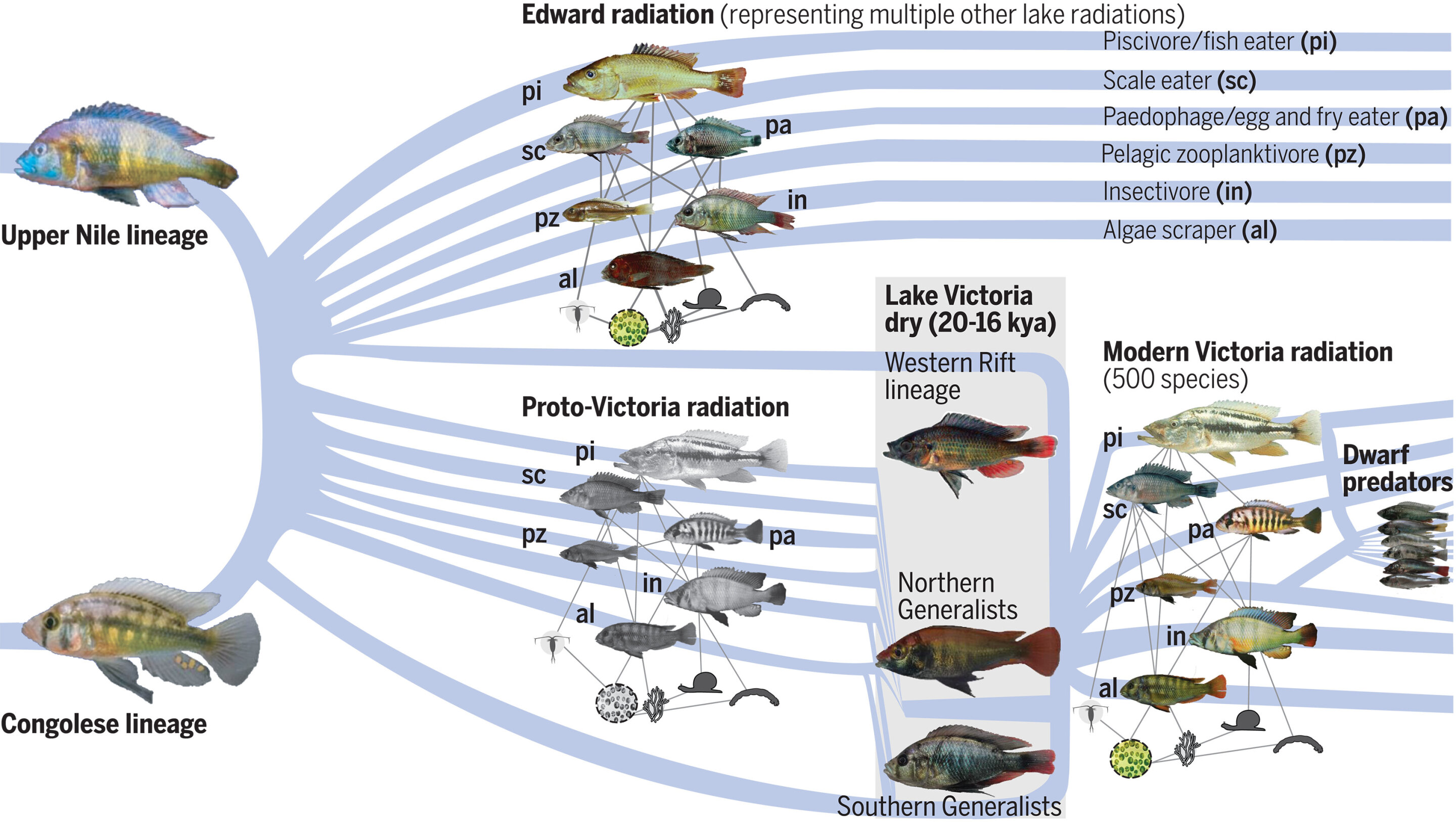
Over 500 species of cichlid fish in Lake Victoria have rapidly evolved within just 16,000 years through hybridization, challenging the traditional understanding of evolution. Scientists discovered that these diverse species originated from three lineages that arrived in the lake and interbred, generating a wide array of hybrids that eventually evolved into different species. This phenomenon challenges the assumption that hybrids are an evolutionary dead-end and highlights the potential benefits of genetic diversity through hybridization in various species, including humans.
Over 500 different species of cichlid fish have rapidly evolved in Lake Victoria within just 16,000 years, thanks to hybridization and genetic recycling. Researchers have found that these diverse species originated from three lineages of cichlid that arrived in the lake after a dry spell. The murky waters of the newly refilled lake allowed for extensive hybridization, leading to the development of various shapes, sizes, colors, and forms among the cichlids. This study challenges the assumption that hybrids are always an evolutionary dead-end and highlights the potential benefits of hybridization in generating genetic diversity and aiding survival.
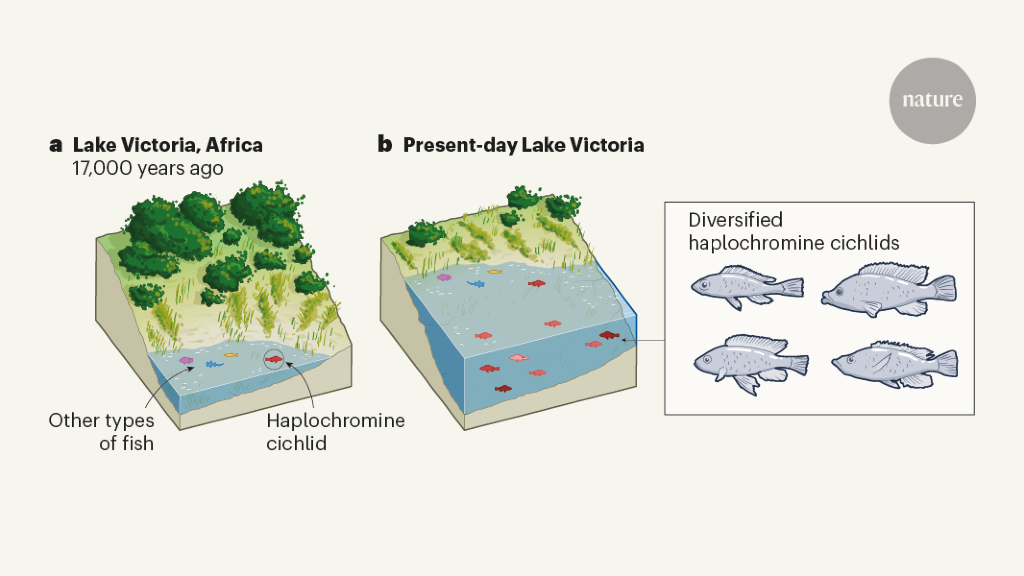
Fossil analysis of sediment cores from Lake Victoria in Africa reveals that a group of cichlid fish rapidly diversified while other fish did not as the lake expanded and provided new ecological niches. The study suggests that the diversifying cichlid group had a genetic predisposition to seize the opportunity to radiate into new species on a large scale.
A study reveals that the extraordinary diversity of cichlid fish in Africa's Lake Victoria is a result of "genetic recycling," where repeated cycles of new species appearing and rapidly adapting to different roles in the ecosystem enabled the emergence and thriving of 500 fish species in just 16,000 years. Hybridization and the mixing of genes played a crucial role in this process, allowing for the rapid formation of various species with unique characteristics and behaviors. The findings shed light on the genetic basis of adaptive evolution and provide insights into the importance of preserving diverse species for their ability to adapt to environmental changes.