
Genetic recycling sparks explosion in fish biodiversity, study finds
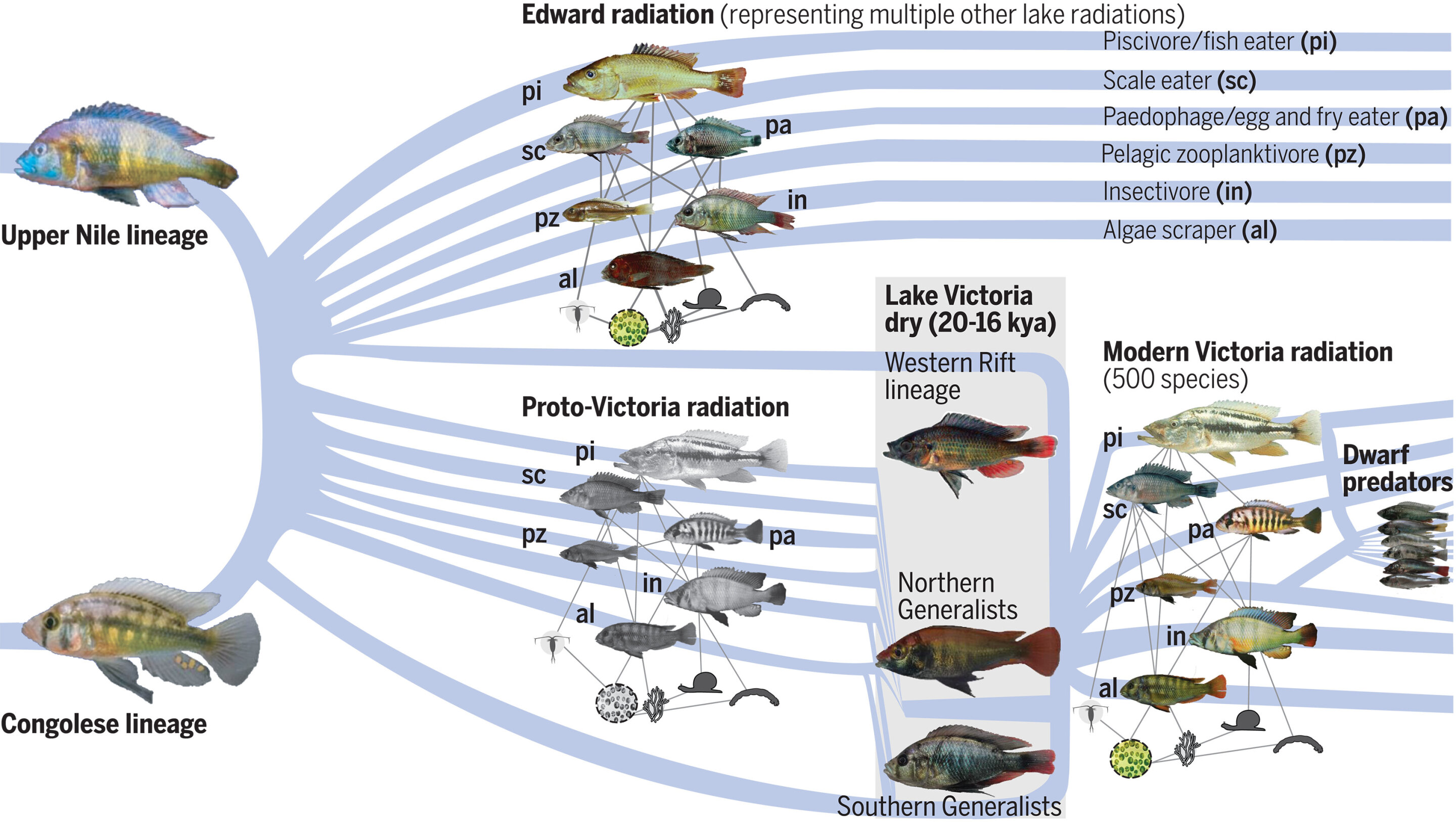
A study reveals that the extraordinary diversity of cichlid fish in Africa's Lake Victoria is a result of "genetic recycling," where repeated cycles of new species appearing and rapidly adapting to different roles in the ecosystem enabled the emergence and thriving of 500 fish species in just 16,000 years. Hybridization and the mixing of genes played a crucial role in this process, allowing for the rapid formation of various species with unique characteristics and behaviors. The findings shed light on the genetic basis of adaptive evolution and provide insights into the importance of preserving diverse species for their ability to adapt to environmental changes.