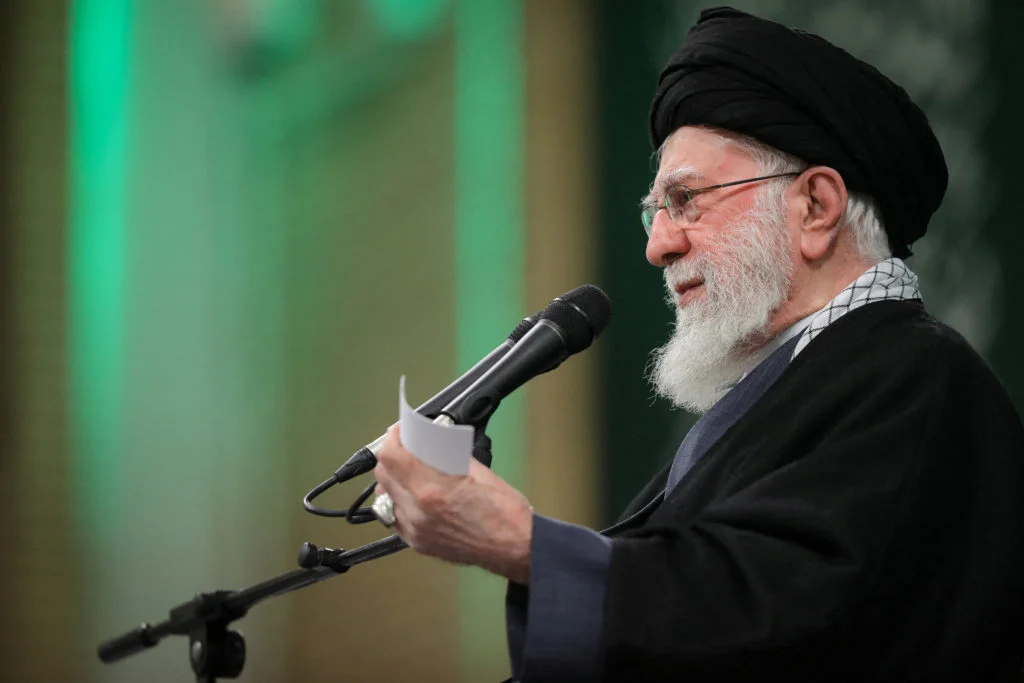
Iran’s Supreme Leader Ayatollah Ali Khamenei has drawn up a four-layer plan for succession and rebuilt security structures into a mosaic system to endure a potential US strike, signaling a more autonomous regime. As US-Iran tensions rise, experts warn Tehran could escalate to spill American blood even at a high cost, while domestic protests continue.
A Saudi royal family source tells N12 that the Iran crisis should be resolved through regime change beginning with the ouster of Supreme Leader Ali Khamenei, advocating elimination of top leadership and a post-regime election, while criticizing US/Israel strategy and noting Iran’s ongoing protests, political dynamics, and potential nuclear trajectory.
The Trump administration says it could accept a detailed deal allowing Iran limited, verifiable 'token' enrichment if it proves the program remains peaceful, signaling a narrow path between hard red lines and diplomacy. Some advisers warn Trump could still order military action, including strikes targeting Supreme Leader Ali Khamenei and his son. Iran insists enrichment rights are civilian and resists zero-enrichment demands, while Geneva talks focus on ‘technical measures’ and confidence-building steps. Any proposal would need thorough verification to win support at home and in the region, and the outcome remains uncertain.
Iran's Supreme Leader Ayatollah Ali Khamenei crushed nationwide protests with a harsh crackdown but is signaling openness to talks with the United States over its nuclear program to avert a possible U.S. attack, a move that underscores the regime's grip on power through the Revolutionary Guard while Iran navigates sanctions, economic woes, and regional pressure.
Iran's Supreme Leader Ayatollah Ali Khamenei warned that any U.S. attack would spark a regional war, as Washington pressures Tehran with a carrier presence near the Gulf and Tehran pursues its nuclear talks amid protests and recent blasts in Iran.
Iran's Supreme Leader Ayatollah Ali Khamenei warned that a U.S. strike would trigger a regional war across the Middle East, with Tehran vowing retaliation against Israel and American forces as President Trump deploys a large naval armada to pressure Tehran over its nuclear program.
Mass protests reveal Iran’s fragility, yet elites publicly stay united; the most plausible near-term path to change is a coup by the IRGC, with outcomes depending on whether the old guard or younger officers lead. A popular revolution or foreign intervention could hasten reform, but democracy remains unlikely without mass defections and external backing. Any transition would preserve parts of the system, so the regime would likely fail gradually and then abruptly.
Iran warned President Trump not to act against Supreme Leader Ayatollah Ali Khamenei, promising retaliation if aggression occurs, as U.S.-Iran tensions rise with a backed-by-security officials’ rhetoric, a U.S. carrier moving toward the Middle East, and a crackdown on protests that rights groups say have killed thousands and led to tens of thousands of arrests.
Iran warned Trump not to act against Supreme Leader Ayatollah Ali Khamenei, promising retaliation, as a U.S. carrier group moves toward the region amid ongoing protests that have killed thousands and led to more than 26,000 arrests.
Iran’s Supreme Leader Ali Khamenei, in a Jan. 9, 2026 speech broadcast from Qom, said the Islamic Republic would not retreat and effectively authorized lethal force against protesters, portraying the movement as foreign-backed and invoking the regime’s founding bloodline. The speech coincided with a nationwide internet blackout and a surge in casualties; the regime acknowledged about 5,000 deaths, while opposition sources claimed far higher totals. On Jan. 13, Armed Forces Chief of Staff Mousavi called protesters “ISIS terrorists” and vowed harsh measures, with judiciary officials pushing swift trials and punishments. State messaging framed unrest as a foreign conspiracy and intensified anti-American rhetoric, including a post on X contrasting Trump with tyrants while the crackdown continued.
Iran’s Supreme Leader Ayatollah Ali Khamenei said thousands were killed during the protests that erupted in late December, blaming US President Donald Trump for openly backing the demonstrators and calling him a “criminal.” He framed the unrest as caused by foreign-backed rioters or naive youths manipulated by leaders, while omitting security-forces’ crackdown details. HRANA cites a death toll above 3,000 (CNN cannot independently verify), and more than 24,000 protesters have been arrested. The government shut down internet access during the crackdown, with connectivity only gradually returning; fears of possible executions were raised by some officials, though Tehran says such penalties are not yet decided. Trump and US officials publicly responded to Khamenei’s remarks.
President Donald Trump told Politico that it’s time for new leadership in Iran as nationwide protests continue and a harsh crackdown has killed thousands and led to tens of thousands of arrests (HRANA cites about 3,090 dead and 22,123 arrests). Ayatollah Ali Khamenei defended the regime and said authorities have detained key agitators, with Iran’s Fars News Agency noting protests had largely subsided. The White House did not comment on Trump’s remarks. Separately, the U.S. is moving to bolster regional security with additional forces and defenses and has begun evacuating personnel from its largest Middle East base amid potential retaliation from Iran.
Iran’s Supreme Leader Ayatollah Ali Khamenei branded Donald Trump a criminal for backing protesters and blamed demonstrators for thousands of deaths as authorities crackdown; Trump offered conciliatory remarks, signaling possible de-escalation, while activists say the toll runs around 3,000 but figures are disputed and not independently verified.
President Donald Trump told POLITICO it’s time to look for new leadership in Iran as protests against the regime have waned and U.S.-Iran tensions escalate, denouncing Ayatollah Ali Khamenei and warning of possible military action while urging Iranians to continue pressing for change.
Iran's supreme leader Ayatollah Ali Khamenei publicly acknowledged that thousands were killed during the protests—around 3,090 per HRANA, with higher counts cited by some groups—blaming the US as the internet blackout hampered verification and drawing international concern over the crackdown and regional tensions.