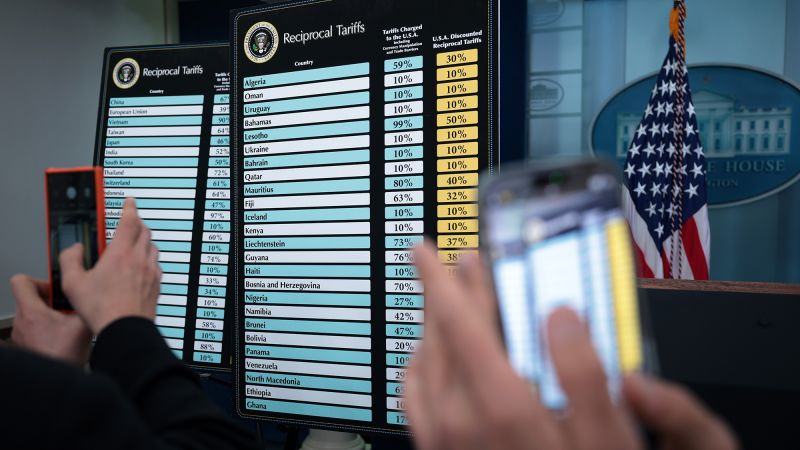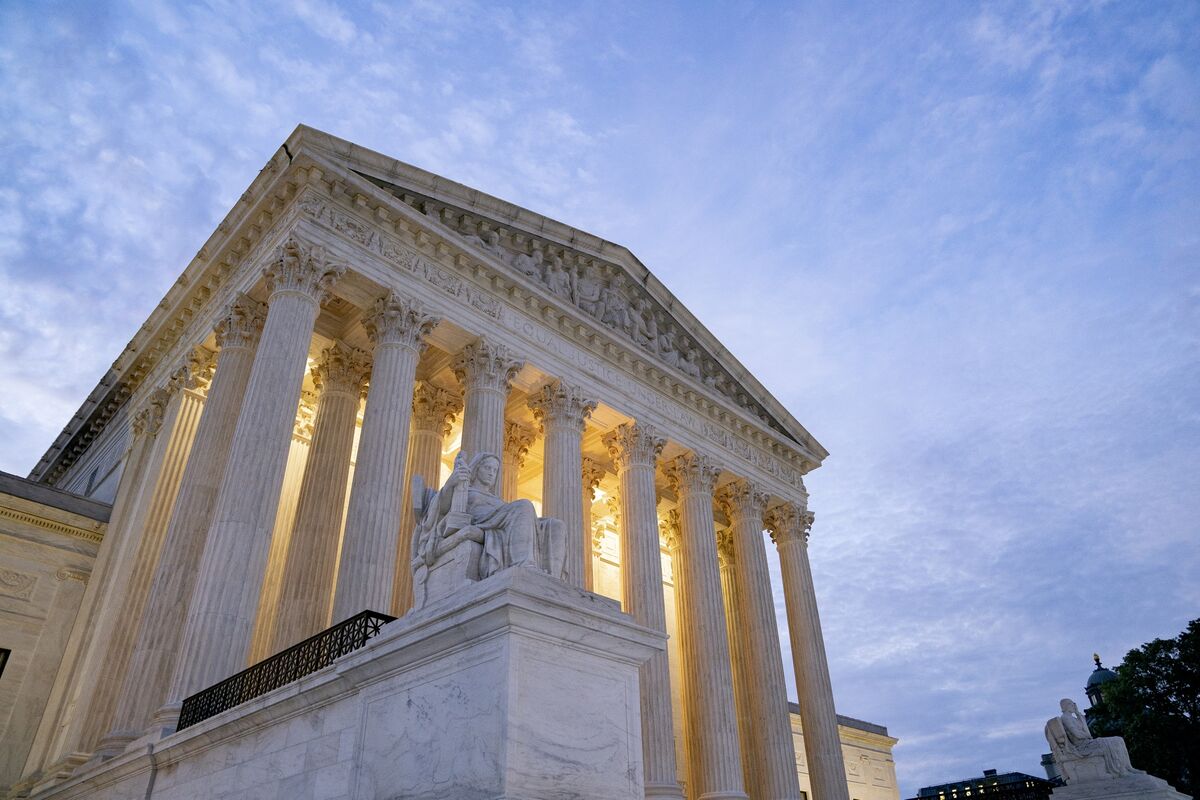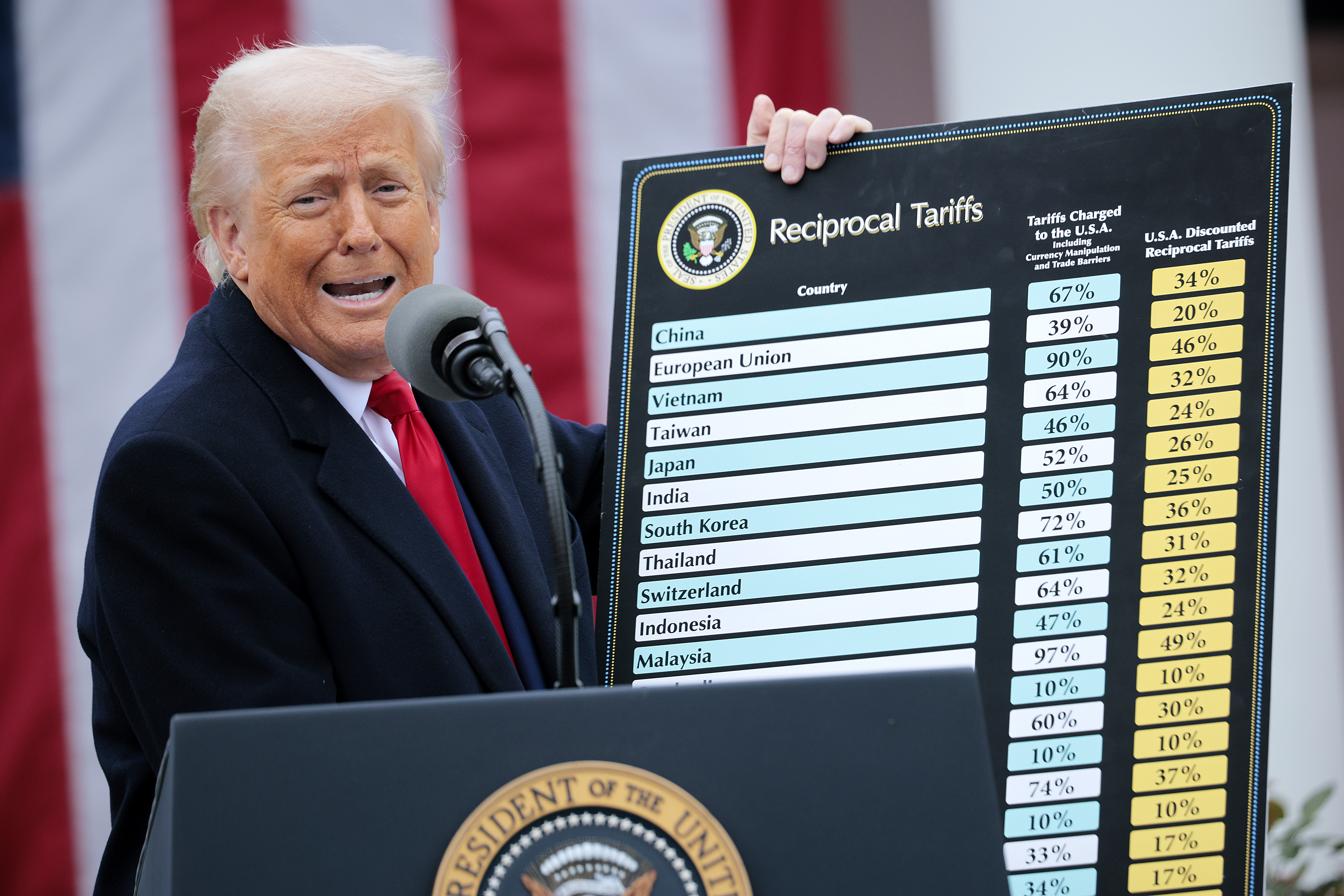
The Supreme Court examined challenges to Trump's 'Liberation Day' tariffs, revealing that these tariffs are essentially a tax on Americans and highlighting the economic and constitutional issues involved, including the president's broad power to impose tariffs under the IEEPA and the economic misconceptions surrounding trade deficits.

Small businesses have appointed Neal Katyal to argue before the Supreme Court that President Trump's tariffs are unlawful, in a case that tests the president's authority under the International Emergency Economic Powers Act, with a decision expected to impact international commerce and presidential powers.
Trump officials have petitioned the Supreme Court to quickly approve broad tariffs, potentially setting a major legal precedent and impacting the U.S. economy and global trade, as Trump claims the authority to use the International Emergency Economic Powers Act for tariffs.
President Trump and his advisers are contesting a federal appeals court decision that invalidated many of his tariffs, arguing that losing the ability to impose tariffs under the International Emergency Economic Powers Act would harm the U.S. economy and military power. The administration plans to appeal to the Supreme Court, but a loss could lead to significant financial and diplomatic repercussions, including the potential need to refund billions in tariffs and the unraveling of trade deals.
The US Trade Representative supports Trump's use of tariffs on Brazil, citing legal backing under the 1977 International Emergency Economic Powers Act, amidst political tensions involving Brazilian President Lula and former President Bolsonaro.
A U.S. appeals court expressed skepticism about the legality of President Trump's sweeping tariffs, questioning the use of the International Emergency Economic Powers Act to justify them, amid ongoing legal battles and deadlines for tariff implementation.
A federal appeals court is reviewing whether Trump's use of the International Emergency Economic Powers Act to impose tariffs is lawful, which could significantly impact his trade strategy, though it won't immediately stop new tariffs. The case involves questions about the legality of tariffs on various countries, including China, Mexico, and Canada, and could influence future trade agreements and legal avenues for imposing tariffs.
The US Supreme Court is being asked to consider whether to strike down President Trump's broad tariffs, with toy companies arguing that the tariffs have significant economic consequences and should be reviewed directly by the Supreme Court rather than through the usual appellate process.
Two federal courts have ruled that President Trump's global tariffs are unlawful, citing that the International Emergency Economic Powers Act does not grant him the authority to impose such tariffs unilaterally, leading to legal challenges and potential impacts on U.S. foreign policy and trade negotiations.
A U.S. federal court has invalidated President Trump's broad 'reciprocal' tariffs on multiple countries, ruling that his justification under the International Emergency Economic Powers Act exceeded his legal authority, and ordered the tariffs collected to be vacated.
The US Justice Department has unsealed two indictments charging multiple defendants with violating the Arms Export Control Act and the International Emergency Economic Powers Act for their roles in separate schemes to procure and export US technology to Iran between 2005 and 2013. The Department of Treasury’s Office of Foreign Assets Control designated three of the defendants and four entities for their involvement in the procurement of equipment that supports Iran’s ballistic missile and unmanned aerial vehicle and weapons programs.