Tag

Inattentional Blindness

All articles tagged with #inattentional blindness

health-and-technology2 years ago

How Your Smartphone Alters Your Walking and Mood

Using smartphones while walking can lead to inattentional blindness, affecting mood, gait, and posture, and increasing the risk of accidents. Research suggests that people are often unaware of the extent to which their situational awareness changes when using a phone while walking, and that this behavior can hinder their ability to navigate safely in their environment.


science-and-technology2 years ago

The Science of Inattentional Blindness: Revisiting the Invisible Gorilla Experiment.

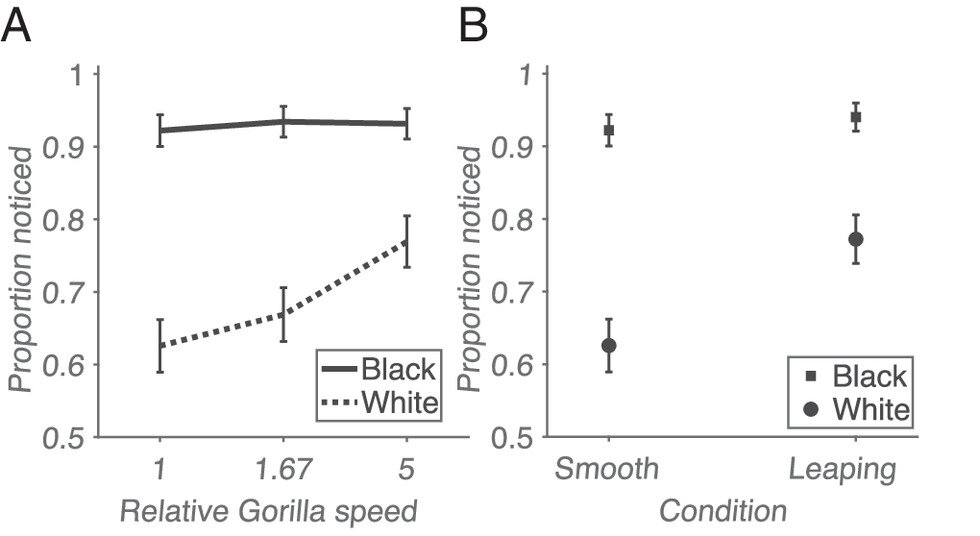
Researchers at New York University have recreated the classic 'invisible gorilla test' from over 20 years ago to understand inattentional blindness. Participants were asked to count how many times people wearing white passed the ball, while an unexpected gorilla ran through the crowd. The study found that people are more likely to spot fast-moving unexpected objects than slower ones, which may be linked to our primal predator-detecting instincts. Inattentional blindness is a cognitive deficit that refers to an inability to notice unexpected objects when focused on a specific task.

neuroscience2 years ago

The Invisible Gorilla Experiment Revisited: New Insights on Attention and Perception.

A study challenges the long-held belief that our ability to spot unexpected objects is compromised when focused on a separate task. The team showed that individuals are surprisingly good at noticing fast-moving objects entering their field of vision, even when concentrating elsewhere. The findings suggest the existence of a ‘sentinel’ system, which might have evolved to alert us to potential fast-moving threats.

science2 years ago

Reexamining the 'Invisible Gorilla': Surprising Objects Demand Attention.

A new study by New York University researchers challenges the long-standing view that our ability to see unexpected objects is impaired when our attention is focused elsewhere. The study found that people are quite capable of noticing unexpected objects that are moving quickly while focusing on a task, but are less adept at noticing the same objects when they are moving slowly. The findings suggest that organisms possess a "sentinel" system that constantly monitors the environment, alerting them to potential threats, specifically fast-moving attacking predators.