General Motors reported a $6 billion impairment charge due to unprofitable EV investments, citing reduced consumer demand following the removal of federal tax incentives and relaxed emissions regulations, leading GM to scale back EV capacity and shift production focus.
Beyond Meat has rescheduled its Q3 2025 financial results to November 11, 2025, due to an expected material non-cash impairment charge related to its assets, and will hold a conference call to discuss the results.
Beyond Meat's shares dropped over 11% after delaying its Q3 financial results to account for a significant impairment charge, amid its recent meme stock surge and volatility.
Beyond Meat has rescheduled its Q3 2025 financial results announcement to November 11, 2025, due to the need to finalize a material non-cash impairment charge related to its assets, and will hold a conference call to discuss the results.
Thyssenkrupp's shares rose by 7.5% after the company reported a narrowed net loss and a significant impairment charge of 1 billion euros on its Steel Europe division. The firm posted adjusted earnings before interest and taxes of 151 million euros in the fourth quarter, surpassing expectations. Thyssenkrupp is restructuring its steel division and considering selling its Marine Systems business amid ongoing economic challenges in Germany.
Verizon announced it will take a $5.8 billion impairment charge in Q4 2023 due to secular declines and competitive pressures in its Business reporting unit, resulting in a goodwill balance of $1.7 billion as of December 31, 2023. Goodwill impairment reflects the reduction in the estimated fair value of intangible assets and must be carried out in accordance with accounting standards and ethical principles.
Verizon Communications will incur a $5.8 billion impairment charge in the fourth quarter due to a five-year planning review of its unit Verizon Business Group, leading to lowered financial projections. The Business unit, which provides wireless and wireline services, has been under pressure from competition and economic uncertainty, resulting in a goodwill balance of $1.7 billion as of Dec. 31. Verizon is set to report its fourth-quarter results on Jan. 23.
ChargePoint Holdings, Inc. reported a Q3 2024 earnings miss, with revenue of $110 million, down 12% YoY. The company attributed the shortfall to delayed commercial fleet vehicle arrivals, a slowdown in commercial demand, and automotive labor disputes. ChargePoint's non-GAAP gross margin was negative 18% due to a $42 million non-cash impairment charge. The company aims to be adjusted EBITDA positive in Q4 of 2024 and highlighted positive developments such as increased sales of its consumer home charging station and the rollout of new products. ChargePoint ended the quarter with $397 million in cash and cash equivalents.
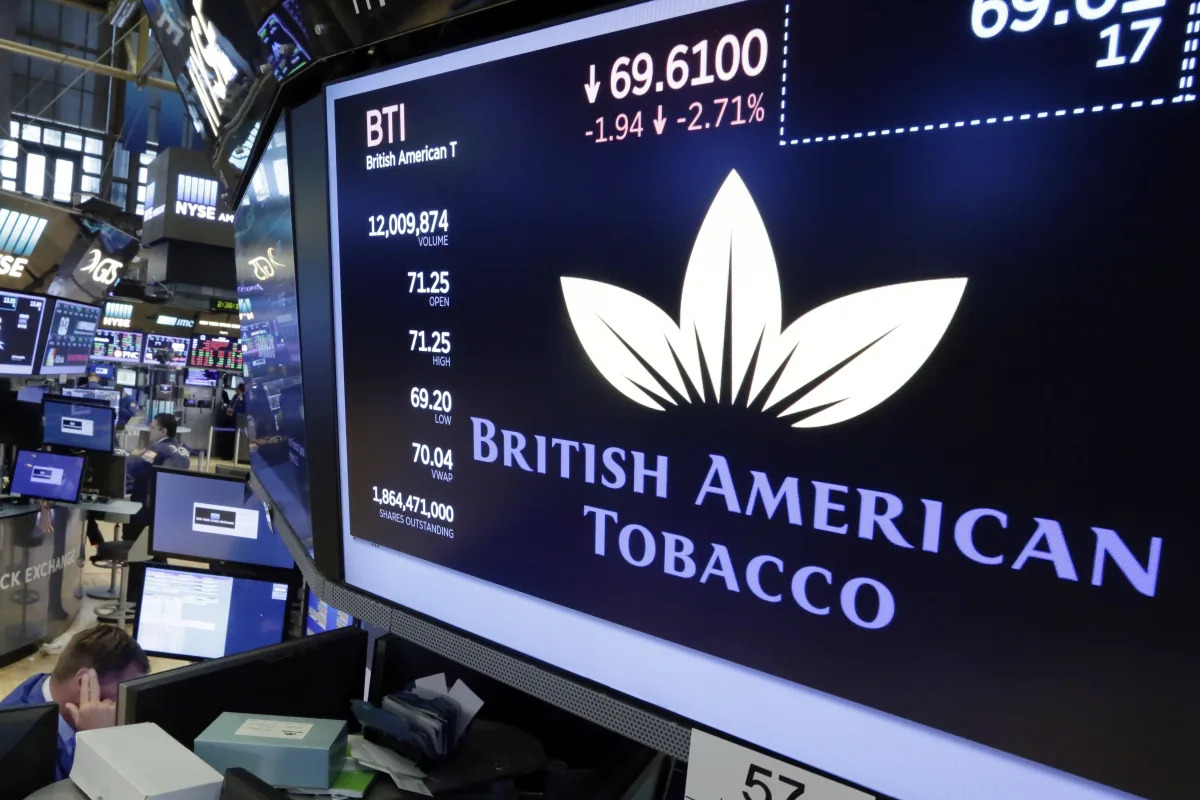
British American Tobacco (BAT) announced a £25 billion impairment charge related to its US cigarettes business, causing its stock to drop by roughly 8%. The charge is mainly due to the acquisition of Reynolds American in 2017, resulting in a decline in the equity ratio. BAT believes that the present value of US cigarette brands will be zero after 30 years. While the impact on the valuation of BAT stock is difficult to estimate, it is likely to be around -14% to -18%. BAT's stake in ITC Ltd., currently worth around £16 billion, could potentially be sold to reduce leverage. Despite the impairment charge, BAT stock is considered a compelling value opportunity with a high free cash flow yield and a well-covered dividend.
British American Tobacco, the owner of Camel and American Spirit cigarettes, has taken an impairment charge of $31.5 billion, mainly due to the decline in the number of people smoking. The company is in the process of shifting its business away from traditional cigarettes to "smoke-free" products and aims to generate half of its revenue from non-combustibles by 2035. The CDC survey shows a continued decrease in cigarette smoking in the US, while electronic cigarette use has risen. British American Tobacco plans to invest in its "new products" business, including vaporizers. Shares of the company fell by 8.6% following the announcement.
British American Tobacco (BAT) is writing down the value of its US cigarette brands, including Camel and Pall Mall, by approximately $31.5 billion, acknowledging the declining future of the traditional tobacco market. BAT cited stricter regulations, health risks, economic challenges, and the rise of illicit disposable vapes as factors contributing to the decline in cigarette volumes. The company will adjust the treatment of these brands on its balance sheet, recognizing their value for a finite lifetime of 30 years. BAT's shares fell over 8% following the announcement. The company aims to generate 50% of its revenues from non-combustibles by 2025.
British American Tobacco (BAT) expects a one-off impairment charge of $31.5 billion this year due to declining performance of its traditional cigarette brands in the U.S. market. The company is shifting its focus to smokeless products and facing macroeconomic pressures, leading to the write-down.
Lumen Technologies shares dropped over 8% after reporting a massive quarterly net loss of $8.74 billion, primarily due to an impairment charge of nearly $9 billion. The company's long-term debt stands at $19.9 billion, and it is undergoing a digital transformation process while facing stiff competition from wireless carriers. Lumen's revenue for the second quarter narrowly missed analysts' estimates.
Lumen Technologies shares dropped over 8% after reporting a massive quarterly net loss of $8.74 billion, primarily due to an impairment charge of nearly $9 billion. The company's long-term debt stands at $19.9 billion, and it is undergoing a digital transformation process while facing stiff competition from wireless carriers. Lumen's revenue in the second quarter narrowly missed analysts' estimates.
MicroStrategy, a business intelligence company and one of the largest institutional holders of Bitcoin in the U.S., reported a $24.1 million impairment charge on its crypto holdings in Q2. Despite this, the company returned to profitability, with a net income of $22.2 million for the quarter. MicroStrategy now holds 152,800 Bitcoins worth about $4.4 billion. The company's founder and chairman, Michael Saylor, believes that Bitcoin is a good hedge against inflation and has seen significant returns on the company's investment.