In 2024, global smartphone sales rebounded by 6.2% after two years of decline, but Apple's growth was minimal, with iPhone shipments increasing by only 0.4%, according to IDC. Despite this, Apple remains the profit leader with an average selling price over $1,000, while Android competitors average around $295.
The global smartphone market grew by 6.5% year-over-year in Q2 2024, with shipments reaching 285.4 million units, according to IDC. Samsung led with an 18.9% market share, followed by Apple at 15.8%. The market is seeing increased competition and a polarization of price bands, with premium brands like Apple and Samsung benefiting from higher average selling prices, while Chinese OEMs focus on the low end. Gen AI smartphones are expected to be a significant growth driver, capturing 19% of the market this year.
According to IDC, Android is expected to grow at twice the pace of iOS in 2024, with Apple's sales dropping 10% in Q1 2024, allowing Samsung to reclaim the top slot. Meanwhile, Apple is facing pressure in the United States due to a lawsuit by the DOJ alleging anticompetitive practices. Additionally, Android 15 is adding support for wireless charging via NFC, Google Wallet's 'verify it's you' request appears after phone unlock, and Android's Find My Device network highlights Google's neglect of UWB.
Samsung has regained its position as the leader in global smartphone shipments, surpassing Apple in the first quarter of 2024, according to the IDC Mobile Phone Tracker. Despite a slight decrease in shipments, Samsung shipped 60.1 million units, representing 20.8 percent of the market share, while Apple shipped 50.1 million units for 17.3 percent. The top five brands remained the same as in 2023, with Xiaomi, Transsion, and OPPO following Samsung and Apple. The IDC sees this as a sign of a strengthening smartphone market, with a shift in power among the top companies and growth in average selling prices.
Samsung has regained the top spot in the global smartphone market, surpassing Apple in the first quarter of 2024, while Apple experienced a 10% drop in shipments. Xiaomi showed significant growth and secured the third position, despite its absence from the US market. The overall smartphone market saw a 7.8% increase in shipments, with IDC predicting continued competition and potential diversification among the top players.
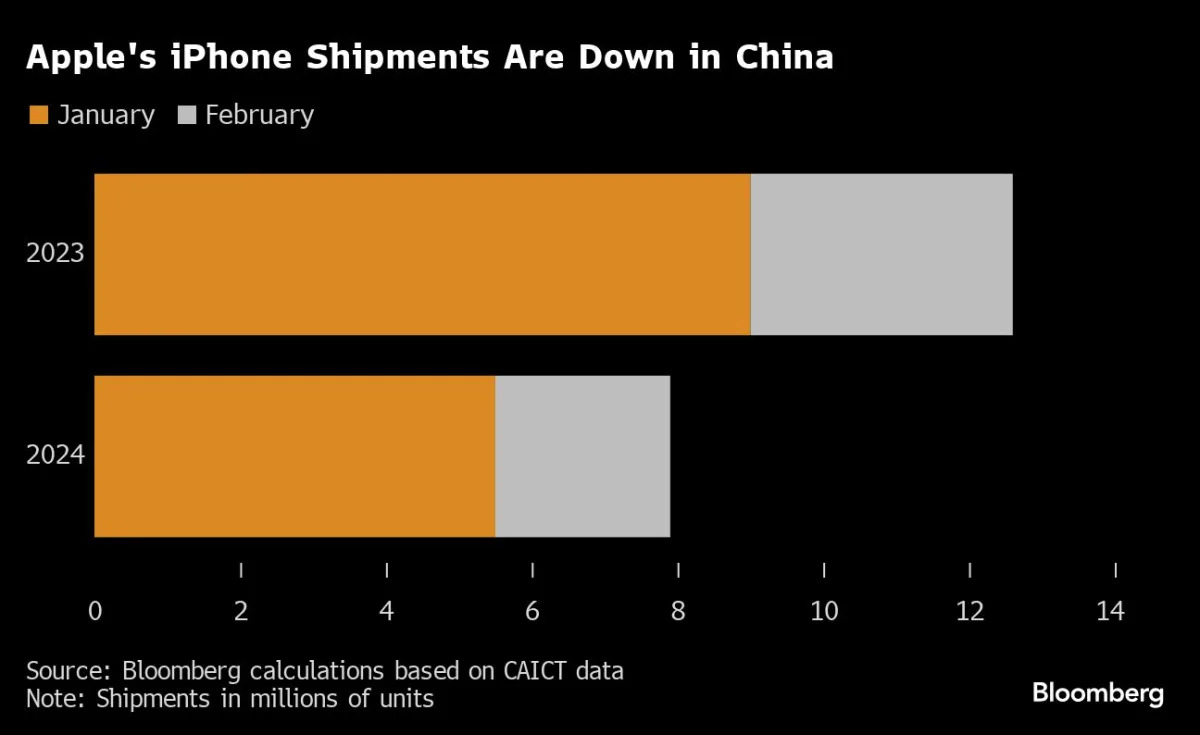
Apple's iPhone shipments dropped nearly 10% in the first quarter of the year, while the global smartphone market saw a 7.8% rise in shipments, with Samsung regaining the top spot. Budget-focused brand Transsion experienced an 85% jump in shipments, and Xiaomi Corp. closed the gap on second-place Apple. Apple's struggles in China have impacted its global results, with the company shipping 5 million fewer iPhones than the previous year. Despite rising average selling prices for handsets, Apple has resorted to discounts to boost sales, particularly in China.
IDC forecasts that AI PCs, equipped with neural processing units (NPUs) for efficient AI task processing, will make up nearly 60% of all PC shipments by 2027, with shipments expected to grow from 50 million units in 2024 to over 167 million. These AI PCs are categorized based on NPU performance, with some already available and others expected in the future, and are designed to run generative AI tasks locally, offering specific AI features within apps and enabling persistent and pervasive AI capabilities in the operating system and apps.
Apple became the largest smartphone vendor in China for the first time in 2023, with a market share of 17.3%, while Huawei returned to the top five rankings. Despite a 2.2% decline in overall smartphone shipments, Apple's success was attributed to timely price promotions, while Huawei's resurgence was fueled by the release of the Mate 60 containing a cutting-edge semiconductor. The uncertain economic environment and weak consumer spending in China have impacted the smartphone market, with Honor, Vivo, and Oppo also holding top spots.
Apple has surpassed Samsung as the top seller of smartphones, commanding a 20% market share in 2023, while Samsung ended the year with a 19.4% share. The change in ranking comes after a tough year for smartphone sales, with Apple and Transsion being the only top five vendors to record sales growth. Despite a 3.2% decline in the overall market, Apple's iPhone shipments were up 3.7%, while Samsung's were down 13.6%. Apple faces pressure in China from Huawei and budget Chinese brands, and is offering discounts to attract customers.
Apple has surpassed Samsung to become the world's largest smartphone maker for the first time in 12 years, capturing over a fifth of the global market share, while Samsung took 19.4%. Smartphone sales have declined due to the pandemic, with Apple being the only player in the top 3 to show positive growth annually. Apple's success is attributed to trade-in offers, interest-free financing plans, and increased demand for premium devices. Meanwhile, Samsung faces competition from cheaper Android models and warns of dropping profits due to weak global demand for consumer electronics. The smartphone market is evolving with a growing number of Android providers and increasing customer interest in foldable phones and AI capabilities.
Samsung has been dethroned as the top global smartphone vendor by Apple, according to IDC's latest report on global shipments of smartphones. Apple achieved 234.6 million phone shipments in 2023, surpassing Samsung's 226.6 million shipments. This marks the first time since 2010 that a company other than Samsung has held the top spot. The global smartphone market saw a 3.2% decline in shipments, with Apple's success attributed to the increasing trend of premium devices. Other top vendors included Xiaomi, OPPO, and Transsion.
In 2023, Apple surpassed Samsung to become the top smartphone seller, shipping 234.6 million units with a 20.1% market share, while Samsung shipped 226.6 million units with a 19.4% share. Xiaomi, Oppo, and Transsion followed in the rankings. Apple's shipments grew by 3.7%, while Transsion's grew by 30.8%, but overall smartphone shipments fell by 3.2% compared to 2022. In the fourth quarter of 2023, Apple maintained its lead, with the market growing by 8.5% compared to the same period in 2022.
Apple has achieved an all-time high market share of 20.1% in 2023, surpassing all Android OEMs, with the iPhone 14 Pro Max being the world's top-selling phone model. Despite the higher average selling price of iPhones compared to Android phones, Apple's success is attributed to the increasing trend of premium devices, aggressive trade-in offers, and interest-free financing plans, which now represent over 20% of the market, according to market research firm IDC.
Apple has surpassed Samsung as the top global smartphone manufacturer for the first time in 13 years, with a 20.1% market share compared to Samsung's 19.4%. Apple's positive growth in shipments, despite facing regulatory challenges and competition, contributed to this shift. Factors such as strong sales of iPhone models, diversification in the Android market, and the resurgence of Huawei and other brands impacted Samsung's rank. The overall smartphone market declined by 3.2% in 2023, but a late-year growth spurt suggests a potential recovery, driven by foldable devices and increased interest in AI capabilities.
Apple surpassed Samsung in global smartphone shipments for the first time, with IDC reporting 234.6 million Apple smartphones shipped versus 226.6 million for Samsung in 2023. This marks the first time in 13 years that Samsung hasn't topped the annual board. Apple's success is attributed to the increasing trend of premium devices and aggressive trade-in offers. Despite challenges from other Android manufacturers, the smartphone market showed signs of recovery with overall shipments growing in the fourth quarter after seven straight quarters of declines.