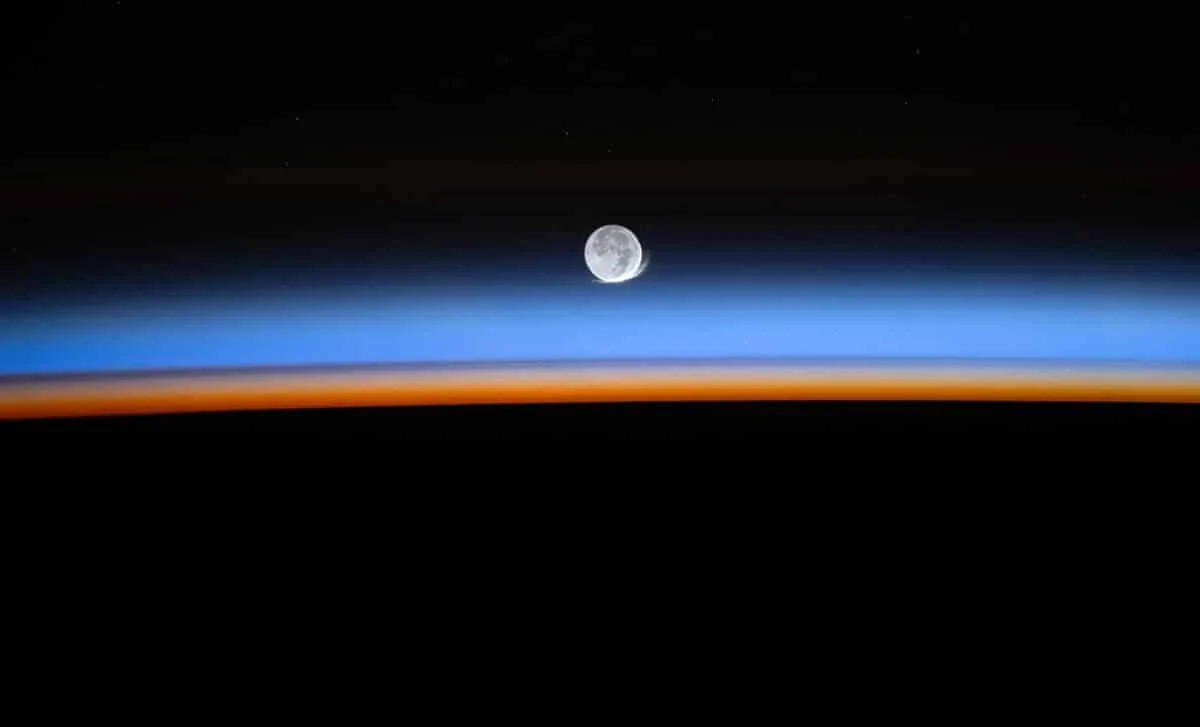
An astronaut aboard the ISS captured a rare lunar halo, a delicate optical ring caused by light refraction through high-altitude ice crystals in Earth's mesosphere, providing valuable insights into atmospheric conditions and phenomena from space.
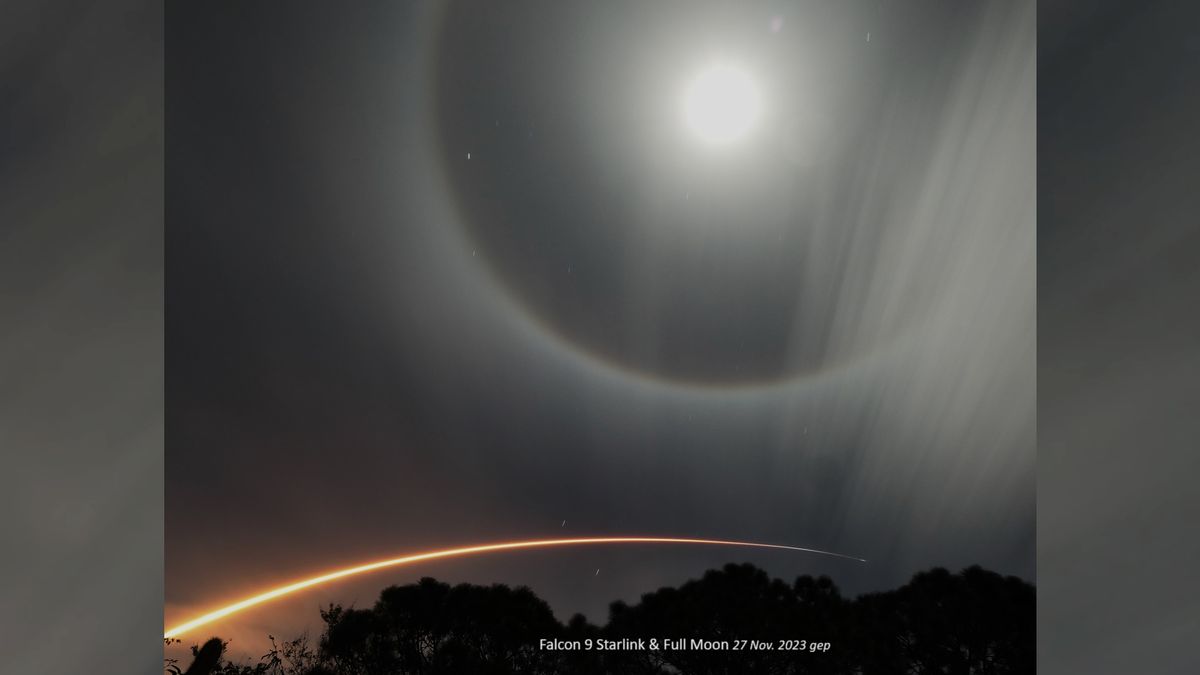
A recent SpaceX rocket launch created a stunning halo of light around the full moon after punching a hole in a cloud full of ice crystals. The photographer captured the rare ring of light, which was caused by light reflecting off the ice crystals in the cirrus clouds. These visual phenomena are becoming more common as SpaceX launches increase, raising concerns for astronomers and radio astronomers. Additionally, Starlink satellites have been found to leak radio waves and pose risks of falling back to Earth during solar storms.
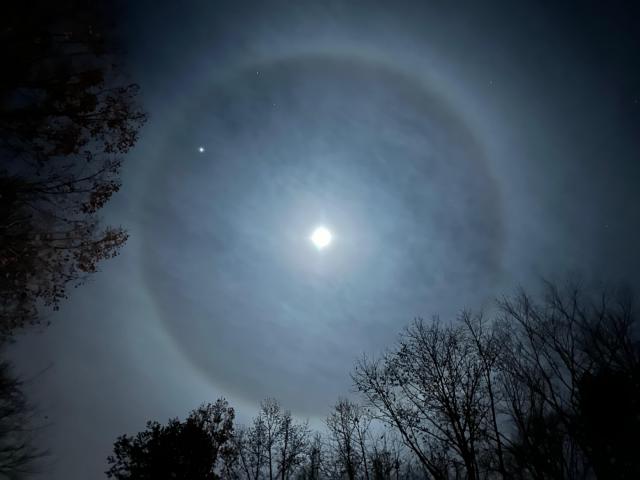
People in North Carolina observed a glowing ring around the moon, known as a "moon halo" or "22° halo." This optical illusion is caused by the refraction of moonlight from ice crystals in the upper atmosphere, creating a large bright ring. The halo is a sign of high, thin cirrus clouds containing millions of tiny ice crystals, which must be oriented and positioned correctly for the halo to appear.
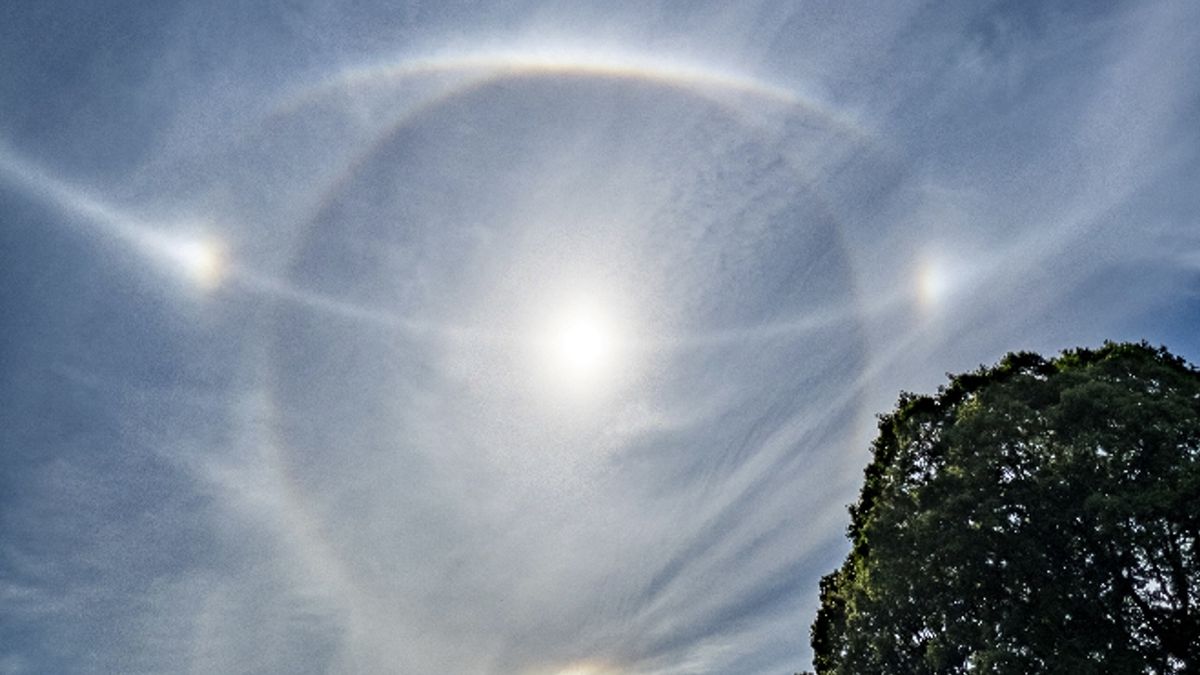
Astronomer Alan Fitzsimmons captured a rare optical phenomenon of shining halos and arcs of light surrounding the sun in the sky above Belfast's Botanic Gardens on May 28. The display lasted around 30 minutes and was caused by millions of tiny, perfectly positioned ice crystals in the upper atmosphere, which often accompany thin cirrus clouds. Fitzsimmons' image includes at least three different confirmed optical phenomena: a 22-degree halo, a pair of "sundogs," and a complete parhelic circle, the line that bisects the circle, which also forms a full circle around the entire sky.