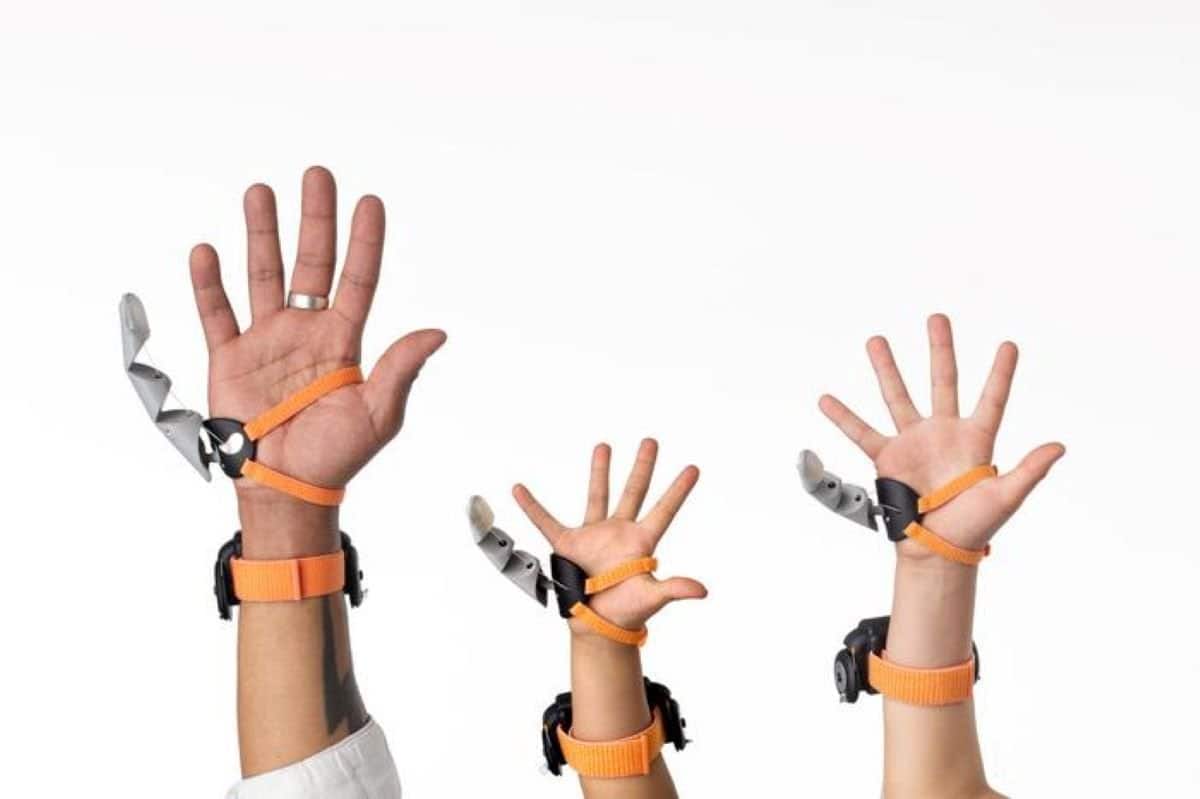
Researchers at the University of Cambridge have demonstrated that a diverse group of people can quickly learn to use a controllable prosthetic "Third Thumb" to manipulate objects, highlighting the importance of inclusive design in developing new technologies. The study, involving 596 participants aged 3 to 96, found that 98% could use the device within a minute, showing promise for both productivity enhancement and aiding those with disabilities.
Cambridge researchers found that the public can quickly learn to use a controllable, prosthetic third thumb to manipulate objects, highlighting the potential of motor augmentation technologies. The study, involving 596 diverse participants, underscores the importance of inclusive design to ensure new technologies benefit everyone, including marginalized communities.
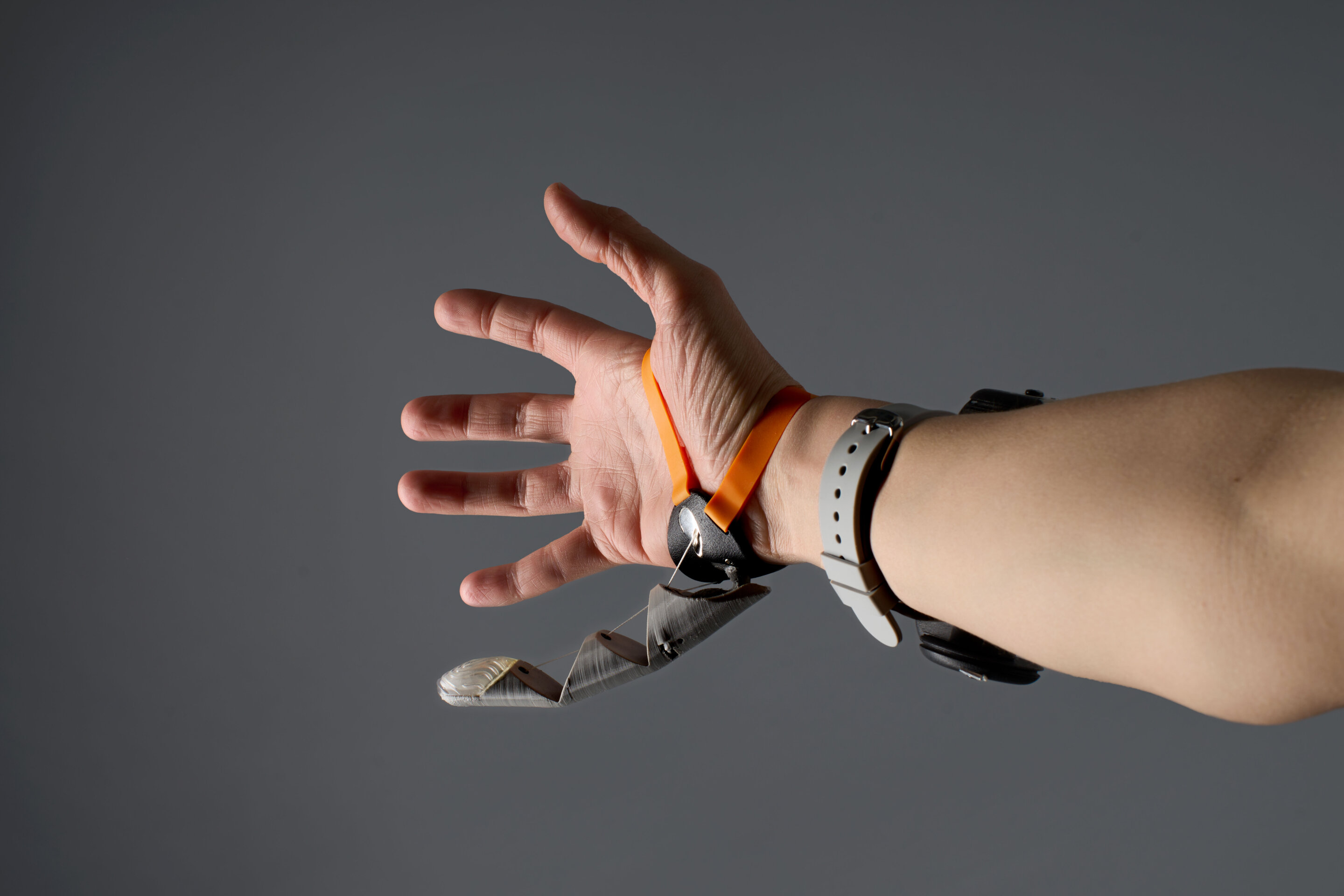
A study by Cambridge researchers found that people can quickly learn to use a controllable prosthetic extra thumb, called the Third Thumb, to manipulate objects. Tested on a diverse group of participants, the device showed high usability across different ages and backgrounds, highlighting the importance of inclusive design in wearable technology. The Third Thumb, controlled by foot pressure sensors, could enhance productivity and provide new interaction methods for people with disabilities.