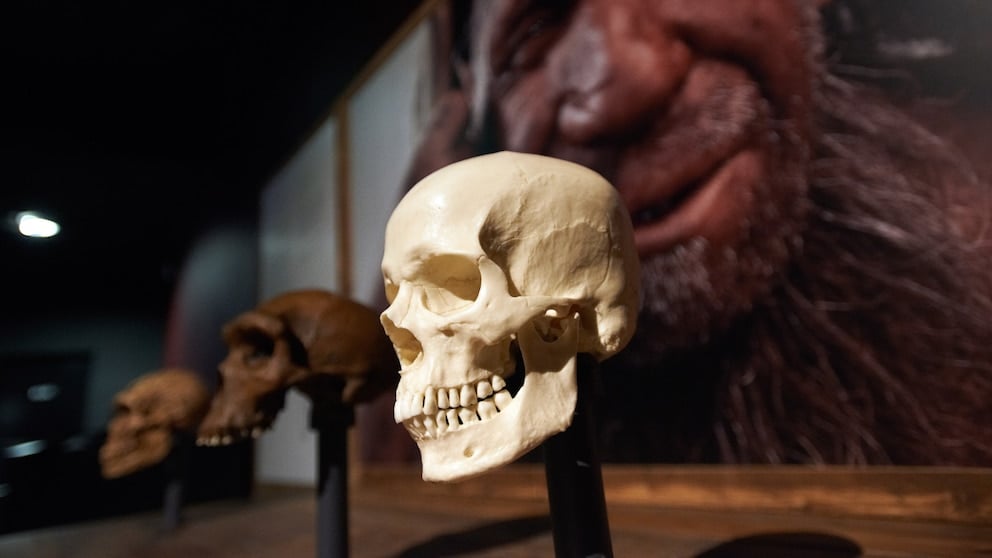
The article explains the difference between hominids and hominins, clarifying that hominids include all great apes and their ancestors, while hominins specifically refer to the human lineage after diverging from chimpanzees, reflecting updated scientific classifications.
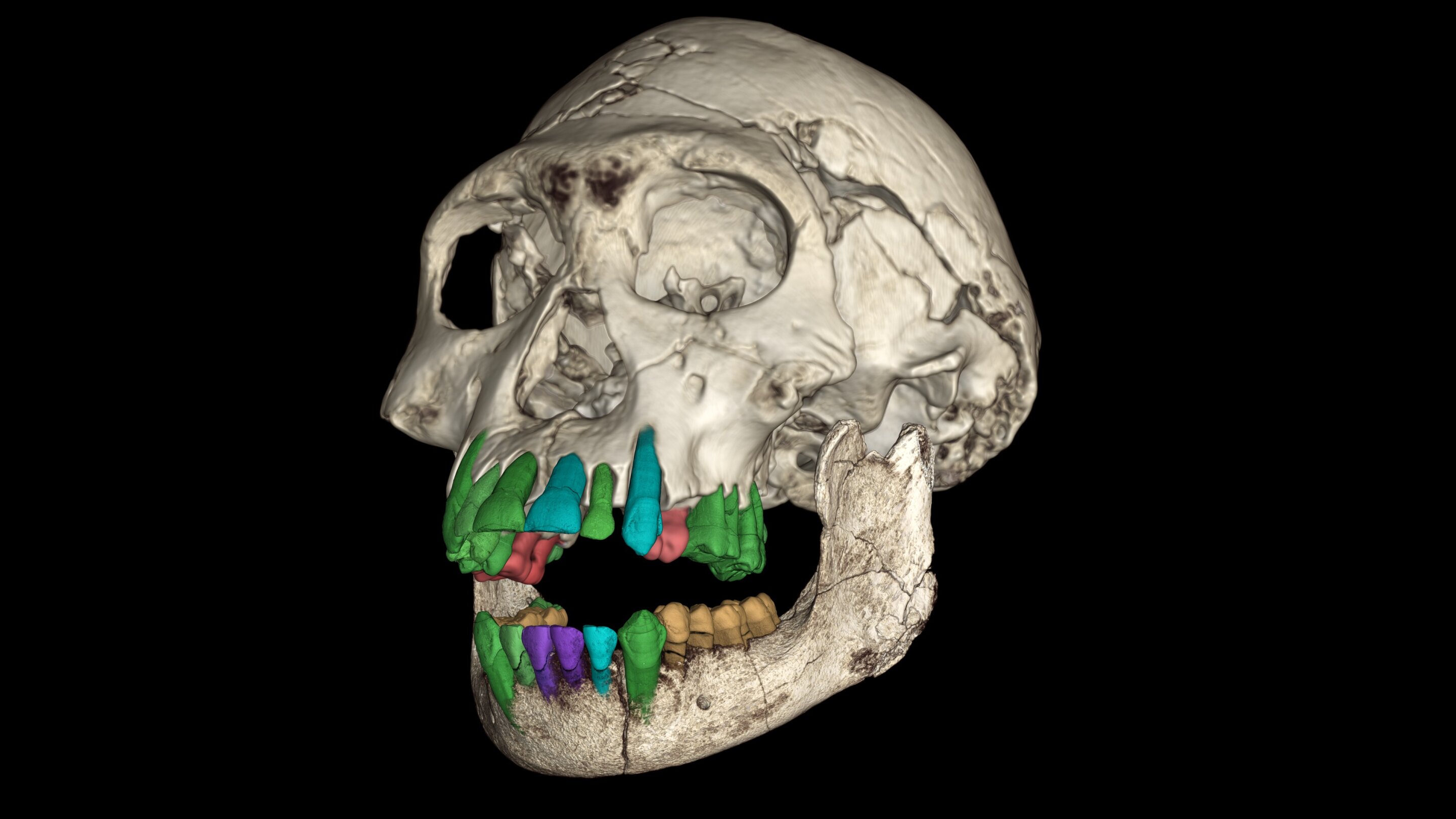
A study of fossil teeth from early Homo individuals at the Dmanisi site in Georgia suggests that a prolonged childhood may have been a precursor to the evolution of larger brains in humans. Researchers found that these early humans had a dental development pattern similar to modern humans, indicating a longer dependency on adult support. This challenges the traditional "big brain—long childhood" hypothesis, proposing instead that extended childhood and cultural transmission may have driven brain evolution and delayed adulthood.
A new study suggests that the transformation of the landscape from dense forests to open plains during the Miocene era may have prompted early hominids to develop speech and language. Researchers found that as hominids transitioned from living in trees to moving onto the ground, they switched from vowel-based calls to consonant-based calls. By studying orangutan calls in a savanna-like landscape, scientists discovered that consonants traveled farther than vowels, indicating that the development of consonant-based calls allowed hominids to communicate over greater distances. This early expansion of speech was a pivotal turning point in language development for humans, leading to the emergence of a rich spoken language in Homo sapiens.
A new study suggests that a shift from dense forests to open plains during the Miocene era may have influenced the evolution of human language. Researchers used orangutan calls, believed to resemble early human sounds, projected across an African savannah to study how the environment shaped our ancestors' ability to speak. The study found that consonant-based calls were more audible over long distances in open landscapes, indicating that moving to open plains may have been crucial in hominid vocal communication. The findings suggest that the ecological settings and soundscapes experienced by our hominid ancestors may have had a significant impact on the emergence and shape of spoken language.
A recent study claiming to have found evidence of cannibalism among our ancient human ancestors has sparked controversy in the field of paleoanthropology. The study focused on a 1.45-million-year-old fragment of a shin bone found in northern Kenya, which showed cut marks consistent with butchery by stone tools. While some experts praised the findings, others criticized the lack of definitive proof that the flesh had been eaten. The debate over prehistoric cannibalism has raged for over a century, with scholars divided on whether it was a routine practice or a rare occurrence. Clear evidence of systematic cannibalism has been found among hominids, including Neanderthals, but determining cannibalism from marks on a single bone remains a methodological challenge.