Tag

Gpcr

All articles tagged with #gpcr

Ligand-tuned activation paths reveal multiple GPCR signaling states in living cells
science4 days ago

Ligand-tuned activation paths reveal multiple GPCR signaling states in living cells

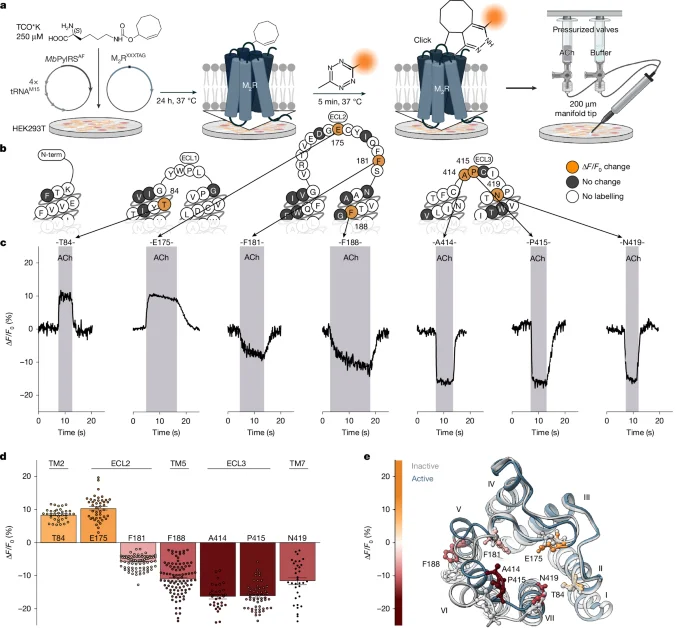
Researchers built extracellular, single-residue GPCR biosensors on the M2 muscarinic receptor using noncanonical amino acids and fast click labeling to watch real-time, ligand-induced conformational changes in live cells. They show agonists stabilize at least two distinct M2R–G-protein signaling complexes (C1 and C2) that form via ligand-specific activation trajectories, with the complex balance and trajectory dictating G-protein subtype selectivity and signaling strength. Overexpressing a nucleotide‑free Gα mutant shifts equilibria to reveal different complexes, while PTX and TRUPATH assays map GDP-bound, low-efficacy and GDP-free, high-efficacy states and their G-protein preferences. Kinetic analysis links on-rates (0.2–5 s formation) to activation trajectories, suggesting ligand-specific pathways underlie GPCR signaling diversity and offering new angles for drug discovery.
"Uncovering the Molecular Mechanism for Neuronal Health and Brain Disease Treatment"
neuroscience1 year ago

"Uncovering the Molecular Mechanism for Neuronal Health and Brain Disease Treatment"

Researchers have identified a molecular complex, Alex3/Gαq, crucial for the transport of mitochondria within neurons, which is essential for neurotransmission and neuronal functions. This finding offers potential therapeutic avenues against neurodegenerative diseases, neuromuscular disorders, and certain cancers by targeting the mitochondrial transport mechanism. The study underscores the complex’s role in maintaining neuronal health and viability, suggesting that manipulating this system could offer innovative treatments for a range of diseases linked to mitochondrial dysfunction.

Revolutionary Drug Development Process Minimizes Side Effects.
health2 years ago

Revolutionary Drug Development Process Minimizes Side Effects.

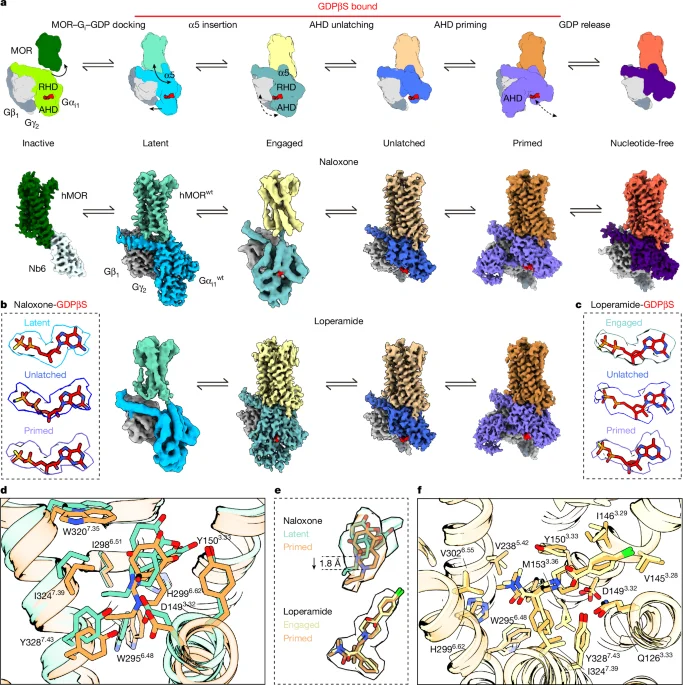
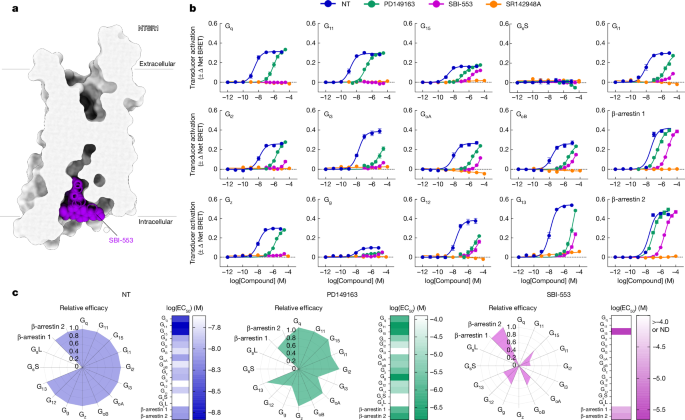
Researchers have discovered a new way to activate G-protein coupled receptors (GPCRs) from inside cells, using a molecule called PCO371 that interacts with the intracellular region of a specific GPCR. This method could help develop drugs with fewer or no side effects for conditions such as obesity, pain, osteoporosis, and neurological disorders. The specificity of PCO371's binding and receptor activation mode makes it a suitable candidate for potential small-molecule-based drugs for class B1 GPCRs, which currently lack oral administrative drug ligands.