A new study suggests that remnants of ancient viruses embedded in our DNA, particularly transposable elements, play a crucial role in early human development and evolution by influencing gene regulation, with potential implications for understanding human diseases and genome innovation.
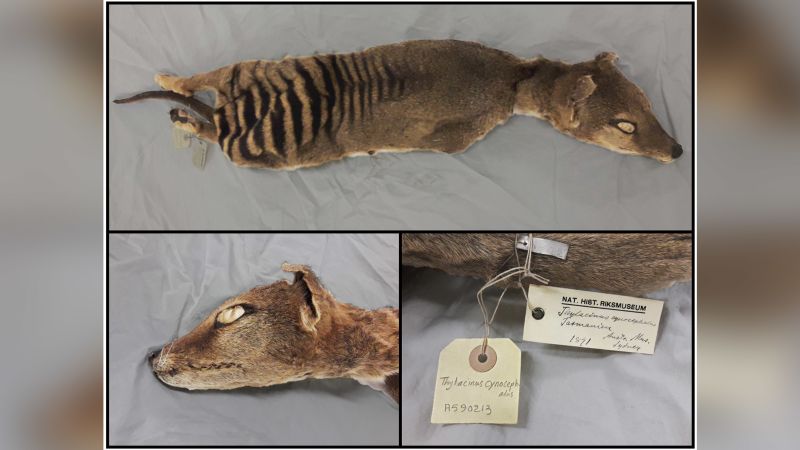
Scientists have successfully isolated and decoded RNA molecules from a 130-year-old Tasmanian tiger specimen, marking the first time RNA has been recovered from an extinct species. The genetic material has provided insights into the functioning of the thylacine's genes and could aid efforts to resurrect the species. This groundbreaking research expands scientists' understanding of extinct animals and has the potential to enhance the reconstruction of extinct genomes. RNA, which is more fragile than DNA, was previously not thought to endure for any length of time. The study serves as a proof of concept and paves the way for future attempts to recover RNA from even older extinct animals, such as the woolly mammoth.
Researchers have published a draft human ‘pangenome’ that captures more of human diversity than has been previously available. The international project aims to map the entirety of human genetic variation, to create a comprehensive reference against which geneticists will be able to compare other sequences. The draft pangenome represents a collection of sequences from a diverse selection of 47 people from around the globe, including individuals from Africa, the Americas, Asia and Europe. However, ethical considerations surrounding the effort to make genome research more inclusive have been highlighted.
A genome research study led by a former docent at San Jose State University's Beethoven center has debunked the authenticity of a lock of hair believed to belong to the famous composer. The hair, named the "Hiller Lock," was found to belong to an unidentified woman with Jewish heritage. The findings were published in the journal Current Biology and also authenticated five other locks of hair. The Beethoven center houses the largest collection of Beethoven materials outside of Europe and previously had fragments of a skull believed to belong to Beethoven discredited in 2016.