
Researchers discovered that small tweaks to a single protein in rattlesnake motor neurons can lead to vastly different movement behaviors, challenging the traditional view of motor circuits as fixed entities. Despite initial expectations, gene expression of the potassium channel did not differ between rattle and body neurons, suggesting that post-translational modifications may play a role. This finding suggests that subtle changes in the chemical environment of cells, rather than structural differences, could drive the evolution of new movement behaviors. The study highlights the potential for tuning motor neurons to produce diverse behaviors and raises questions about the mechanisms behind frequency control in other species.
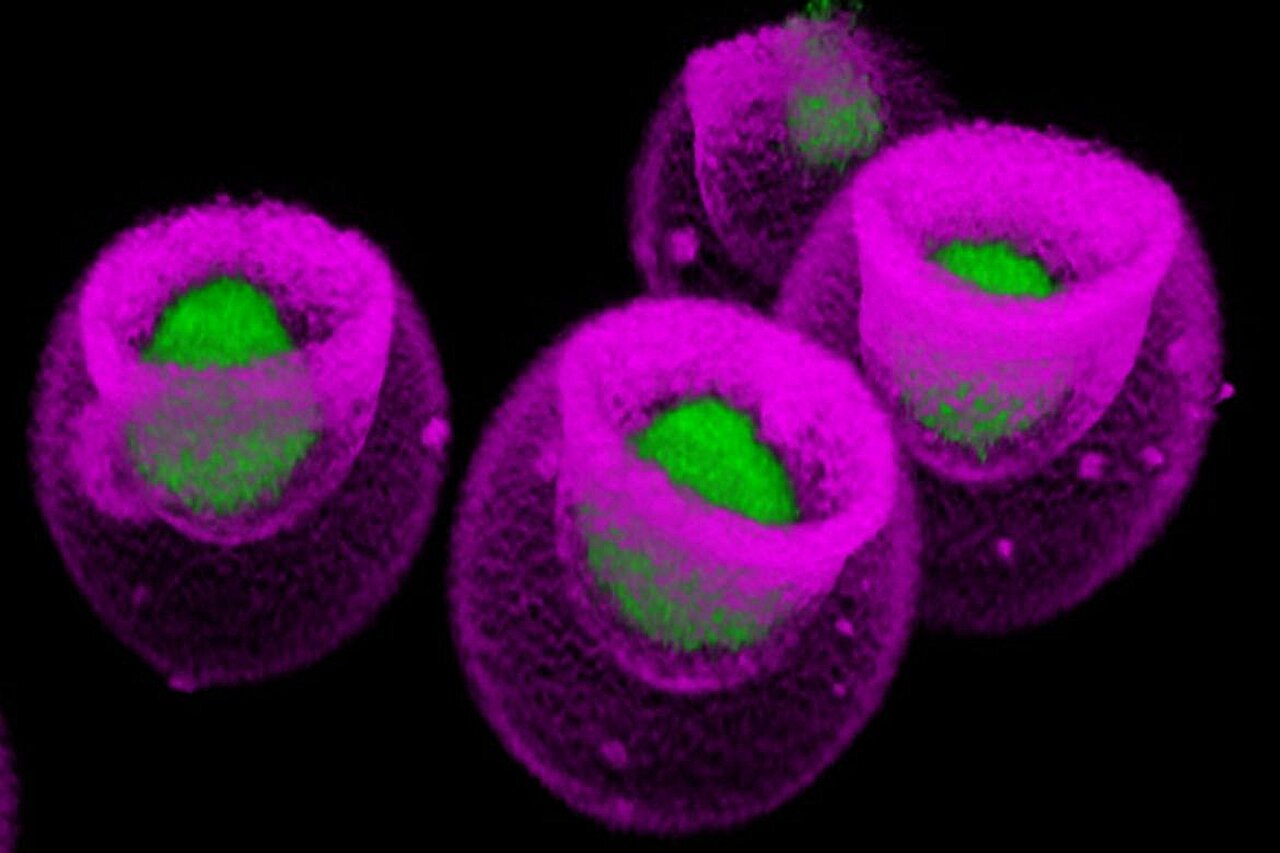
A study conducted by UCLA researchers challenges the "central dogma" of biology, which states that higher gene expression leads to increased protein secretion. The study focused on mesenchymal stem cells and found that gene expression for a protein growth factor called VEGF-A only weakly correlated with its actual secretion. However, the researchers identified other genes, including one that codes for a cell-surface protein called IL13RA2, that showed a strong correlation with VEGF-A secretion. This discovery could lead to more efficient manufacturing of antibody-based treatments and the development of more effective cellular therapies.
A new study published in the journal Nature reveals that starfish don't just have a head, they are a head, and their "arms" are also heads. The research, which used RNA tomography to map gene expression, suggests that starfish have a decoupling of the head and trunk regions, challenging previous assumptions about their anatomy. This discovery may provide new insights into the evolution of echinoderms and raises questions about their unique body plan.