Tag

Gene Therapies

All articles tagged with #gene therapies

healthcare1 year ago

"Expanding Access: Medicaid's Outcomes-Based Agreements for Sickle Cell Gene Therapies"

The Centers for Medicare and Medicaid Services (CMS) will implement a program to reimburse expensive gene therapies for sickle cell disease based on patient outcomes, marking a significant shift in financing high-cost treatments. Starting next year, Medicaid programs will test outcomes-based agreements to pay for two FDA-approved gene therapies, with list prices of $2.2 million and $3.1 million, respectively.


healthcare1 year ago

"Advancements in Sickle Cell Gene Therapies Offer Hope for Patients"

The U.S. government plans to implement an "access model" to help state Medicaid programs afford new gene therapies for sickle cell disease, which come with multimillion-dollar price tags. The Centers for Medicare and Medicaid Services will pursue outcomes-based agreements with drug manufacturers to negotiate pricing and rebates on behalf of participating states, starting in January 2025. This move aims to alleviate concerns over the financial burden of these curative treatments on Medicaid programs, which many people with sickle cell disease rely on for health care coverage.

health2 years ago

FDA Approves Game-Changing Gene Therapies for Sickle Cell Disease

The U.S. FDA has granted approval for two gene therapies, Casgevy and Lyfgenia, for the treatment of sickle cell disease (SCD). Casgevy, developed by Vertex Pharmaceuticals and CRISPR Therapeutics, is the first treatment in the U.S. to utilize CRISPR gene editing technology. SCD is an inherited blood disorder that affects around 100,000 people in the U.S., primarily Black individuals. Both therapies have shown promising results in reducing painful episodes in clinical trials. Casgevy has a list price of $2.2 million, while Lyfgenia is priced at $3.1 million. However, Lyfgenia's higher price and safety warning may impact its sales compared to Casgevy.

healthcare2 years ago

"Projected Surge: US Employers Face Largest Healthcare Cost Increase in 10 Years by 2024"

US employers are expected to face the largest increase in healthcare costs in a decade in 2024, with estimates ranging from 5.4% to 8.5%. Factors contributing to this rise include medical inflation, increased demand for expensive weight-loss drugs, and the availability of high-priced gene therapies. However, in a tight labor market, many employers are hesitant to pass on the full cost increase to their employees. Instead, they are exploring cost-cutting measures such as using artificial intelligence to reduce administrative expenses and identifying less expensive hospital networks for certain procedures.

health2 years ago

Uncovering the Link Between Gene Expression and Visual Impairments

Researchers at Harvard have created a comprehensive "cell atlas" of the human eye, identifying nearly 160 unique cell types and the genes expressed by each cell type. This groundbreaking atlas could revolutionize treatments for blinding diseases like glaucoma and macular degeneration by enabling highly targeted gene therapies. The study also offers insights into the evolution of human vision. The researchers analyzed 151,000 single cells across different eye structures, mapping the expression of over 180 genes associated with glaucoma. The atlas provides a blueprint for understanding which cell types express disease-associated genes and where they are expressed, informing both therapies for blindness and our understanding of vision's evolution.

business2 years ago

AstraZeneca Acquires Pfizer's Rare Disease Gene Therapies in $1 Billion Deal

AstraZeneca's subsidiary, Alexion, is acquiring Pfizer's preclinical gene therapies in a deal worth up to $1 billion, expanding its rare disease research and development capabilities. As part of the announcement, Mene Pangalos will step down as EVP, BioPharma R&D, and will be succeeded by Sharon Barr, the current head of research and product development at Alexion.

health2 years ago

Early Detection: Revolutionary Scanning Methods Uncover Silent Killer

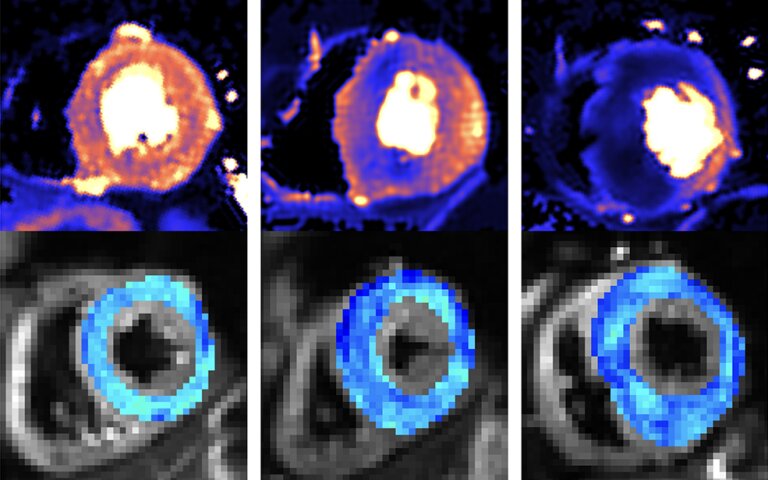
Combining cardiac diffusion tensor imaging (cDTI) and cardiac MRI perfusion (perfusion CMR) scans can help detect hypertrophic cardiomyopathy (HCM) before symptoms appear, according to a study by researchers at University College London. HCM is an inherited condition that thickens the heart's muscular walls, leading to heart failure and sudden cardiac death. The scans were able to identify abnormal microstructure and microvascular disease in individuals with a genetic mutation but no symptoms or muscle thickening. Early detection could aid in the development of gene therapies and drug treatments to prevent HCM from progressing.

synthetic-biology2 years ago

Enzymatic DNA Synthesis: The Future of Synthetic Biology

Ansa Biotechnologies, a DNA synthesis startup, has successfully synthesized the world's longest synthetic oligonucleotide using enzymatic DNA synthesis, which leverages a polymerase enzyme called terminal deoxynucleotidyl transferase (TdT). This process produces less waste, boasts higher fidelity, and can produce longer DNA molecules than traditional phosphoramidite chemistry. Ansa's goal is to provide gene-length synthetic DNA directly to customers, removing the need for researchers to think about how they get the DNA to do their experiments.