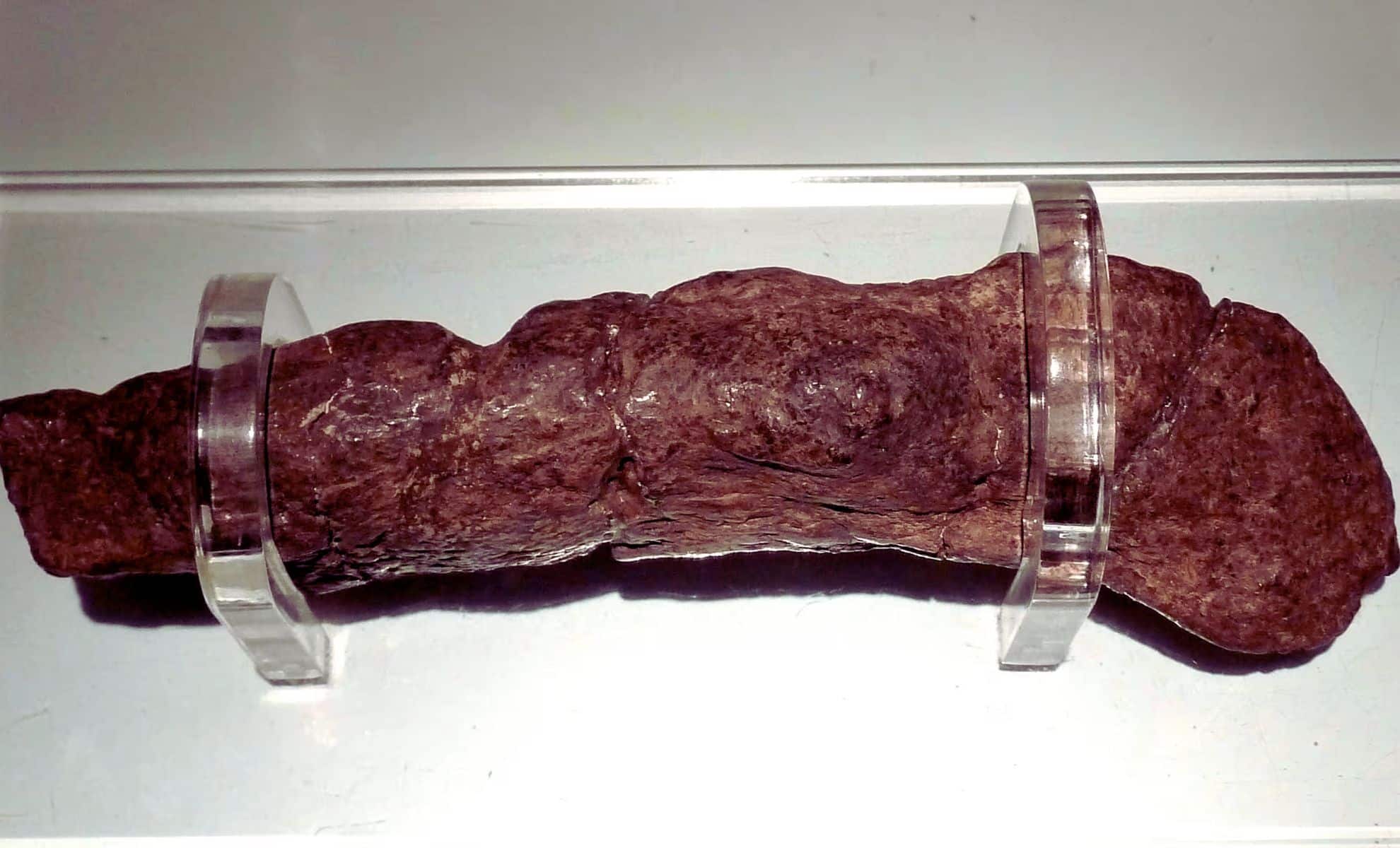
Archaeologists in York discovered the largest fossilized human feces from the Viking era, revealing insights into Viking diet, health, and sanitation issues, and highlighting its archaeological significance as a rare and valuable artifact.
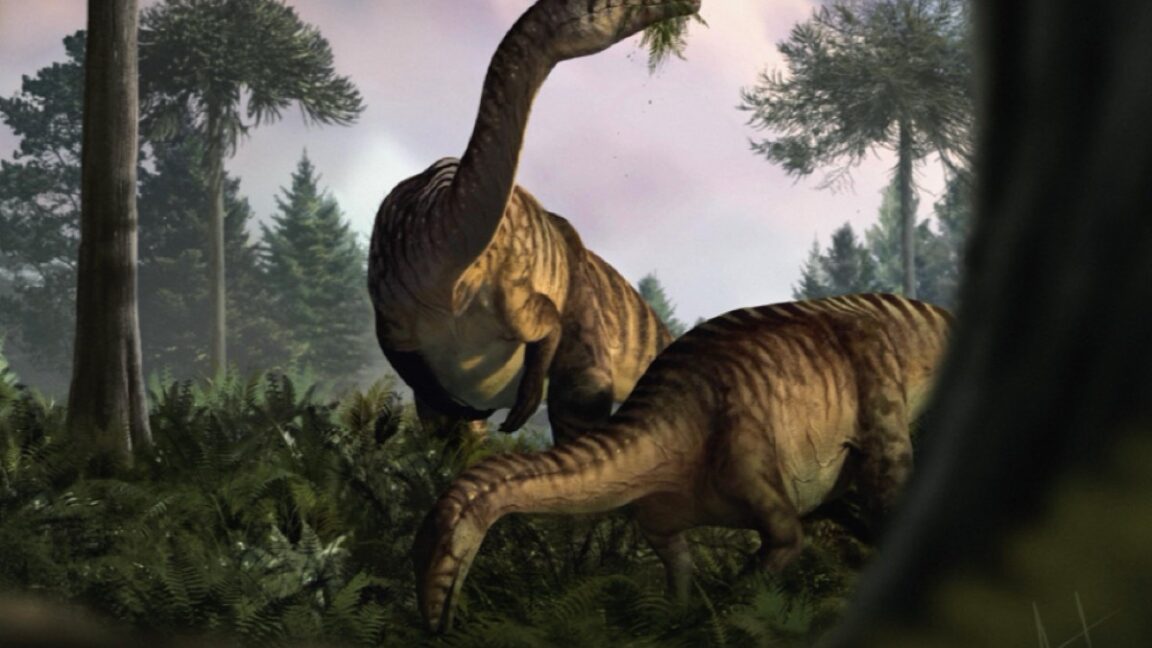
A new study published in Nature suggests that fossilized dinosaur feces and vomit, known as bromalites, could provide insights into how dinosaurs evolved from minor species to dominant ones. Researchers, including Martin Qvarnström from Uppsala University, examined these trace fossils to test two hypotheses about dinosaur dominance: the 'competitive replacement' model, which attributes their success to superior adaptations, and the 'opportunistic replacement' model, which suggests adaptability to environmental changes. The study highlights the potential of coprolites to reveal details about ancient diets and ecological dynamics.
Scientists have successfully reconstructed the mitochondrial genome of the long-extinct wooly rhinoceros using genetic material extracted from fossilized feces left behind by cave hyenas. This marks the first recovery of a genome for the European wooly rhinoceros, offering insights into potential regional distinctions among rhino herds and highlighting the value of coprolites as a scientific resource. The study also revealed that European rhinos and their Siberian counterparts separated almost half a million years ago, contradicting previous hypotheses. The findings may have implications for understanding past climate changes and predicting the future of extant wildlife populations.
Scientists have successfully reconstructed the mitochondrial genome of the extinct wooly rhinoceros using DNA extracted from fossilized feces of cave hyenas. The study contradicts previous theories about the wooly rhino's range expansion and provides important insights into regional differences among woolly rhino populations. The genetic material was obtained from a single coprolite sample, highlighting the value of ancient DNA analysis. This discovery offers a better understanding of the wooly rhinos that once roamed the Earth and their historical past.